

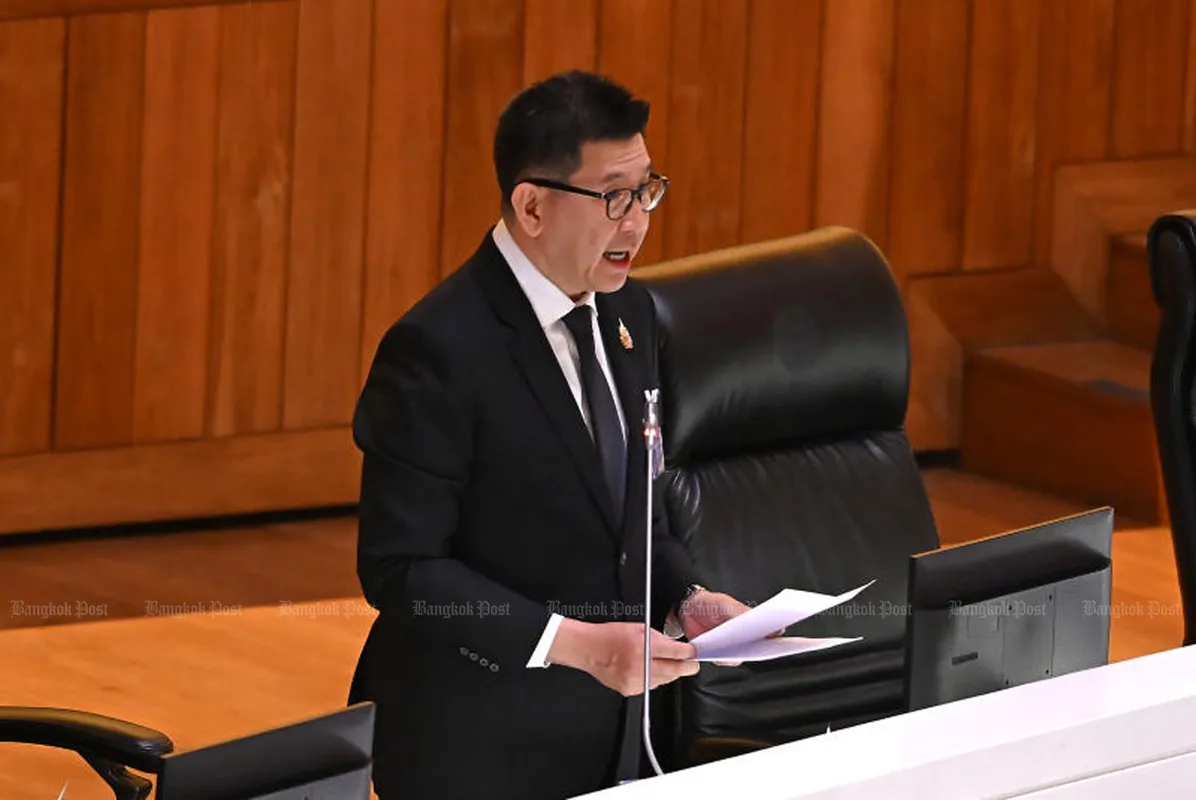
Thailand’s National Assembly has advanced a crucial budget bill, marking a significant step in the nation’s fiscal planning. The bill successfully passed its first reading following three days of extensive debate, securing 288 votes in favor, with 119 members voting against and 86 abstentions. This procedural milestone paves the way for further scrutiny before the bill undergoes its second and third readings.
Special Committee to Scrutinize Budget Bill
Following the initial vote, the House of Representatives established a 72-member special committee tasked with a thorough examination of the budget bill. This committee comprises a diverse group, including 18 cabinet ministers and representatives from both coalition and opposition parties. Their mandate is to delve into the details of the proposed budget, considering the arguments and concerns raised during the initial debate before the bill proceeds to its subsequent readings.
Government Defends Fiscal Strategy, Opposition Raises Concerns
The parliamentary debate preceding the vote highlighted a clear divergence in perspectives regarding the nation’s fiscal direction. Government officials staunchly defended their economic strategy, emphasizing its role in navigating current challenges and fostering future growth. Conversely, members of the opposition voiced significant concerns, questioning the government’s spending priorities and its commitment to fiscal discipline. The core of the debate revolved around the government’s approach to managing national finances in the face of economic headwinds.
Deputy Prime Minister Addresses Fiscal Room and Emergency Borrowing
In his concluding remarks, Deputy Prime Minister and Finance Minister Ekniti Nitithanprapas reiterated the government’s unwavering commitment to key economic objectives. He stated that the administration remains focused on enhancing Thailand’s global competitiveness, elevating national income levels, and providing essential support to households grappling with economic difficulties. Minister Nitithanprapas acknowledged the constraints imposed by limited fiscal space but asserted that these goals are paramount.
The Minister specifically addressed the government’s controversial 400-billion-baht emergency borrowing decree. He defended the necessity of this measure, explaining that swift and decisive action was crucial to preempt the escalation of existing economic difficulties into a more widespread crisis that could severely impact small businesses and employment rates. The borrowing, he explained, is intended to provide a lifeline to struggling households and to fund critical investments in Thailand’s transition towards green energy.
Energy Transition and Economic Vulnerability
Minister Nitithanprapas elaborated on the strategic importance of the energy transition, highlighting Thailand’s significant vulnerability stemming from its heavy reliance on imported oil and natural gas. He pointed out that the recent surge in global energy prices has exacerbated this vulnerability, contributing to a substantial current account deficit that has exceeded 500 billion baht over the past two months. Consequently, he emphasized the critical need for programs like “Thais Help Thais Plus” and investments in renewable energy infrastructure to mitigate these risks and stabilize the economy.
Addressing Fiscal Discipline and Deficit Reduction Targets
Responding directly to criticisms concerning fiscal discipline, Minister Nitithanprapas asserted that the government is fully cognizant of the nation’s fiscal challenges. He outlined a medium-term fiscal framework designed to systematically reduce the budget deficit. The plan aims to bring the deficit down from 4.4% of the Gross Domestic Product (GDP) recorded last year to a target of 3% by the year 2029. For the upcoming fiscal year, the projected deficit target is set at 3.9% of GDP.
Shifting Spending Towards Investment
A key element of the government’s fiscal strategy, as presented by the Minister, involves a strategic shift in public spending priorities. The focus is increasingly moving towards investment, recognizing its long-term economic benefits. While direct budgetary allocations for investment may appear limited, the government plans to significantly augment these efforts through substantial investments from state-owned enterprises. An additional 270 billion baht is earmarked for projects undertaken by these enterprises, alongside public-private partnerships. These initiatives are expected to span critical sectors such as infrastructure development, the expansion of clean energy sources, and improved water management systems.
Compliance and Forward-Looking Considerations
Minister Nitithanprapas concluded by assuring the assembly that the budget bill adheres to all stipulated legal requirements. He affirmed that all suggestions and concerns raised by members during the debate would be formally submitted to the newly appointed special committee. This committee will then undertake a detailed and comprehensive review of these points as part of its mandate to scrutinize the bill before it moves to the final stages of legislative approval.
The advancement of the budget bill signifies a critical juncture for Thailand’s economic policy. The comprehensive review by the special committee will be closely watched as it holds the potential to shape the nation’s financial trajectory for the coming fiscal year and beyond, balancing immediate needs with long-term strategic objectives.
