

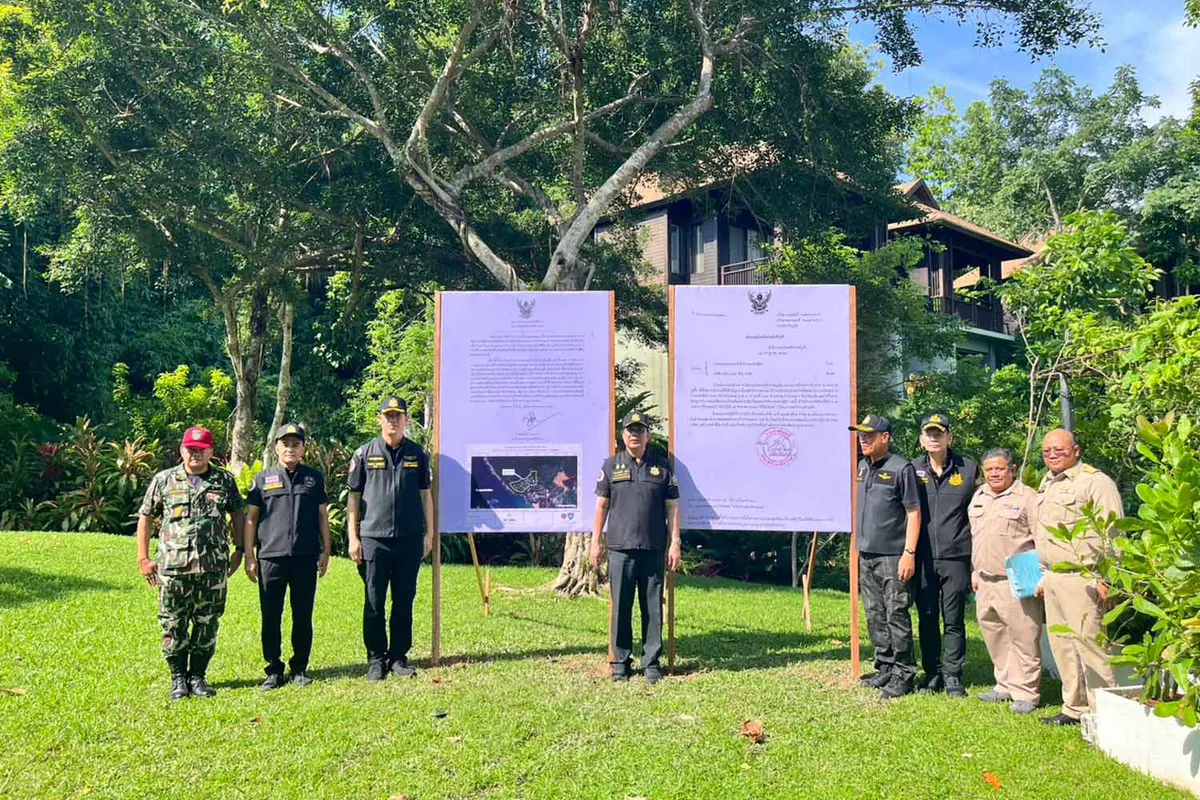
Authorities in Phuket are intensifying efforts to reclaim state land illegally occupied, with a focus on significant encroachments within national park boundaries. The Ministry of Interior, through its relevant departments, is directing the enforcement of court orders to dismantle structures and revoke land-use certificates tied to fraudulent titles and unauthorized development. This renewed push aims to restore natural resources and ensure legal compliance across the popular tourist island.
Phuket Land Recovery Initiative Underway
The Department of National Parks, Wildlife and Plant Conservation (DNP), in conjunction with the Sirinat National Park and the Phuket Legal Execution Office, is actively pursuing the recovery of state-owned land. This initiative is driven by court-ordered judgments that mandate the revocation of land-use certificates and the demolition of illegally erected structures. The operation targets specific cases where land has been acquired through dubious means or developed without proper authorization, signaling a firm stance against land encroachment.
Key Cases Driving Enforcement
Two prominent cases are at the forefront of this enforcement drive:
- Sakhu Tambon Case: A 13-rai parcel of land in Sakhu Tambon is subject to a Supreme Court order. This ruling mandates the cancellation of the existing land-use certificate and the demolition of 39 hotel and villa buildings constructed on the site. The judgment underscores the severity of the violations and the state’s commitment to reclaiming the land.
- Choeng Thale Tambon Case: In Choeng Thale Tambon, a 12-rai plot has been identified where the title deed was reportedly issued based on forged documents. Authorities are taking decisive action to address this fraudulent acquisition of state land.
Occupants of these illegally occupied areas have been given a strict 15-day ultimatum to comply with the orders. Failure to vacate the premises voluntarily will result in the structures being demolished under the provisions of the national park law. This timeframe is designed to allow for orderly compliance before enforcement actions commence.
Unwavering Stance Against Influence
Deputy Interior Minister Polapee Suwunchwee visited the affected sites to underscore the government’s resolve. He emphasized that legal actions would be pursued impartially, irrespective of the scale of investment or the influence of the parties involved. “There will be no exceptions and no preferential treatment for influential figures or investment groups,” Minister Suwunchwee stated. “Natural resources must be returned to the state.” This declaration highlights a commitment to equitable enforcement and the paramount importance of preserving state assets.
Broader Crackdown on Encroachment
The DNP director-general, Atthapol Charoenchansa, confirmed that a total of six encroachment cases within Sirinat National Park are currently under active pursuit. Two of these cases have already received notices to vacate, with demolition proceedings pending. To bolster future efforts, the DNP is finalizing a memorandum of understanding (MOU) with the Ministry of Interior and the Department of Lands. This inter-agency agreement aims to enhance the scrutiny and verification processes for land titles, thereby preventing future instances of fraudulent acquisition.
Wider Regulatory Scrutiny in Phuket
Beyond the national park boundaries, the Phuket administration is conducting a comprehensive review of over 1,000 businesses that have not yet completed their registration processes. This broader regulatory sweep indicates a wider effort to ensure all commercial activities on the island operate within legal frameworks. Concurrently, investigations are ongoing into alleged encroachments on beaches and other public lands, suggesting a multi-faceted approach to land management and conservation.
Protecting Natural Resources for the Future
The coordinated actions by various government agencies reflect a significant effort to address long-standing issues of land encroachment and illegal development in Phuket. By enforcing court judgments, investigating fraudulent land titles, and scrutinizing business registrations, authorities aim to safeguard the island’s valuable natural resources and public spaces. The commitment to applying the law without bias is crucial for restoring public trust and ensuring sustainable development that respects environmental integrity and legal boundaries.
The recovery of these lands is not merely about enforcing existing laws; it is about reasserting state ownership and control over its assets, particularly those designated for conservation and public benefit. The success of this initiative could set a precedent for addressing similar issues across other regions, reinforcing the principle that natural resources are a public trust, to be managed responsibly for the benefit of current and future generations.
