

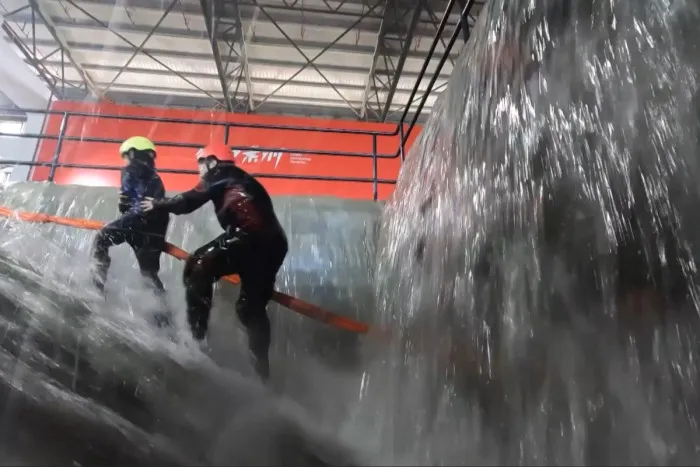
In Hangzhou, eastern China, a unique training facility is allowing individuals to experience the raw power of simulated typhoons and flash floods, offering a crucial preparation tool for devastating natural disasters. The Lvxing Disaster Simulation Training Center provides an immersive, albeit controlled, environment where participants can confront extreme weather conditions, equipping them with vital knowledge and practical skills for survival.
Realistic Typhoon Simulation
The center boasts what it claims is the world’s first facility dedicated to typhoon training. Here, participants are exposed to wind speeds reaching up to 103 miles per hour, accompanied by torrential rain, mimicking the ferocity of a genuine typhoon. While participants don protective gear such as wetsuits and helmets and are guided by safety instructors, the experience is designed to be as realistic as possible, offering a visceral understanding of the forces at play during such events.
Flash Flood Preparedness
Beyond typhoons, the training center also simulates flash floods, another perilous natural phenomenon that frequently affects regions prone to heavy rainfall. These simulations are critical for developing an instinctive response to rapidly rising water levels and strong currents. By navigating these artificial torrents, individuals learn about water safety, potential hazards, and effective strategies for self-rescue or assisting others.
The Importance of Disaster Preparedness
Natural disasters, including typhoons and floods, pose a significant threat globally, causing widespread destruction, loss of life, and economic disruption. China, with its extensive coastline and varied topography, is particularly vulnerable to these events. Typhoons often make landfall along the eastern coast, bringing destructive winds, heavy rainfall, and storm surges, while inland areas can be devastated by flash floods triggered by intense precipitation.
Why Simulation Training is Crucial
Traditional disaster preparedness often relies on theoretical knowledge and drills. However, the Lvxing center’s approach offers a more impactful learning experience. The psychological aspect of facing simulated extreme conditions can be as important as the physical. Participants can develop a sense of calm and learn to make rational decisions under duress, which is often compromised during actual emergencies.
- Understanding Wind Forces: Experiencing high winds helps individuals appreciate the danger of flying debris and the structural integrity of buildings and shelters.
- Water Safety Acumen: Flash flood simulations teach critical survival skills, such as identifying safe routes, understanding water depth and current speed, and the dangers of submerged obstacles.
- Psychological Resilience: Repeated exposure to simulated stressful scenarios can build mental fortitude, reducing panic and improving response effectiveness in real emergencies.
- Equipment Familiarization: Participants learn to use safety equipment correctly, ensuring they are prepared to don and utilize gear when needed.
Technological Advancements in Safety Training
The development of such advanced simulation centers highlights a growing global trend towards utilizing technology to enhance disaster response and public safety. These facilities employ sophisticated engineering to create controlled yet intense environments. The ability to precisely replicate wind speeds, rainfall intensity, and water flow allows for standardized training and objective assessment of participant performance.
Broader Applications of Disaster Simulation
While the Lvxing center focuses on typhoons and floods, the concept of disaster simulation has broader applications. Similar technologies are used to train emergency responders for earthquakes, fires, and other hazardous situations. The goal is to create a safe space where individuals can practice critical life-saving techniques without the real-world risks, thereby improving overall community resilience.
The Human Element in Disaster Response
Despite the technological sophistication, the human element remains paramount. The presence of experienced safety instructors is vital. They not only ensure the physical safety of participants but also provide expert guidance, debriefing, and reinforce the lessons learned. Their role is to translate the simulated experience into actionable knowledge that can be applied when facing genuine threats.
As climate change potentially increases the frequency and intensity of extreme weather events, facilities like the Lvxing Disaster Simulation Training Center play an increasingly important role. By providing realistic, hands-on training, they are helping to build a more prepared and resilient population, better equipped to face the challenges posed by natural disasters.
Conclusion
The Lvxing Disaster Simulation Training Center in Hangzhou represents a forward-thinking approach to disaster preparedness. By offering participants a chance to bravely face simulated typhoons and flash floods, the facility aims to instill a deeper understanding of these natural forces and equip individuals with the skills and confidence needed to navigate real-world emergencies. This innovative training method underscores the growing importance of experiential learning in enhancing public safety and resilience against the backdrop of increasingly unpredictable weather patterns.
