

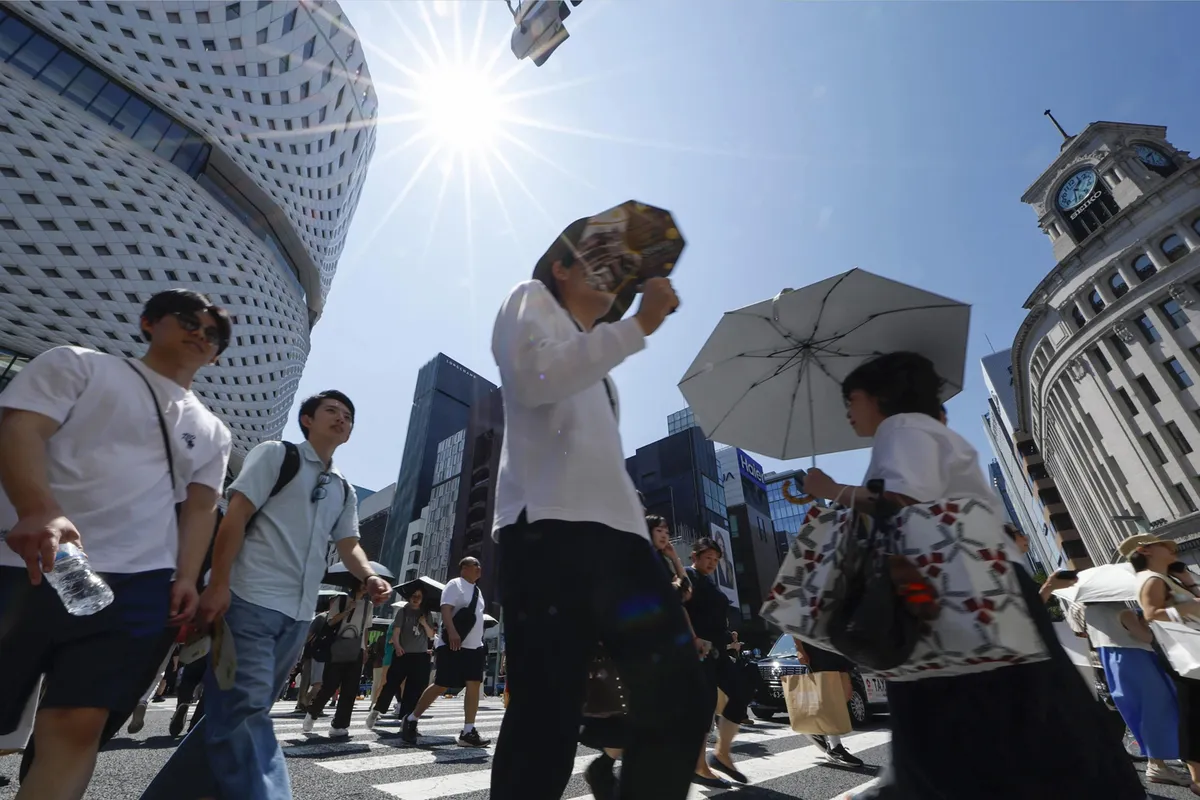
Tokyo and much of Japan are experiencing a significant shift in weather as the prolonged rainy season officially concludes, ushering in a period of intense heat. Temperatures have already climbed, with the mercury reaching a sweltering 35 degrees Celsius (95 degrees Fahrenheit) in the capital. This abrupt transition has prompted widespread alerts for heatstroke, as the nation braces for what is expected to be a very hot week.
End of a Delayed Rainy Season
The Japan Meteorological Agency (JMA) confirmed the end of the rainy season for key regions, noting a considerable delay compared to previous years. In the Kanto-Koshin region, which includes Tokyo, the rainy season concluded approximately 22 days later than last year. Similarly, the Tokai region, centered around Nagoya in Aichi Prefecture, saw its rainy season end about 23 days behind schedule. This extended period of rain had delayed the onset of summer heat, making the current high temperatures feel even more pronounced.
Earlier in July, the Kyushu region in southwestern Japan had already seen its rainy season declared over on July 13. The JMA’s latest announcements signal the full transition to summer conditions across the archipelago.
Record Highs and Heatstroke Warnings
The impact of the departing rain clouds and the arrival of high-pressure systems has been immediate and dramatic. On Monday morning, the final day of a three-day weekend, temperatures had already surpassed the 30-degree Celsius mark at over 600 of the JMA’s 914 observation points nationwide. This widespread warmth is a stark contrast to the preceding weeks of rainfall.
As temperatures continue to climb, the risk of heat-related illnesses has become a major concern. Health authorities are urging residents to take precautions against heatstroke. This includes staying hydrated, avoiding strenuous outdoor activities during the hottest parts of the day, seeking cool environments, and being aware of the symptoms of heat exhaustion and heatstroke, particularly for vulnerable populations such as the elderly and young children.
Expected Weather Patterns for the Week
Looking ahead, the JMA forecasts that high temperatures will persist throughout the week across western and eastern Japan. The agency anticipates that the mercury will continue to hover around or exceed the 30-degree mark in many areas, with some locations, like Tokyo, experiencing temperatures closer to the mid-30s.
Residents are advised to monitor weather updates closely and implement necessary safety measures. The combination of high temperatures and humidity can create particularly dangerous conditions, making proactive health management essential. The end of the rainy season marks the official start of summer, but this year, it arrives with an immediate and intense heatwave that demands attention and caution.
Preparing for the Heat
With the rainy season now definitively over, the focus shifts to managing the intense summer heat. The delayed end meant that many were caught off guard by the rapid escalation in temperature. Public health campaigns are likely to intensify, emphasizing:
- Hydration: Consistently drinking water, even before feeling thirsty. Electrolyte drinks may also be beneficial.
- Cooling Measures: Utilizing air conditioning, fans, and seeking shade or cooler indoor locations. Public facilities like libraries and community centers often offer respite.
- Activity Management: Rescheduling outdoor activities to cooler morning or evening hours, or postponing them altogether.
- Vigilance: Paying close attention to the well-being of family members, neighbors, and especially the elderly and children, who are more susceptible to heatstroke.
- Awareness: Recognizing the signs of heat exhaustion (dizziness, nausea, headache, heavy sweating) and heatstroke (high body temperature, confusion, lack of sweating, rapid pulse), and knowing when to seek medical attention.
The transition from a prolonged rainy season to a severe heatwave presents a unique challenge for Japan. As the country adapts to these rapidly changing conditions, public awareness and adherence to safety guidelines will be crucial in mitigating the health risks associated with the ‘extremely hot’ days ahead.
Conclusion
The conclusion of Japan’s extended rainy season has brought immediate and significant heat, with Tokyo recording temperatures as high as 35°C. The Japan Meteorological Agency has issued heatstroke warnings across the country, urging residents to take precautions. With high temperatures expected to continue throughout the week, preparedness and vigilance are key to navigating this intense summer heat safely.
