

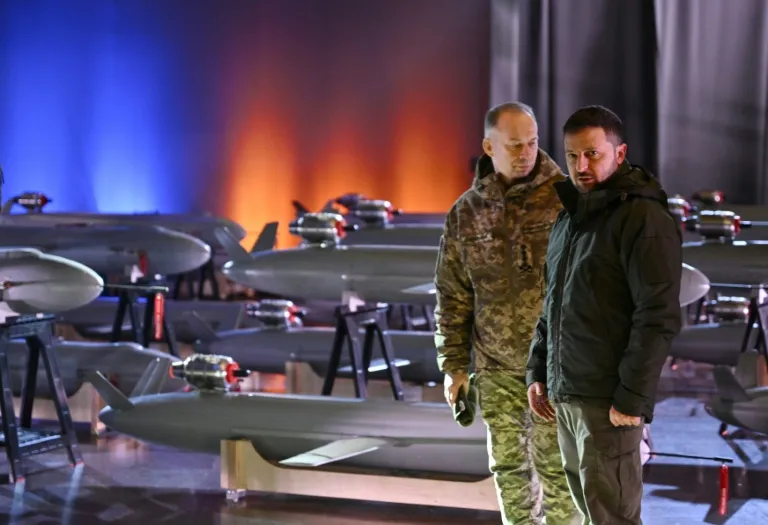
Ukraine’s Commander-in-Chief, General Oleksandr Syrsky, is reportedly under consideration for removal by President Volodymyr Zelensky. This potential leadership change comes at a critical juncture in the ongoing conflict, with Ukrainian and foreign media outlets reporting that the President is weighing the decision. Despite facing scrutiny, Syrsky has been credited with significant military achievements since Russia’s full-scale invasion in 2022.
Key Military Contributions and Criticisms
General Syrsky, 60, has a long military career, notably halting Russia’s initial advance on Kyiv in 2022 and orchestrating a notable counter-offensive into Russia’s Kursk region in 2024. However, his background, including his birth in Russia and training in Moscow, has led to persistent questions about his approach, often characterized as Soviet-style.
Critics have accused Syrsky of a perceived disregard for troop casualties, leading to the unflattering moniker “the butcher.” A high-ranking Ukrainian official, speaking after Syrsky’s appointment as commander-in-chief in 2024, acknowledged his toughness, stating, “He is very tough, but an army general has to be tough.” However, as the war has dragged on, leading to widespread fatigue and public anger over army-related scandals, this perceived inflexibility has become a point of contention.
The situation was exacerbated when President Zelensky unexpectedly dismissed the reform-minded Defense Minister Mykhailo Fedorov. Fedorov had been instrumental in modernizing the Ukrainian military, and his ousting, coupled with Syrsky’s perceived role, triggered significant war-related demonstrations in Kyiv, with protesters chanting, “Shame on Syrsky” and calling for his removal.
Syrsky’s Relationship with President Zelensky
For a period, President Zelensky appeared to support Syrsky. The President, who is often perceived as wary of individuals with political aspirations or broad public appeal, found in Syrsky a loyal, career military officer who posed no apparent political threat. Syrsky himself has emphasized his singular focus on the war effort, stating in a recent article, “My job is war… I have no political ambitions. I deal with the war 24/7.”
Analysts have echoed this sentiment, suggesting that Syrsky was not a political rival to Zelensky, unlike his predecessor, the highly popular General Valery Zaluzhny, who was removed from his post. “He is not a politician. Just look at him. He speaks Ukrainian poorly and is not a public communicator,” noted Anatolii Oktysiuk, an analyst at the KI Research Group in Kyiv. Oktysiuk added that Syrsky’s approach has always been to align with President Zelensky’s directives.
Criticism of Command Structure
This perceived subservience, however, is also at the heart of the current criticism. Oktysiuk elaborated that Syrsky “built a system in which initiative and independence are suppressed, while a loyal cadre of generals is promoted instead.”
In a strong public statement following his dismissal, former Defense Minister Fedorov accused Syrsky of hindering modernization efforts, particularly in areas of procurement, equipment, and mobilization. Fedorov claimed, “All the initiatives we were proposing started to be blocked, and Syrsky… is not ready to look you in the eye and openly talk about those problems.”
General Syrsky has refuted these accusations, advocating for internal resolution of disputes rather than public confrontation. He stated, “A war is won by real work, not by the public drama surrounding it.”
Background and Origins
Like many senior officers of his generation, Syrsky was born in the Russian SFSR of the Soviet Union and received his military education at a Red Army academy in Moscow. During the 1980s, he was stationed in Soviet Ukraine. Following the collapse of the USSR, he remained in Ukraine, studied at the National Defence University in Kyiv, and joined the newly formed Ukrainian army.
Despite his long service in Ukraine, his command of the Ukrainian language is reportedly not fluent, and his parents and brother continue to reside in Russia. His brother, speaking to Russia’s state news agency TASS shortly after Syrsky’s appointment, indicated a lack of contact, stating, “I’m not in touch with him… I don’t know anything about him.”
An internet meme humorously reflected on Ukraine’s attack on the Kursk region, with Syrsky quipping, “I just want to go home.” The general maintains a private personal life, is married, and has two sons, according to an army spokesperson.
Acknowledged Achievements and Future Considerations
Even his detractors acknowledge Syrsky’s significant military accomplishments. He played a crucial role in the defense of Kyiv during the initial phase of the invasion. Six months later, he was instrumental in a swift counter-offensive in the Kharkiv region that resulted in substantial territorial gains for Ukraine. In 2024, his leadership was evident in the operation targeting Russia’s Kursk region, marking the first sustained Ukrainian incursion into Russian territory since World War II.
Fedorov, despite his criticisms, conceded Syrsky’s value: “We can’t treat such a commander as someone whose contribution we don’t fully appreciate.” However, he stressed the evolving nature of the conflict, adding, “But the war has completely changed… The command-and-control system has changed, and we have to change.”
The central question facing President Zelensky, and closely watched by international observers and Moscow alike, is the nature of this necessary change. Political expert Volodymyr Fesenko commented, “What (Zelensky) needs is a younger version of Syrsky. Someone more flexible, more communicative, and more appealing to society—but such a person does not seem to exist.” This highlights the complex challenge of leadership transition amidst an active and demanding war.
