

The film industry, once hesitant and wary, is increasingly integrating artificial intelligence into its creative and production processes. While initial concerns about intellectual property and the potential displacement of human talent were significant, a noticeable shift is occurring. Major studios and production companies are now actively exploring and investing in AI technologies, signaling a new era of filmmaking that balances innovation with artistic integrity.
From Skepticism to Investment: Hollywood’s AI Journey
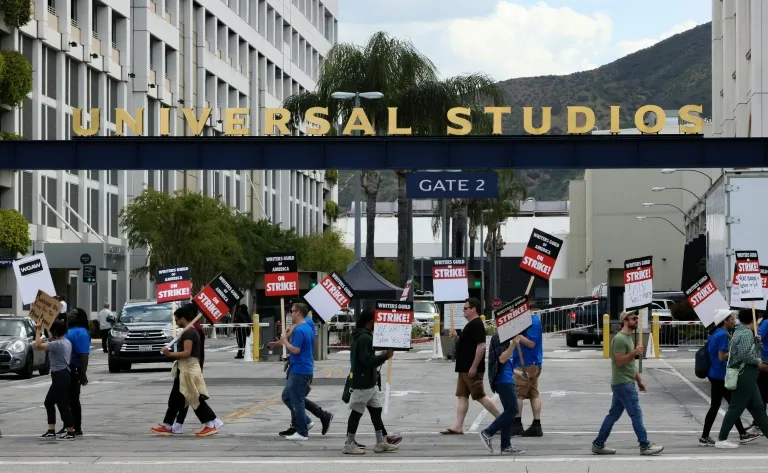
Initially, the rapid advancement of AI technology prompted a defensive posture within Hollywood. Studios expressed anxieties regarding the potential misuse of their intellectual property, while actors voiced fears of being reduced to mere data for AI systems. These concerns were a central theme during the 2023 industry strikes. Early forays into AI also revealed technical limitations, such as inaccuracies in generating human features like hands or realistic facial movements.
However, a significant turning point appeared in early March with Netflix’s acquisition of InterPositive, a small AI platform company with fewer than 20 employees, for a substantial $587 million. Co-founded in 2022 by Ben Affleck, InterPositive is designed to support film and television production. This move underscored a growing recognition of AI’s potential value in the industry.
Further signaling this trend, in early June, Lionsgate took a stake in Runway, a prominent company specializing in AI-generated video. The two entities have established a partnership to collaborate on creative projects. Shortly thereafter, Google followed suit with an investment in the independent studio A24, indicating broader industry-wide interest in AI’s capabilities.
AI’s Growing Sophistication and Creative Applications
Recent advertising campaigns and short films have demonstrated that AI-generated video, even when incorporating human actors, has reached a new level of sophistication. Runway, a leader in this field, stated in May, “In many cases, if the story is strong enough, the technology is now good enough to become invisible.” This suggests that AI is becoming a seamless tool rather than a noticeable artificial element.
Jamie Umpherson, Runway’s chief creative officer, noted that as the technology improves at an “unimaginable” pace, creatives are becoming more adept at utilizing these tools. “There’s more familiarity than there was even a year ago,” he observed, adding that this increased comfort allows creative teams to dedicate more energy to storytelling and stylistic development.
Netflix co-CEO Ted Sarandos echoed this sentiment in mid-July, highlighting the efficiency gains. “We’re making higher quality output more quickly and efficiently than we could have using traditional methods,” he stated. Sarandos revealed that Generative AI workflows have been applied to approximately 300 Netflix titles, primarily in post-production, and are being used for complex visual effects and sequences.
The ‘Hybrid’ Model: Augmenting, Not Replacing, Human Creativity
Despite the advancements, Netflix appears to be focusing AI applications on specific aspects of production, from early concept visualization to final color grading. This suggests a strategic approach to integrating AI without overhauling the entire filmmaking process.
Independent director and producer Jon Erwin champions a view where AI serves to enhance, rather than replace, core human elements. “Actors drive all the performances, and we use these tools to amplify the sets and the scope of the shows,” he explained. “But we preserve the core of the filmmaking process, which is the relationship between the actor, the director and the camera. These tools do not replace that.”
Erwin’s production company, Wonder Project, has partnered with Luma, a competitor to Runway, to launch Innovative Dreams. This joint venture has developed a novel process that allows actors to be filmed naturally, without green screens or motion-capture suits. The AI then generates hyper-realistic virtual environments around them. Erwin describes this as “hybrid” or “nonlinear” filmmaking.
This method is remarkably efficient, enabling AI-generated backdrops to be added mere minutes after a scene is shot. This provides filmmakers with immediate previews and the opportunity to reshoot scenes if necessary. The first feature film utilizing this approach, “Young Washington,” starring Ben Kingsley, has achieved significant box office success, grossing over $40 million against its production budget.
The Future Landscape: Adaptation and Uncertainty
While technicians, actors, and camera operators still hold vital roles, the long-term impact on employment levels remains a subject of discussion. Actor Matt Damon has expressed concerns, suggesting that the extensive resources required for large-scale productions like Christopher Nolan’s “The Odyssey” might become less feasible with evolving technologies.
Major Hollywood studios such as Paramount, Universal, Sony, Walt Disney, and Warner Bros have, for the most part, maintained a cautious, official distance from the AI shift. However, Tanya Porquez, CEO of Generated Group, a company that recently launched a database of AI-generated video creations, anticipates this stance will change. “Studios will have to get on board. Not because they necessarily want to, but I think it’s just the wave,” she predicted, suggesting that industry adoption is inevitable.
The evolving relationship between Hollywood and AI is characterized by a gradual acceptance, driven by technological advancements and strategic investments. While challenges and uncertainties persist, the industry appears poised to harness AI’s potential to reshape the future of filmmaking, emphasizing a collaborative approach between human creativity and artificial intelligence.
