

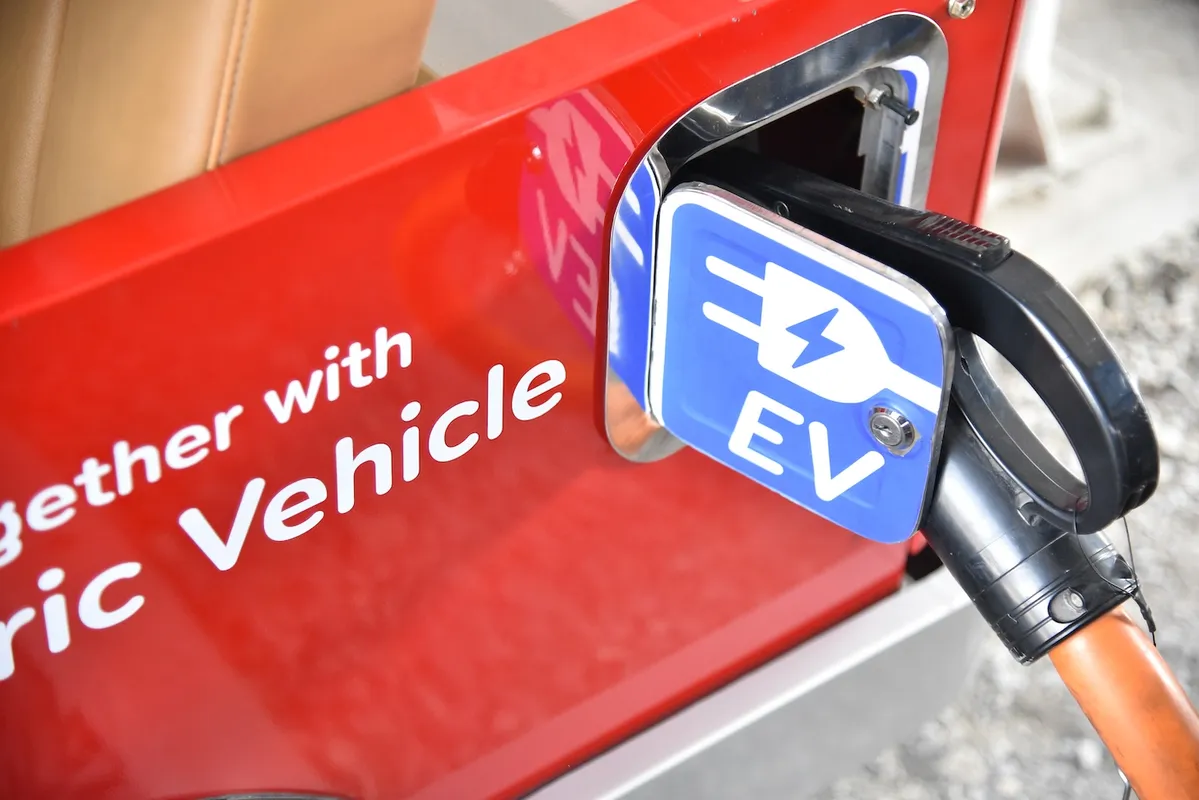
Thailand is actively refining its strategy to promote electric vehicle (EV) adoption, aiming to revitalize its significant automotive sector, which has experienced a sharp downturn. The government is considering expanding its EV incentive program beyond commercial transport vehicles to encompass a wider range of vehicle categories. This initiative comes as the nation, a major automotive production hub in Southeast Asia, grapples with declining domestic vehicle sales, hitting a 15-year low in 2024. High household debt and stringent lending conditions have been identified as key factors dampening consumer demand, particularly for pickup trucks, a cornerstone of the Thai automotive market.
Government Reassessing EV Incentive Scope
Initially, a proposal presented in June focused on replacing commercial transport vehicles—such as taxis, motorcycle taxis, tuk-tuks, buses, and trucks—with electric alternatives. However, Deputy Transport Minister Siripong Angkasakulkiat indicated that discussions are now underway to broaden the scope of assistance. “We are reconsidering whether the assistance should be extended to all vehicle categories, not just those for transport,” Mr. Siripong stated, signaling a potential shift towards a more comprehensive national EV promotion plan.
The momentum for these expanded discussions has been bolstered by a recent ruling from the Constitutional Court. The court declared the government’s 400-billion-baht emergency borrowing plan lawful in May, paving the way for increased government spending. While the opposition had challenged the borrowing plan, questioning the allocation of funds, the court’s decision has removed a significant hurdle for the administration’s fiscal initiatives.
The government’s borrowing plan allocates half of the 400 billion baht towards consumption stimulus measures and support for vulnerable populations. The remaining half is earmarked for energy transition projects. However, concerns have been raised by opposition lawmakers regarding the transparency and specific details of these energy transition initiatives, with some suggesting potential pre-arranged project funding.
Proposed Support Mechanisms for EV Adoption
The Ministry of Transport has outlined several potential avenues for supporting EV purchases. These include direct subsidies, low-interest loan programs, and tax incentives specifically targeting vehicles slated for replacement due to age limits. A review committee, chaired by the Ministry of Finance, is tasked with approving projects and overseeing the implementation of both relief measures and energy transition support under the borrowing plan.
EV Market Trends and Industry Concerns
Data from the Federation of Thai Industries (FTI) indicates a mixed picture for the automotive market. While total domestic car sales, including pickup trucks, saw a 14% year-on-year increase in the first five months of the current year, reaching 288,242 units, the overall market has faced significant headwinds. Notably, EVs are capturing an increasing share of the market, constituting 30% of all sales according to FTI data. In 2025, the FTI projected domestic car sales of 621,166 units, with 120,301 being passenger EVs, and approximately 1.7 million motorcycles sold.
Despite the growing EV penetration, the broader automotive industry faces uncertainty. Successive Thai governments have implemented various tax breaks and incentives to foster EV manufacturing and adoption, attracting over $4 billion in investments from international players like BYD and Great Wall Motor. However, the current policy framework is set to expire in 2027, prompting warnings from industry groups about a potential sharp decline in the sector if new supportive measures are not introduced.
Industry Calls for Localized EV Production
Industry stakeholders are emphasizing the importance of prioritizing domestically manufactured EVs in any new incentive programs. Surapong Paisitpattanapong, spokesperson for the FTI’s Automotive Industry Club, stressed that incentives should favor vehicles produced locally and utilizing a majority of locally sourced parts. “More domestic EV production means more jobs, higher incomes and greater tax revenue, (and) is a win-win for businesses, consumers and the government,” he stated.
Echoing this sentiment, Siamnat Panassorn, vice-president of the Electric Vehicle Association of Thailand, advocated for trade-in schemes to be exclusively for locally produced vehicles. He also highlighted the need to focus on electrifying high-emission vehicle types, such as EV motorcycles and public buses. Deputy Transport Minister Siripong Angkasakulkiat concurred, affirming the goal of promoting widespread EV adoption while ensuring public benefit through cleaner transportation.
Specific Support for Taxi Drivers and Pickup Trucks
Targeted financial assistance is being considered for taxi drivers who need to replace vehicles reaching the 10-year age limit next year. The government is exploring financing options that could reduce daily loan repayments for EVs from approximately 700 baht to 500 baht over a five-year period. Similar, though varied, support is anticipated for other commercial electric vehicles, including minibuses, vans, buses, and heavy transport trucks.
Furthermore, Finance Minister Ekniti Nitithanprap
