

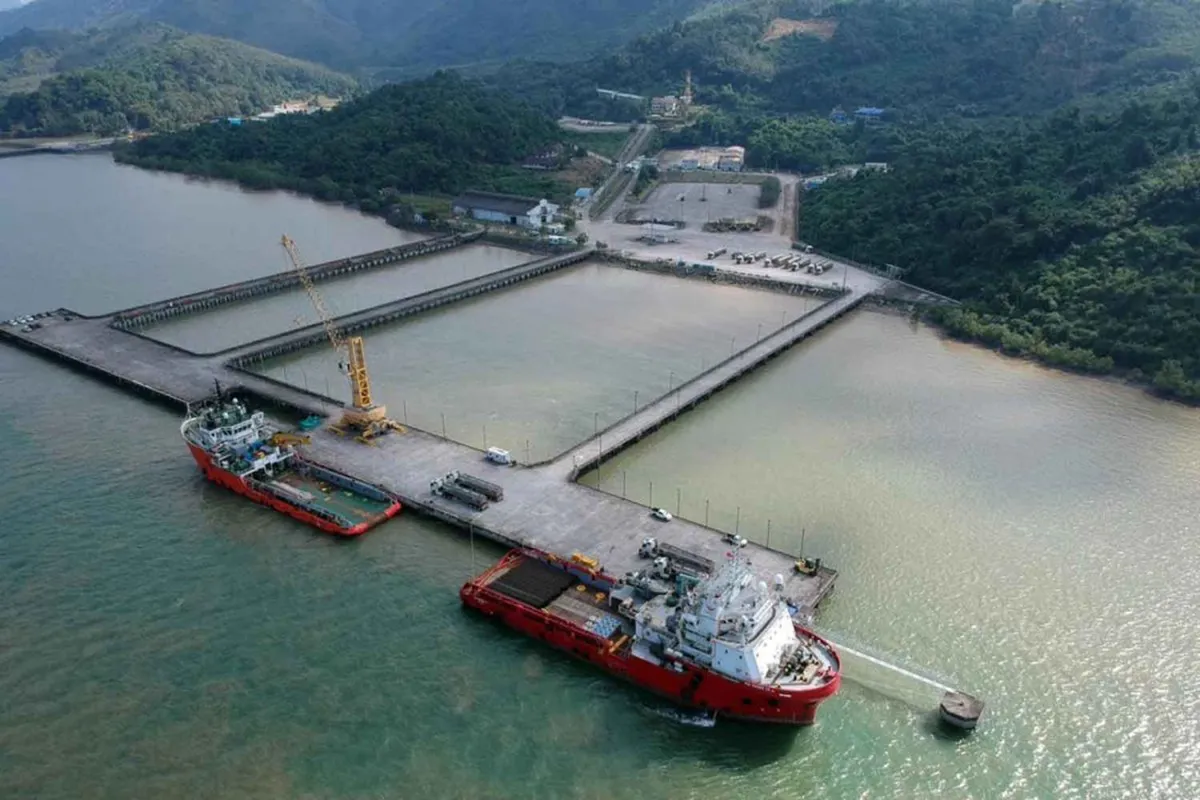
A significant infrastructure initiative, the proposed Thai Land Bridge project, is on the verge of cancellation following a comprehensive review that highlighted substantial financial, operational, and environmental risks. The committee tasked with assessing the project’s viability has concluded that its probability of success is low, recommending its termination in its current form to the Prime Minister and cabinet.
Project Review Concludes Low Probability of Success
The review, chaired by Deputy Prime Minister and Finance Minister Ekniti Nitithanprapas, was completed ahead of a 90-day deadline set by the Prime Minister. The findings indicate that the project, intended to create a vital transport corridor, faces insurmountable challenges. “The findings concluded that the project had a low probability of success due to financial, operational and environmental risks,” stated Mr. Ekniti. The committee is set to submit its report and recommendations to Prime Minister Anutin Charnvirakul for final consideration. Importantly, no financial losses have been incurred to date, as land acquisition and construction phases had not yet commenced.
Deteriorating Financial Outlook and Global Economic Headwinds
A primary concern driving the recommendation for termination is the project’s significantly weakened financial outlook. Global economic uncertainties, exacerbated by the COVID-19 pandemic, the conflict between Russia and Ukraine, and ongoing tensions in the Middle East, have cast a long shadow over the project’s economic feasibility. These external factors have led to a reassessment of the project’s potential returns.
Revised Financial Projections Reveal Stark Decline
Further details on the financial deterioration were provided by Danucha Pichayanan, secretary-general of the National Economic and Social Development Council (NESDC) and chairman of the economic and financial working group. A revised study indicated a sharp drop in the project’s financial return rate, falling from an initial projection of 8% to just 4.8%. The Net Present Value (NPV), a key metric for investment appraisal, also experienced a dramatic shift. It moved from an anticipated positive 637.7 billion baht to a negative 10.3 billion baht, signaling a substantial loss in projected value.
Reduced Container Volumes and Market Saturation
The decline in projected returns is partly attributed to an estimated 15-16% reduction in container volumes, which consequently reduced overall returns by approximately 38%. Adding to these concerns is the competitive landscape. Mr. Danucha noted that nine of the world’s ten major shipping lines have already committed to or invested in similar infrastructure projects in other regions. This existing investment saturation leaves limited opportunities to attract the significant cargo volumes necessary for the Land Bridge project to be economically viable.
Operational Complexities and Unrealistic Timelines
Beyond financial hurdles, the committee also identified significant operational complexities. The Land Bridge concept involves intricate logistics, requiring multiple transfers of cargo between ships, trucks, and rail systems. The original timeline, which estimated cargo transfers to be completed within three days, has been found to be overly optimistic. The review highlighted that this estimate did not adequately account for potential delays, inherent operational risks, and the actual costs associated with such complex logistical operations.
Environmental Concerns Pose Significant Risks
Environmental considerations presented another major obstacle. A representative from the Ministry of Natural Resources and Environment voiced concerns that the proposed route for the Land Bridge would traverse sensitive ecological areas, including forests, mountainous terrain, and vital ecosystems. Ranong province, in particular, faces potential impacts. This region is home to Thailand’s largest mangrove forest, a designated biosphere reserve, and a wetland of international importance. The project could adversely affect marine ecosystems, endanger rare species, disrupt local fisheries, and impact coastal communities.
Inadequate Environmental Impact Assessments
Further scrutiny revealed deficiencies in the environmental impact assessments (EIAs) conducted for the project. Seven separate reports, prepared by three different agencies, were found to lack an integrated approach to evaluating the cumulative environmental impacts. Moreover, the existing strategic environmental assessment from 2016 did not encompass the current proposed route, leaving critical environmental aspects unaddressed in the context of the revised plans.
Future Transport Development in the South
Despite the decision to halt the Land Bridge project in its current form, the government remains committed to enhancing transport infrastructure in the southern region. Mr. Ekniti indicated that efforts would continue to develop transport links along the Andaman coast. This strategic focus is driven by the significant portion of southern exports, over 34%, that currently transit through neighboring countries. Furthermore, anticipated growth in trade with India, the Middle East, and Europe underscores the need for robust transportation networks.
The proposed Land Bridge project, initially envisioned as a transformative 1 trillion baht initiative featuring deep-sea ports, dual-track railways, motorways, and industrial estates, aimed to connect Ranong on the Andaman Sea with Chumphon on the Gulf of Thailand. Its objective was to offer an alternative maritime route, bypassing the Strait of Malacca. However, the culmination of financial uncertainties, operational challenges, and environmental risks has led to its likely discontinuation.
