

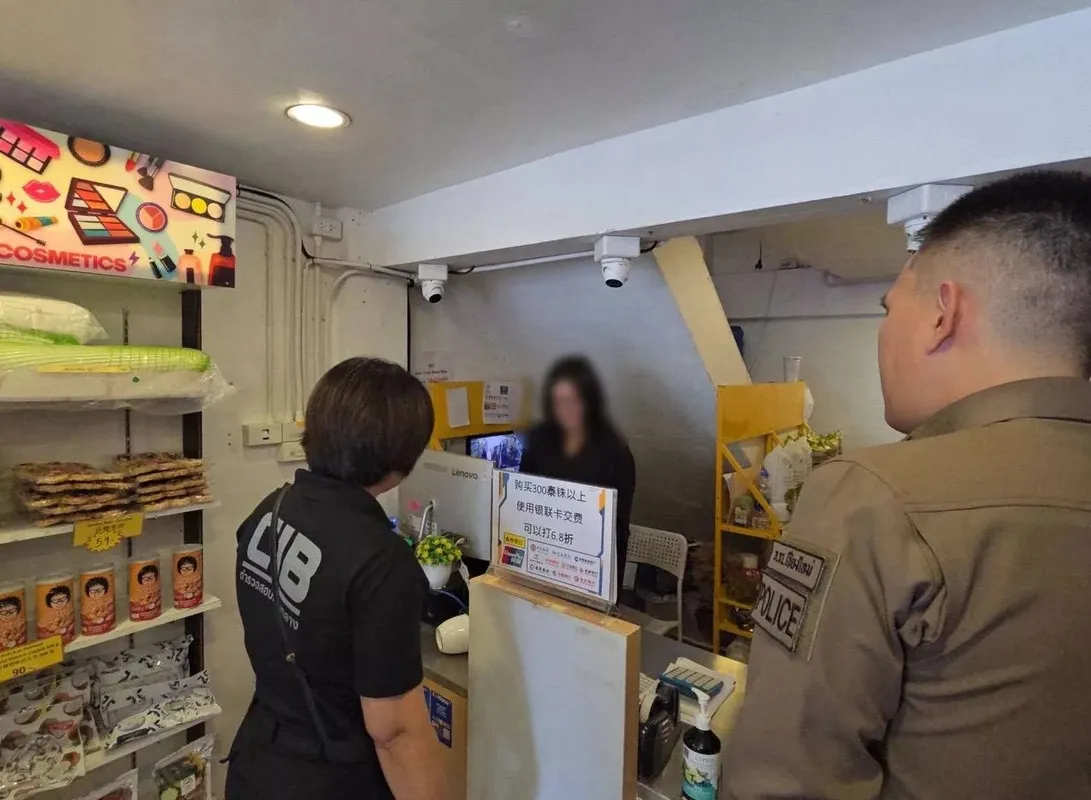
Authorities have dismantled a sophisticated credit card skimming operation in Thailand that targeted approximately 1,200 Chinese tourists, resulting in an estimated loss of 30 million baht (around 6 million yuan). The crackdown followed an intervention by the Chinese embassy, which alerted Thai law enforcement to the criminal activities. The network, believed to be operating across China, Thailand, and the United States, used stolen credit card data to create counterfeit cards for illicit purchases and cash withdrawals.
Criminal Network Uncovered
The investigation culminated in the arrest of a 42-year-old Chinese national, identified as Chao Ji, along with three Thai accomplices: Salinee, 33; Jittra, 32; and Theeraphat, 32. These individuals were reportedly linked to three dried fruit and souvenir shops located in Bangkok and Chiang Mai. The shops, named CM Yummy Fruit Dried Shop and Fruit Dried Shop in Chiang Mai, and Yaowarat Fruit Dry Shop in Bangkok, served as fronts for the fraudulent activities.
The scheme involved capturing credit card information from unsuspecting tourists as they made purchases. According to police reports, the stolen data was then transmitted to associates in the United States via the messaging application LINE. Along with the card details, PINs were also covertly recorded, likely through the extensive network of surveillance cameras discovered at the premises, which were strategically positioned to capture customers entering their codes.
Sophisticated Skimming Methods
During searches conducted on July 22nd, law enforcement officials raided the three shops and the residences of the suspects. The operation yielded a significant haul of evidence, including 11 computer keyboards fitted with card skimming devices, three electronic data capture (EDC) machines, five computers, and 18 surveillance cameras. These tools were instrumental in the systematic theft of cardholder information.
Interviews with shop employees revealed the modus operandi employed to dupe customers. Staff were instructed to process customer UnionPay cards twice. The first transaction would pass through the skimmer-equipped keyboard, capturing the sensitive data. The second transaction would be processed normally using an EDC reader. When questioned by customers about the unusual double processing, employees were trained to explain it as a requirement for applying a 32% discount, a tactic designed to allay suspicion and encourage compliance.
International Scope of the Fraud
The criminal enterprise demonstrated a clear international reach. The data stolen in Thailand was reportedly sent to the United States, where it was allegedly used to manufacture counterfeit credit cards. These fraudulent cards were then utilized to acquire luxury goods and withdraw cash, with the proceeds being distributed among the members of the criminal syndicate. The involvement of multiple countries highlights the complex nature of modern cybercrime and the challenges faced by law enforcement in combating transnational criminal organizations.
Targeting Tourists
The choice of victims—Chinese tourists making purchases in popular souvenir shops—was strategic. These establishments often cater to a high volume of international visitors, providing ample opportunity for data capture. The use of UnionPay cards, widely used by Chinese travelers, further narrowed the focus of the operation. The estimated 1,200 affected tourists represent a significant number of individuals whose financial security was compromised by this elaborate scheme.
Legal Action and Future Implications
The proactive engagement of the Chinese embassy was crucial in initiating the investigation and bringing the perpetrators to justice. This case underscores the importance of international cooperation in combating financial fraud and protecting citizens abroad. Authorities are continuing their investigation to identify any further accomplices and to fully understand the extent of the network’s operations. The recovery of assets and the prosecution of those involved are ongoing priorities.
This incident serves as a stark reminder for travelers to remain vigilant about their credit card security, particularly when making purchases in tourist-heavy areas. While technology offers convenience, it also presents opportunities for criminals. Awareness of potential skimming devices and unusual transaction procedures can help travelers protect themselves from becoming victims of such sophisticated fraud schemes.
