

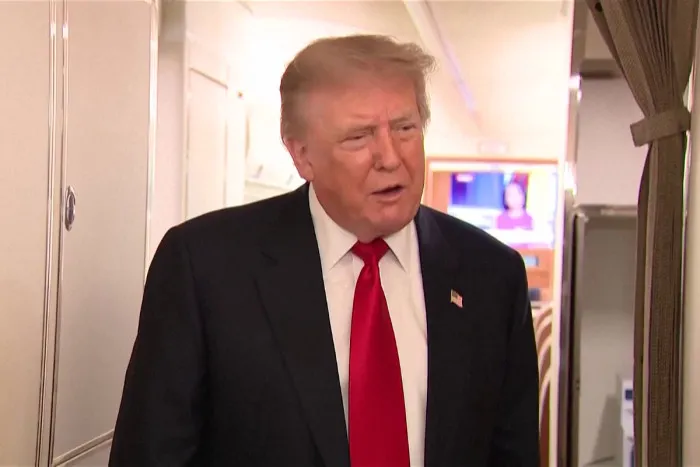
President Donald Trump announced on Monday, July 27th, that the United States is currently engaged in what he described as “good talks” with Iran. The President made these remarks to reporters, indicating a potential shift or continuation of diplomatic engagement between the two nations.
Context of US-Iran Relations
The relationship between the United States and Iran has been complex and often fraught with tension for decades. Following the 1979 Iranian Revolution, diplomatic ties were severed, and relations have since been characterized by periods of hostility, sanctions, and occasional, often indirect, communication. Key points of contention have included Iran’s nuclear program, its ballistic missile development, its regional influence, and support for various militant groups in the Middle East.
The Iran Nuclear Deal (JCPOA)
A significant development in recent US-Iran relations was the 2015 Joint Comprehensive Plan of Action (JCPOA), commonly known as the Iran nuclear deal. Negotiated by the Obama administration, along with other world powers, the deal aimed to limit Iran’s nuclear activities in exchange for sanctions relief. However, President Trump withdrew the United States from the JCPOA in May 2018, arguing that it did not go far enough in curbing Iran’s nuclear ambitions and that it failed to address other destabilizing activities. This withdrawal led to the reimposition of stringent US sanctions on Iran, significantly impacting its economy.
Post-JCPOA Dynamics
Since the US withdrawal from the JCPOA, tensions have escalated. The period has seen various incidents, including attacks on oil tankers in the Persian Gulf, the downing of a US drone, and the targeted killing of Iranian General Qasem Soleimani by a US drone strike in January 2020. Iran, in response to the sanctions and the killing of Soleimani, has gradually reduced its compliance with certain provisions of the JCPOA, further deepening the rift.
Significance of “Good Talks”
The President’s statement about “good talks” suggests a potential avenue for de-escalation or a renewed effort to address outstanding issues. The nature of these talks, their scope, and the specific issues being discussed remain unspecified in the initial announcement. However, any form of direct or indirect dialogue between Washington and Tehran is noteworthy given the history of animosity and the lack of formal diplomatic relations.
Potential Aims of Dialogue
The objectives of such discussions could be multifaceted. They might include:
- Exploring possibilities for re-engaging with the JCPOA or negotiating a new framework for Iran’s nuclear program.
- Addressing regional security concerns and de-escalating tensions in areas like the Persian Gulf and Iraq.
- Discussing the impact of sanctions and potential pathways for their modification or removal.
- Facilitating the release of detained dual-nationals or individuals held in either country.
Challenges and Skepticism
Despite the President’s positive framing, observers note that significant obstacles remain. Iran has consistently demanded the lifting of all sanctions before returning to full compliance with the JCPOA. The US, under the Trump administration, has maintained a policy of “maximum pressure,” seeking broader concessions from Tehran beyond its nuclear activities. The lack of trust between the two governments, coupled with differing strategic interests and the complex geopolitical landscape of the Middle East, presents formidable challenges to any diplomatic breakthrough.
Broader Geopolitical Implications
The announcement of “good talks” also carries implications for regional and global dynamics. Allies and adversaries alike will be closely watching any developments. European powers, who remain signatories to the JCPOA, have consistently advocated for diplomacy and a return to the agreement. Meanwhile, regional players like Saudi Arabia and Israel have often expressed concerns about Iran’s influence and nuclear ambitions, potentially reacting to any perceived shifts in US policy.
Future Outlook
The coming days and weeks will likely reveal more about the substance and direction of these discussions. Whether “good talks” will lead to concrete policy changes or a sustained period of diplomatic engagement remains to be seen. The effectiveness of these dialogues will hinge on the willingness of both sides to compromise and address the core issues that have fueled decades of animosity.
President Trump’s statement, while brief, opens a new chapter in the ongoing narrative of US-Iran relations, one that will be closely monitored by international observers and policymakers.
