

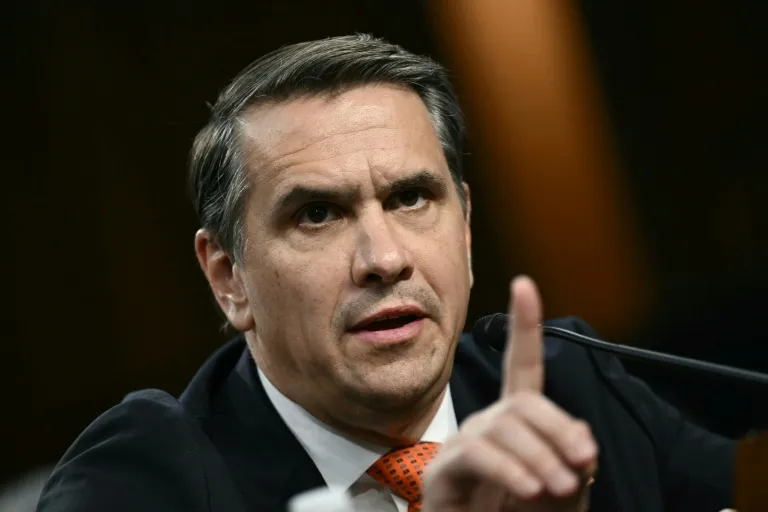
The U.S. Senate has confirmed a former private attorney for President Trump, Matthew Blanche, to serve as the nation’s Attorney General. Blanche, who had been acting in the top law enforcement role, secured confirmation by a narrow margin of 50-49. The vote highlighted the political divisions surrounding the nomination, with Republican Senators Susan Collins and Lisa Murkowski joining all Democrats in voting against him.
A Contentious Confirmation Process
The confirmation of Blanche, who previously represented Trump in several high-profile criminal cases, was a closely watched event. Republicans hold a slim majority in the Senate, making the vote a testament to the intense political maneuvering required. Democrats voiced significant opposition, arguing that Blanche’s prior role as Trump’s personal lawyer compromises the independence of the Department of Justice.
Senator Dick Durbin, a leading Democrat on the Senate Judiciary Committee, stated that the Attorney General should serve as “the people’s lawyer.” He expressed concern that Blanche might continue to treat the Justice Department as a legal firm representing only the president’s interests. This perspective underscores the core of the Democratic objection: the potential for the department to be used as a political tool rather than an impartial enforcer of the law.
Addressing Key Concerns
A significant hurdle in securing enough votes was the White House’s proposal for a $1.8 billion fund designated for victims of what President Trump termed “politicized prosecutions.” This fund was widely believed to include individuals involved in the January 6, 2021, Capitol riot. Another contentious issue was a proposal that would have granted President Trump immunity from future tax audits.
To overcome internal Republican opposition and secure the narrow confirmation, Blanche issued a written order over the weekend. This order effectively scrapped the proposed “anti-weaponization fund.” Additionally, the agreement regarding audit immunity was modified to apply only retroactively to past tax years, rather than extending to future filings. This concession was crucial in persuading wavering Republican senators.
Background and Previous Roles
Blanche stepped into the role of acting Attorney General in April, following the dismissal of Pam Bondi, another Trump loyalist. Since taking on the interim position, Blanche has been closely associated with actions that Democrats have characterized as a “retribution” campaign against President Trump’s political adversaries.
His tenure has also drawn criticism from victims associated with the Jeffrey Epstein case, particularly concerning the handling and release of investigative files related to the convicted sex offender, who was a former associate of President Trump. These criticisms add another layer of complexity to the scrutiny Blanche has faced.
Legal Representation for Trump
Before joining the Department of Justice, Blanche had a notable career representing President Trump. His legal work included defending Trump in the New York trial concerning alleged “hush money” payments made to adult film star Stormy Daniels. He was also part of the legal defense team for Trump in two federal cases brought forth by Special Counsel Jack Smith. These cases involved allegations of mishandling classified documents after leaving the White House and efforts to overturn the results of the 2020 presidential election. It is worth noting that both of these cases were dropped following President Trump’s victory in the 2024 election.
In his statement following the confirmation, Blanche expressed his deep honor regarding the trust placed in him by President Trump to lead the Department of Justice. He also extended gratitude to the Senate for their diligence in completing the confirmation process and acknowledged the dedicated public servants within the Department of Justice for their ongoing work to uphold the law and ensure national security.
Conclusion
The confirmation of Matthew Blanche as Attorney General marks a significant moment, reflecting the polarized political landscape and the unique dynamics of the Trump administration. His background as a personal attorney for the President and the contentious nature of his confirmation process underscore the ongoing debates about the independence and integrity of the Department of Justice. As he assumes the permanent role, Blanche faces the challenge of navigating these complexities while leading the nation’s top law enforcement agency.
