

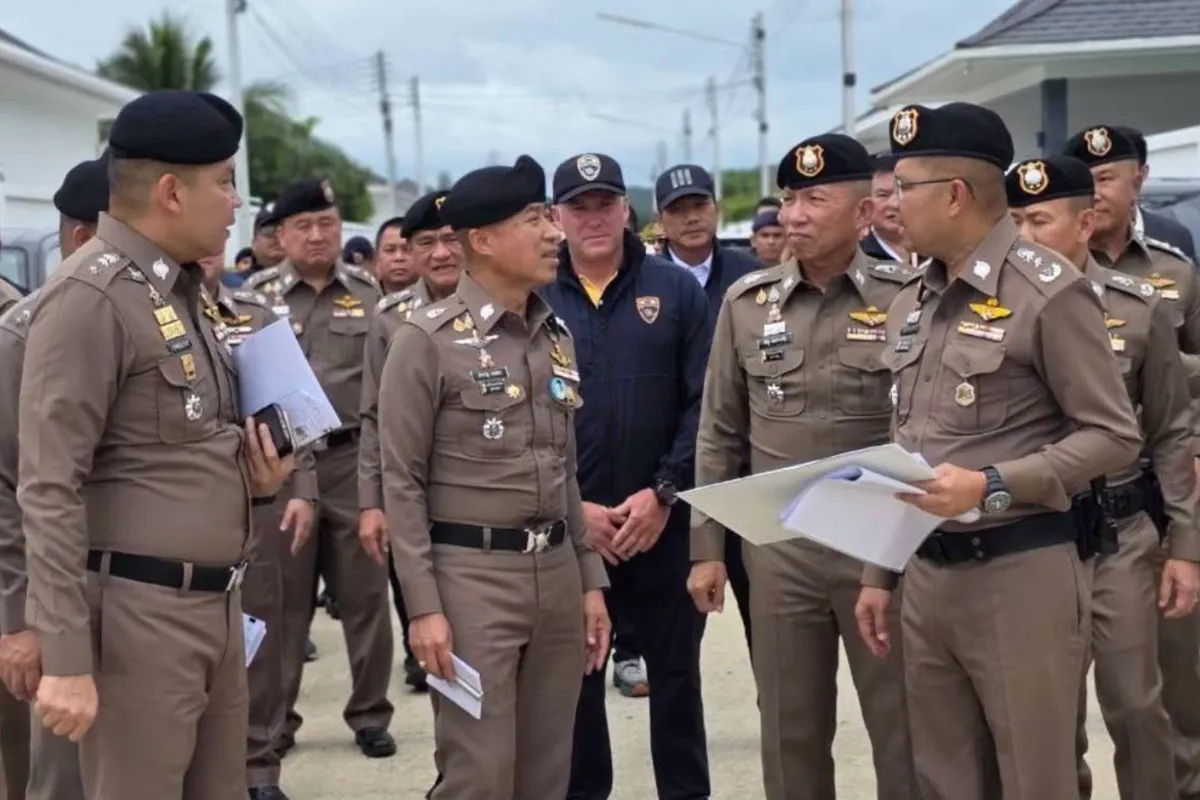
Authorities have apprehended 13 foreign nationals in Hua Hin as part of a nationwide operation targeting illegal property nominee schemes. The arrests, part of the sixth phase of a broader crackdown led by Deputy National Police Chief Pol Gen Samran Nualma, took place in a housing and pool-villa complex located in Tambon Thap Tai, Hua Hin district, Prachuap Khiri Khan province. The properties involved in this operation are reportedly valued between 10 million and 20 million baht each.
Nationwide Nominee Scheme Crackdown
The operation on Monday involved over 200 officers who executed 45 court arrest warrants for foreign individuals and issued summonses for 39 Thai nationals implicated in the scheme. Investigators searched 15 properties, uncovering six companies where Thai shareholders allegedly held land on behalf of foreign owners. This latest action underscores a sustained effort by Thai authorities to dismantle networks that facilitate foreign ownership of land through Thai nominees, which is restricted by law.
Details of the Hua Hin Operation
The 13 foreigners arrested comprised individuals from various nationalities, including four Chinese, three British, one Italian, one French, one Dutch, one Austrian, one Filipino, and one American citizen. According to investigators, the arrested individuals claimed they sought to own real estate in Thailand and had been advised by legal and accounting firms to establish property-holding companies. They reportedly believed their method of ownership was legitimate.
However, Pol Gen Samran stated that the companies in question were not engaged in any actual business operations. This assertion was corroborated by statements from the named Thai shareholders, who indicated they were acting solely as nominees for the foreign owners. These Thai nominees reported having no financial investment in the shares, no involvement in the companies’ management, and no access to financial records or proof of share ownership.
Investigative Measures and Previous Actions
During the raids, police seized corporate records and electronic devices. This evidence is crucial for tracing the financial networks involved and expanding the ongoing investigation into the nominee structure. The goal is to identify all parties involved, from the foreign beneficiaries to the Thai nominees and the professional firms that may have facilitated these arrangements.
The broader crackdown on property nominee schemes commenced earlier this year and has already extended to several key tourist destinations across Thailand. Previous phases of the operation have targeted areas such as Surat Thani, Phangnga, Phuket, Krabi, Chon Buri, and Chiang Mai. These efforts reflect a comprehensive approach to enforcing property ownership laws.
Scope and Impact of the Crackdown
To date, authorities have inspected a significant number of land plots and buildings, covering more than 160 rai (approximately 63 acres) with an estimated total value of 2.5 billion baht. The legal process has seen courts approve 133 arrest warrants related to these cases. Furthermore, 20 cases have already proceeded to conviction, demonstrating the legal system’s engagement with the issue and the potential consequences for those found guilty of violating property laws.
The Thai legal framework generally prohibits foreigners from directly owning land, although specific exceptions exist for certain types of investment under strict conditions. Nominee arrangements, where Thai citizens hold property on behalf of foreigners, are considered illegal and are subject to severe penalties, including imprisonment and asset forfeiture. This ongoing crackdown aims to ensure compliance with these regulations and maintain the integrity of the Thai property market.
Understanding Property Nominee Schemes
Property nominee schemes are often set up to circumvent foreign ownership restrictions. Typically, a Thai national is appointed as a shareholder in a company that owns land, with the understanding that they are acting on behalf of a foreign individual or entity. While some may argue these arrangements are a necessary workaround for foreign investors, authorities view them as a violation of the law designed to protect national interests and prevent undue foreign control over land resources.
The investigation into these schemes involves meticulous examination of company registration documents, shareholding structures, and financial transactions. Authorities are working to identify instances where Thai individuals are used merely as figureheads without genuine investment or control, and where the ultimate beneficiaries are foreign nationals seeking to own property illicitly. The involvement of legal and accounting firms in advising on such structures is also a key focus, as it raises questions about professional responsibility and adherence to legal and ethical standards.
Conclusion: Upholding Property Law
The recent arrests in Hua Hin are a clear indication of the authorities’ commitment to enforcing Thailand’s property ownership laws. The nationwide nominee crackdown aims to ensure transparency and legality in the real estate sector, protecting both the integrity of the market and national interests. Foreign nationals seeking to invest in Thai property are strongly advised to consult with reputable legal counsel to ensure all transactions comply strictly with Thai law, avoiding potentially severe legal repercussions.
