

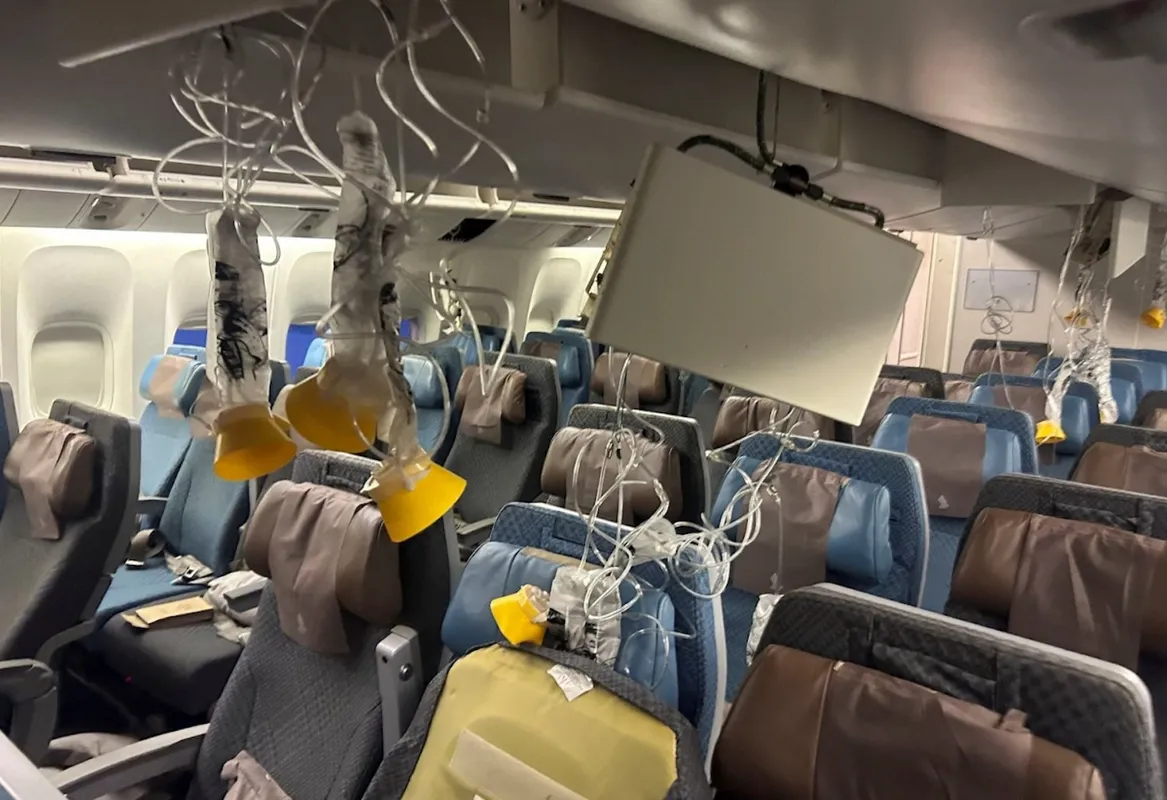
A widow whose husband died and who suffered severe injuries during a turbulent flight is suing the airline. Linda Kitchen, 74, from Thornbury, near Bristol, is seeking damages from the airline after her husband, Geoff, 73, was fatally injured when their flight from London Heathrow experienced a sudden and severe drop over Myanmar on May 21, 2024. The incident caused the aircraft to lose approximately 6,000 feet in altitude.
Legal Proceedings Initiated After Devastating Flight Incident
Lawyers representing Ms. Kitchen have initiated legal proceedings at the High Court, aiming to secure compensation that will aid her in accessing specialized care for her broken back. The lawsuit highlights the tragic consequences of the severe turbulence that impacted the flight, which was en route to Singapore, Indonesia, and Australia for a six-week holiday for the couple.
Recounting the harrowing experience, Ms. Kitchen described how the turbulence, which had been present earlier over Europe and the sea, intensified significantly about 10 hours into the journey. “It was so severe; it felt like the aircraft was dropping,” she stated. The sudden descent caused personal items, including her Kindle and her husband’s phone, to fall to the floor, leading her to fear the plane was going to crash.
During the violent descent, Ms. Kitchen reported that her husband fell on top of her, pinning her against the armrest. Other passengers and crew members eventually moved him, and a doctor on board attempted to administer CPR. Ms. Kitchen herself required hospitalization, while her husband remained on the aircraft. She was informed of his death two days later, reportedly due to a heart attack following the plane’s sudden loss of altitude.
Extent of Injuries and Airline’s Response
The severe turbulence affected a significant number of passengers and crew. In total, 79 individuals sustained injuries, with some requiring hospitalization and emergency medical treatment in Bangkok. The injuries ranged from minor to serious, including spinal fractures and brain trauma.
Anthe Korelidou, an aviation lawyer specializing in such cases and representing Ms. Kitchen, emphasized the gravity of the situation. “That Geoff was fatally injured and Linda suffered severe injuries vividly highlights the severity of what happened,” Korelidou commented. She added that even though it has been over two years since Geoff’s death, Linda and her family still have many unanswered questions regarding the incident and whether preventative measures could have been taken.
In the aftermath of the incident, the airline offered financial compensation to affected passengers. A sum of US$10,000 was offered to those with minor injuries, many of whom accepted the settlement. For passengers with severe injuries, an initial offer of $25,000 was made to cover immediate medical expenses, with the understanding that a larger settlement would be negotiated later.
Passengers Pursuing Legal Action
However, a number of passengers who sustained life-altering injuries, such as severe spinal fractures and significant brain trauma, have opted not to accept the voluntary offers. Instead, they have chosen to pursue legal action. Reports indicate that at least seven such cases are currently pending in the United Kingdom, reflecting a broader dissatisfaction with the airline’s initial response and compensation offers.
The lawsuit filed by Linda Kitchen is part of this larger group of legal challenges, underscoring the profound impact the incident has had on those involved and their ongoing quest for justice and adequate support. The legal battle aims not only to provide Ms. Kitchen with the necessary resources for her ongoing recovery but also to hold the airline accountable for the events of that day.
Understanding Turbulence and Aviation Safety
Turbulence, while a common occurrence in aviation, can range from minor jolts to severe events that pose significant risks. It is primarily caused by atmospheric disturbances, such as changes in wind speed and direction, thunderstorms, or jet streams. Aircraft are designed to withstand forces far exceeding typical turbulence, but extreme events can still lead to passenger and crew injuries, as tragically demonstrated in this case.
Aviation authorities and airlines continuously work to enhance safety protocols and improve forecasting of turbulent conditions. This includes advancements in weather radar technology, real-time communication between aircraft and air traffic control, and pilot training to manage such emergencies effectively. The outcome of these legal proceedings may shed further light on the specific circumstances of this incident and contribute to ongoing efforts to prevent future occurrences.
Conclusion: Seeking Resolution and Accountability
The lawsuit brought forth by Linda Kitchen represents a critical step in seeking accountability and necessary support following a devastating event. The case underscores the severe physical and emotional toll that extreme turbulence can inflict, leaving victims and their families with lasting consequences. As legal proceedings continue, the focus remains on ensuring that those affected receive appropriate compensation and that lessons are learned to enhance aviation safety for all passengers.
