

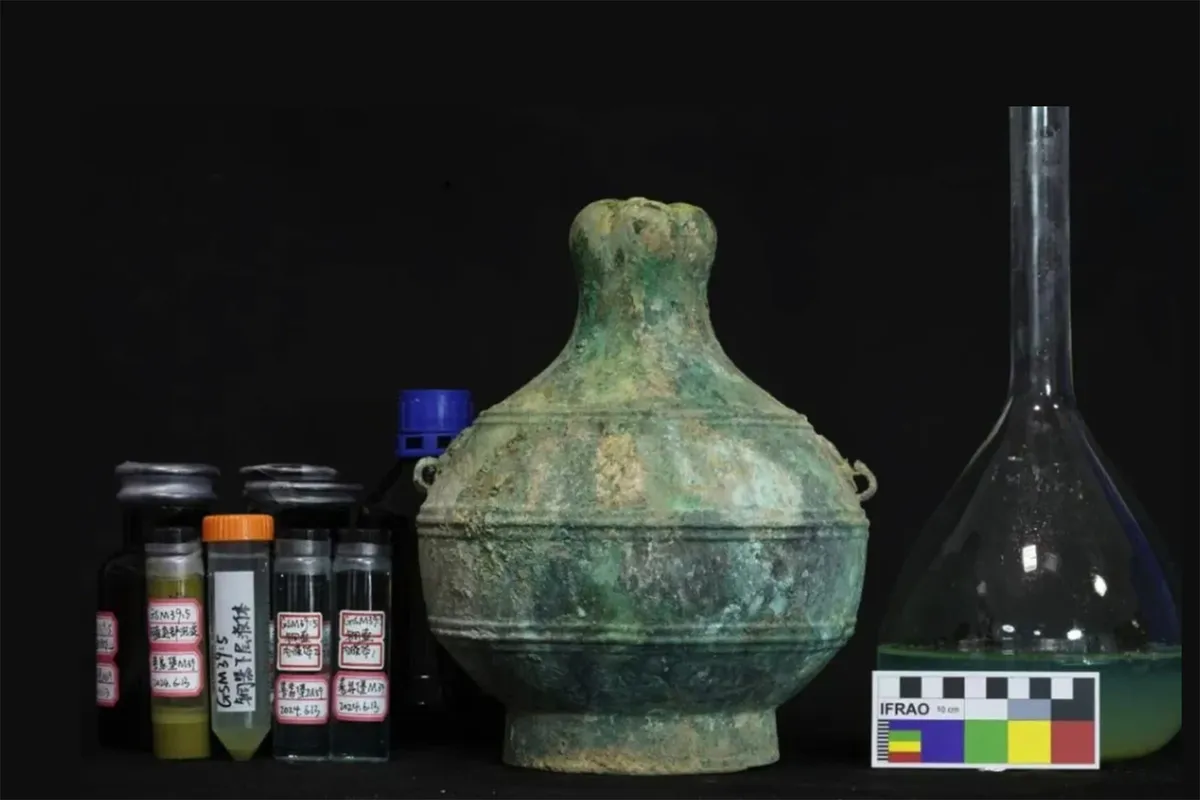
An astonishing archaeological discovery has shed new light on ancient Chinese life and brewing practices. A remarkably well-preserved bronze wine vessel, dating back approximately 2,300 years, was unearthed near a ruin of the Qin Great Wall in Gansu province. This finding offers a tangible link to the Warring States period, a time of significant development in Chinese history.
Ancient Qin Great Wall: A Historical Context
The Qin Great Wall, constructed during the Warring States period (325-251 BC), stands as one of China’s earliest and most significant defensive structures. This ancient fortification stretches over 170 kilometers and is dotted with numerous forts, castles, and barrier outposts. During this era, soldiers and their families resided within these fortified locations, creating self-sufficient communities along the volatile borders. The historical significance of this region was even noted by former Chinese leader Mao Zedong, who penned a poem about the Liupan Mountains near Guyuan, Gansu, during the Red Army’s Long March in October 1935, referencing the Great Wall.
The Discovery of the Ancient Wine Vessel
The significant archaeological find occurred at the Shanjiabao cemetery, situated just two kilometers from a section of the Warring States Qin Great Wall. Excavations at the cemetery commenced in March 2024, conducted by the Ningxia Institute of Archaeology. Among the discoveries, a bronze wine vessel from the Warring States era was found to be in an exceptional state of preservation. Crucially, the vessel remained perfectly sealed, retaining its contents and a remarkable sheen after millennia.
Insights into Qin Brewing Technology
The study of this ancient wine vessel, published in the June issue of the Journal of Archaeological Science, provides invaluable insights into the daily lives and technological capabilities of the Qin people. Chen Ruru, a PhD candidate at Northwest University and the study’s lead author, highlighted the importance of the find. “This study provides a clear understanding of the cereals utilisation and brewing techniques of the Qin people, contributing to the reconstruction of ancient Chinese brewing technology and also refining the development process,” stated Chen Ruru.
The analysis of the vessel’s contents and composition is expected to reveal details about the types of cereals used in fermentation and the specific methods employed in winemaking. This information is crucial for understanding the evolution of brewing techniques in ancient China, a practice that has a long and rich history.
Broader Implications for Historical Reconstruction
The discovery at the Shanjiabao cemetery is more than just the unearthing of an old artifact; it’s a window into a bygone era. The Qin Great Wall itself represents a period of unification and defense, and the artifacts found nearby offer context to the lives of those who lived and worked along its formidable length.
The presence of a sealed wine vessel suggests that rituals, social gatherings, or provisions for the afterlife were important aspects of the culture. The quality of the bronze and the preservation of the seal indicate a high level of craftsmanship and attention to detail among the Qin people.
Understanding Ancient Diets and Economy
The study of the cereals used in the wine can also illuminate ancient agricultural practices and trade networks. Different grains might have been cultivated in specific regions, and their use in brewing could indicate local availability or preferred ingredients. This archaeological evidence helps scholars piece together a more comprehensive picture of the ancient Chinese economy and the resources available to its people.
Preservation and Future Research
The excellent condition of the wine vessel underscores the importance of careful excavation and preservation techniques in archaeology. The ongoing analysis promises to yield further details about Qin society, their technological advancements, and their cultural practices. This discovery not only enriches our understanding of Chinese history but also contributes to the global study of ancient winemaking and beverage production.
Conclusion
The unearthing of this 2,300-year-old wine vessel near the Qin Great Wall is a significant archaeological event. It offers concrete evidence of sophisticated brewing techniques and provides a deeper understanding of the Warring States period in China. As research continues, this ancient artifact is poised to reveal even more about the people who lived and defended the Great Wall millennia ago, solidifying its place as a vital piece of historical evidence.
