

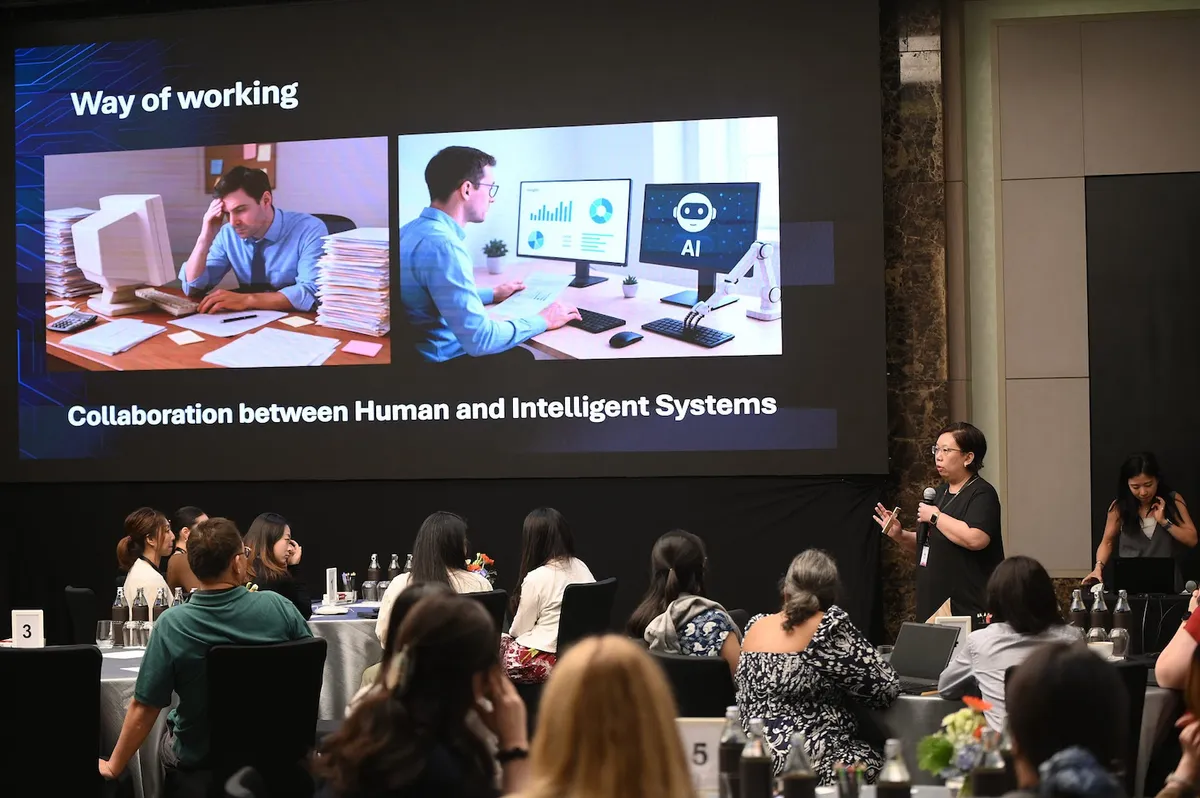
Organizations aiming to integrate Artificial Intelligence (AI) effectively are encountering a common challenge: training initiatives, while well-attended and positively reviewed, often fail to translate into lasting behavioral change. Despite high completion rates and positive feedback, employees frequently revert to pre-training methods, leaving AI tools underutilized. This phenomenon highlights a critical insight: AI capability is not solely a product of formal instruction; it requires a holistic approach encompassing structured learning, practical application, leadership reinforcement, and systemic incentives.
The Limits of Standalone AI Training
Many companies invest in AI training, observing high attendance and satisfaction. However, a significant gap often emerges between the knowledge gained and its application in daily work. Certificates are issued, and icons appear on desktops, but the fundamental ways of working remain unchanged. This disconnect stems from the misconception that training alone is sufficient to build AI fluency. True capability development is a multifaceted process that requires more than just educational modules.
Key Pillars of AI Capability Building
Developing robust AI skills within an organization necessitates a combination of interconnected elements:
- Structured Learning: This includes formal courses, workshops on effective prompting techniques, and guided walkthroughs of AI tools. It provides the foundational knowledge and understanding of AI’s potential.
- Real-World Practice: Crucially, learning must extend beyond theoretical exercises. Employees need opportunities to apply AI tools to their actual, current work—whether it’s drafting a real proposal, analyzing an ongoing report, or solving an immediate customer problem. Practicing on fictional data or sandbox environments does not adequately prepare individuals for the complexities and pressures of daily operations.
- Visible Leadership Reinforcement: Leaders play a pivotal role. Their engagement must go beyond approving training budgets. They need to actively use AI tools themselves, demonstrating their utility and thought processes openly with their teams. This visible adoption signals the importance of AI and encourages emulation.
- Systemic Integration and Incentives: Organizational systems, including performance reviews, promotion criteria, and team goals, must be adapted to recognize and reward the adoption of AI. Simply achieving the same outcomes using old methods is insufficient; performance metrics should acknowledge how AI is leveraged to enhance efficiency, innovation, or quality.
The Consequences of Missing Elements
The absence of any single pillar can significantly impede progress. For instance, if employees receive AI training but return to a work environment that implicitly or explicitly rewards traditional methods, the impact of the training will be minimal. Imagine an employee, energized by a recent AI workshop, attempting a new, AI-assisted approach only to be discouraged by a manager prioritizing speed and established procedures. Such experiences quickly teach individuals that the training was merely a superficial exercise, not a genuine shift in operational expectations.
Similarly, when leaders champion AI verbally but fail to demonstrate its use in practice, employee adoption falters. The discrepancy between stated priorities and observed actions is a powerful signal. If teams do not see their leaders engaging with AI tools, they are less likely to prioritize it themselves. Furthermore, without the chance to practice on live projects, AI skills remain theoretical. Competencies honed only in controlled training settings, detached from real deadlines and consequences, tend to diminish rapidly.
Embedding AI into the Organizational Fabric
The most successful organizations do not treat AI learning as an isolated event. Instead, they integrate it seamlessly into their operational workflows and performance management systems. This involves:
- Connecting AI to Business Problems: AI initiatives should be directly linked to solving tangible business challenges rather than focusing on generic use cases. For example, a workshop might focus on using AI for the current quarter’s pipeline review, making the learning immediately relevant.
- Accountability for Leadership Modeling: Senior leaders must be held accountable for demonstrating AI usage, not just for mandating it. Making AI adoption a visible and expected leadership behavior is crucial for driving widespread acceptance.
- Creating Safe Practice Environments: Organizations should foster an environment where employees feel safe experimenting with AI on live work. Permission to make initial mistakes without negative repercussions is essential for skill development.
- Redefining Performance Evaluation: Judgment regarding the appropriate and effective use of AI should become an explicit component of performance evaluations, defining what constitutes “good” performance in the modern workplace.
Distinguishing Effective from Ineffective Investment
Consider two organizations investing identically in AI training. In one, the focus is on administrative completion: courses are bought, attendance is logged, and satisfaction surveys are collected. Ninety days later, no one scrutinizes how work processes have actually changed. In the second organization, the training budget is only one part of a larger investment. This organization prioritizes redesigning workflows to incorporate AI, coaches managers to reinforce AI usage in regular check-ins, and modifies performance reviews to reward new AI-driven behaviors.
By the end of the year, both organizations might report similar training completion rates. However, only the second organization will have tangible, meaningful business results to demonstrate. This distinction underscores that AI capability is not a one-time training event but a comprehensive leadership system.
AI as a Sustainable Competitive Advantage
When an organization’s leadership system is aligned with the practical realities of how work is performed, AI transforms from a mere technological upgrade into a lasting competitive advantage. Such an integrated approach ensures that AI’s benefits compound over time, rather than fading shortly after implementation. It becomes a foundational element of operational excellence and strategic growth.
