

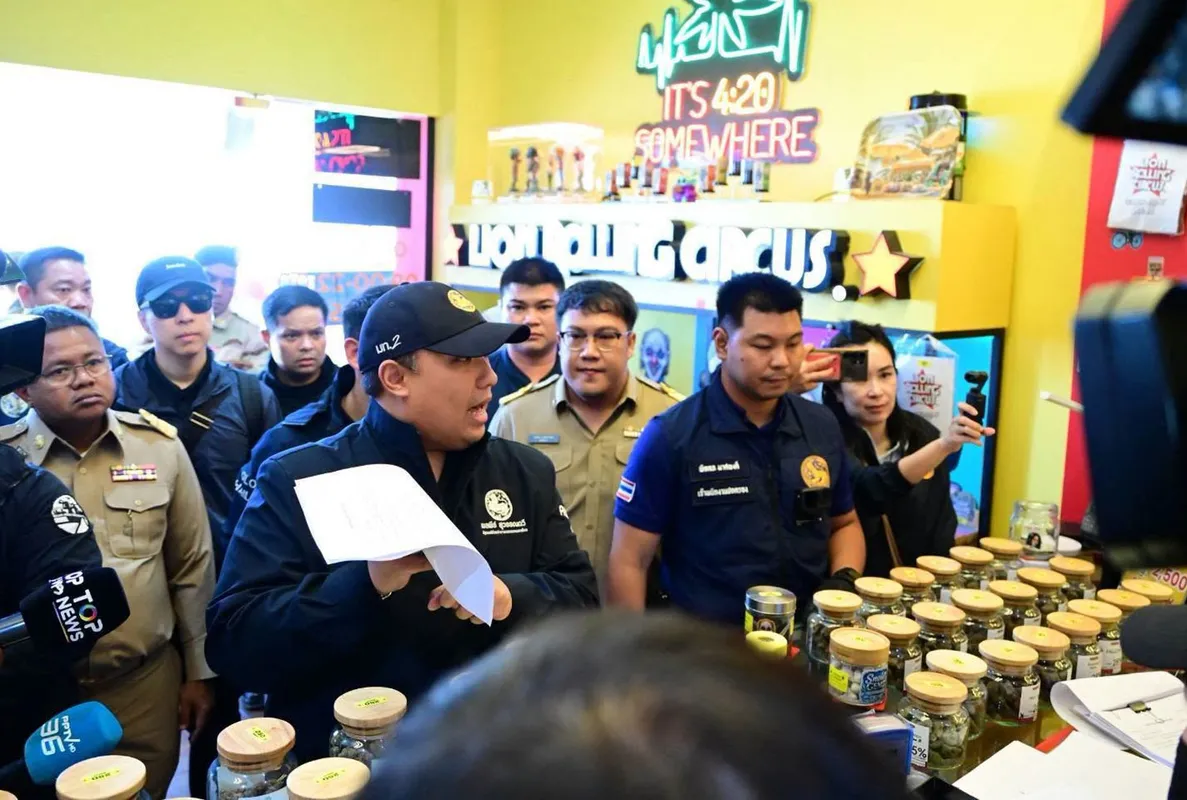
Authorities on Koh Samui have identified and filed legal complaints against 60 companies suspected of operating illegally by using Thai nationals as nominees to hold shares and assets. The operation, involving over 300 police and officials, targeted foreigners circumventing Thai business ownership laws, particularly in the lucrative tourism sector. This action is part of a broader, ongoing crackdown on such practices in popular tourist destinations across Thailand.
Extensive Investigation Targets Nominee Businesses
The recent operation, led by Deputy National Police Chief Samran Nualma, followed a comprehensive review of 12,906 registered companies on Koh Samui. Investigations revealed that 8,254 companies had foreign shareholders, and an additional 875 exhibited characteristics suggesting the use of Thai nominees. After meticulous screening, 59 companies were flagged as suspicious, linked to 37 land plots and properties valued at approximately 1.2 billion baht. This led to the filing of 60 legal complaints against 88 individuals, comprising 26 Thai nationals and 62 foreigners.
The Koh Samui Provincial Court issued 37 search warrants, resulting in the arrest of 14 individuals so far. Those apprehended include four Chinese nationals, four British nationals, and one individual each from Italy, France, the Netherlands, Austria, the Philippines, and the United States. The investigation delved into five distinct groups of suspect companies.
Investigative Findings Across Five Company Groups
- Network Linked to Israeli Nationals: One significant focus involved a network of 19 companies associated with Israeli nationals. Investigators uncovered a sophisticated corporate structure where Thai individuals ostensibly held shares on behalf of foreigners. These businesses were involved in various activities, including operating unlicensed preschool nurseries and engaging in the purchase, development, sale, and rental of luxury villas targeting foreign clientele.
- German Nationals in Real Estate: A second group comprised four companies linked to German nationals operating in the real estate and luxury villa construction sector, particularly on steep hillsides. Authorities suspect these operations may have violated legal restrictions, with concerns that construction permits were improperly obtained. The villas were allegedly sold through share transfers in nominee companies, a method used to evade land transaction taxes and corporate income tax on profits.
- Visa and Work Permit Facilitation: The third group consisted of 27 companies identified as being set up to help foreigners obtain work permits or business visas, which permit stays in Thailand for up to one year. Scrutiny of registration records revealed inconsistencies between the listed Thai shareholders and the actual investment, raising red flags about the legitimacy of these arrangements.
- Bypassing Regulations: A fourth group involved 16 companies initially established entirely by Thai nationals to circumvent documentation requirements. Foreign nationals were later incorporated into the shareholding structures, seemingly to facilitate work permits and visa status changes to business visas, despite a lack of genuine business operations.
- Cannabis Farm and Hotel Operation: The fifth group stemmed from a tip provided by the French Embassy in Thailand concerning a French national accused of defrauding French investors in a cannabis farm, resulting in losses of 21 million baht. An investigation by Surat Thani Immigration officials revealed that Thai nominees were used to hold shares for the foreign national. These companies were allegedly involved in acquiring land and constructing a luxury hotel, complete with a swimming pool and tennis court, and establishing a company to operate it. Investigators discovered a concealed lease arrangement, while the property was advertised online for high-end nightly stays. Notably, no hotel operating license was found.
Broader Crackdown on Nominee Networks
Deputy National Police Chief Samran Nualma, who is set to assume the role of national police chief on October 1, emphasized that this operation is part of a sustained effort to dismantle nominee networks operating in key tourist areas. He stated that in the previous six phases of the crackdown, authorities had examined 238 companies and 272 plots of land covering 184 rai, with a total property value of approximately 2.8 billion baht. A total of 178 arrest warrants have been issued in connection with these previous phases.
The broader objective of these coordinated actions is to ensure that foreign investment and business activities in tourist provinces, including Surat Thani, Phuket, Krabi, Phangnga, Chon Buri, and Prachuap Khiri Khan, strictly adhere to Thai legal frameworks. Authorities are committed to preventing foreign investors from exploiting Thai nationals or negatively impacting their livelihoods. Furthermore, the crackdown aims to root out corruption involving nominee networks and complicit public officials.
Conclusion
The extensive operation on Koh Samui underscores a firm stance against illegal business practices and the misuse of Thai nominee structures. By targeting these illicit operations, authorities aim to protect the integrity of the Thai economy, ensure fair competition, and uphold the rule of law, particularly in vital tourism hubs.
