

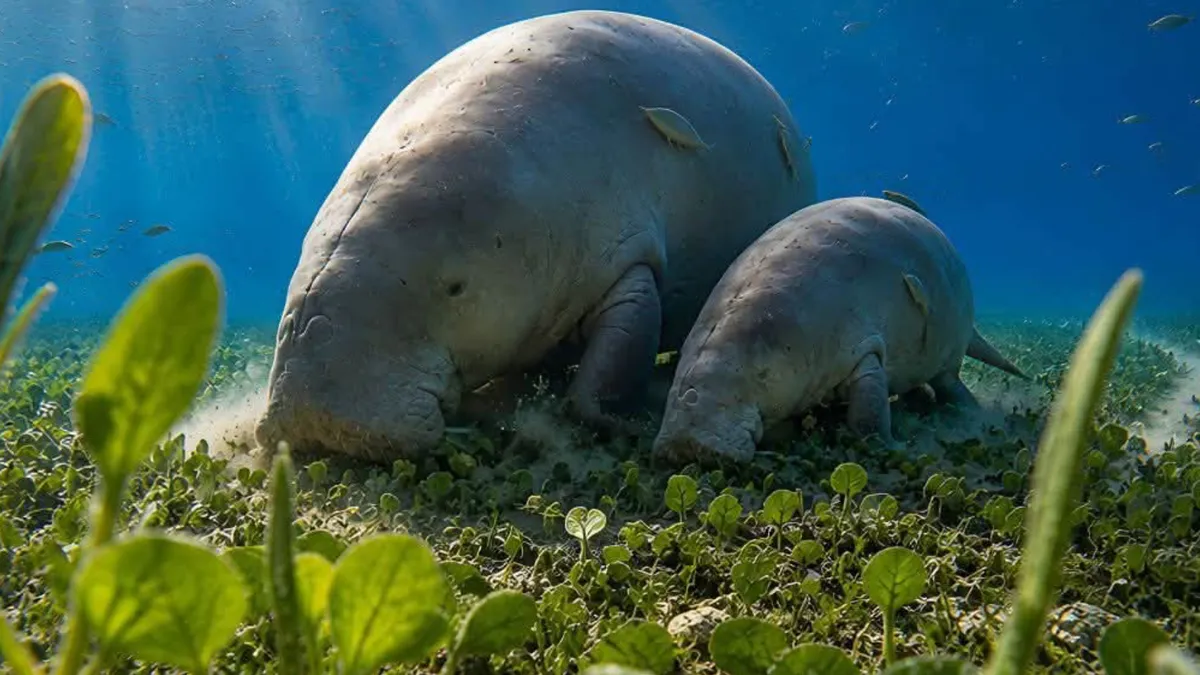
A recent artificial intelligence art contest organized by a marine conservation agency has drawn significant public criticism, primarily due to the winning entry featuring apparent biological inaccuracies and the agency’s subsequent handling of the backlash. The contest, titled “DMCR Play Day: Create Dugong Images with AI Art,” focused on the theme “Protect the Dugong Habitat” and was launched on the department’s Facebook page on August 3, with results announced shortly thereafter.
Contest Sparks Controversy
The backlash began to mount as the winning artwork, intended to depict a dugong mother and calf, was scrutinized by the public. Internet users and conservation advocates pointed out several biological inaccuracies, most notably the depiction of the dugong pair with four legs, which deviates from the actual anatomy of these marine mammals. Further inaccuracies were noted in the portrayal of seagrass and other surrounding marine life, elements crucial to the dugong’s ecosystem.
The criticism was amplified by the fact that the contest was run by a government agency directly involved in scientific research and marine conservation. Many commenters expressed dismay that an agency responsible for protecting these species would choose to reward an AI-generated image containing factual errors. This sentiment was particularly strong given that one of the stated selection criteria for the contest was that submitted works should be “realistic.”
Agency’s Response and Justification
In response to the widespread condemnation, the Department of Marine and Coastal Resources (DMCR) issued an apology, acknowledging the disappointment caused by the contest. The department explained that the use of AI art was intended to broaden participation, allowing individuals without traditional artistic skills to engage with the theme of dugong conservation. The judging criteria, they stated, focused on how well the submissions reflected the theme, along with creativity, visual appeal, and composition.
The department also highlighted that many of the submitted images featured mother-and-calf pairs, which they interpreted as symbolizing family bonds and the importance of population growth for the species. The final selection of shortlisted works was determined by public vote via Facebook “likes.” In total, the contest awarded ten prizes, with the first-place winner receiving 3,000 baht.
Notably, the DMCR chose not to feature the criticized winning image in its subsequent post commemorating National Dugong Conservation Day. This decision, while perhaps an attempt to sidestep further controversy, was also observed by many online.
Public Feedback and Conservation Goals
The department expressed gratitude to all participants for their submissions and valuable feedback. They reiterated their apology for any shortcomings in the contest’s execution, emphasizing that the overarching objective was to raise public awareness about the critical need for dugong conservation and to encourage broader community involvement in protecting their natural habitats. The department also confirmed that the comment section on their response post had been disabled.
The incident has sparked a wider conversation about the role of AI-generated art in public engagement initiatives, particularly those involving scientific accuracy and conservation messaging. While AI tools can democratize creative participation, the case underscores the importance of ensuring that such initiatives align with factual representation, especially when managed by scientific and environmental bodies.
The Importance of Dugong Conservation
Dugongs, often referred to as “sea cows,” are large, herbivorous marine mammals found in coastal waters of the Indo-Pacific. They play a vital role in maintaining the health of seagrass meadows, which are crucial ecosystems supporting a wide array of marine life. These gentle giants are vulnerable to various threats, including habitat degradation, pollution, accidental entanglement in fishing gear, and direct hunting.
Conservation efforts are paramount to ensuring the survival of dugong populations. These efforts typically involve protecting and restoring their seagrass habitats, reducing bycatch in fisheries, mitigating pollution, and raising public awareness. Initiatives like the DMCR contest, despite its controversial execution, aimed to contribute to this broader goal by engaging the public and highlighting the importance of these animals.
Lessons Learned from the AI Art Contest
The controversy surrounding the DMCR’s AI art contest serves as a case study for other organizations considering similar public engagement strategies. Key takeaways include:
- Accuracy in Scientific Representation: When dealing with scientific subjects, especially in conservation, ensuring factual accuracy in all public materials is crucial. This applies whether the content is created by humans or AI.
- Clear Communication of Criteria: While the “realistic” criterion was stated, the interpretation and application of this standard for AI-generated art may have been unclear to participants and judges. Explicit guidelines for AI submissions could prevent future misunderstandings.
- Managing Public Perception: Government agencies and conservation bodies must be prepared for public scrutiny and have robust communication strategies to address criticism constructively. Turning off comment sections can sometimes be perceived as avoiding accountability.
- Balancing Innovation and Integrity: Embracing new technologies like AI can be beneficial for outreach, but it must be done in a way that upholds the integrity of the message and the credibility of the organizing institution.
Ultimately, the DMCR’s stated goal of raising awareness for dugong conservation remains a critical objective. The department’s apology and acknowledgment of feedback suggest a willingness to learn from the experience, hopefully leading to more effective and accurate public engagement campaigns in the future.
