

Mothers across Southern Africa are pleading for their sons and husbands to return home, alleging that many were deceived into joining Russia’s conflict in Ukraine. Authorities are issuing warnings that recruitment efforts are ongoing, leaving families in distress and seeking urgent government intervention.
A Mother’s Anguish and a Son’s Fate
One such mother, whose son Tanaka Muzirikazi would have turned 23, recounted the devastating news of his death. He had left his home in a remote village in eastern Zimbabwe in April with a cousin, reportedly believing he was heading to Tanzania for work as a car import agent. His mother, residing in Beitbridge, learned of his departure only through a relative who noticed a change in his WhatsApp status. Later, a contact in Russia informed her that Tanaka had been wounded in a drone attack. A voice note shared with news agencies described the severity of his injuries, stating, “We need God’s grace to see if he recovers because it was bad.” In July, the same contact delivered the final blow, messaging that Tanaka was dead.
“I just want him brought home. I need closure,” his mother expressed, her voice heavy with grief. “I want to give my son a dignified burial. I am deeply pained.” The Zimbabwean foreign ministry acknowledged the family’s request for repatriation, stating it had been referred to their embassy in Russia. Meanwhile, five individuals suspected of being recruitment agents are currently facing human trafficking charges within Zimbabwe.
Deception and Disillusionment on Foreign Battlefields
The month before Tanaka’s departure, Zimbabwe had announced that 15 of its nationals had been killed on “foreign battlefields,” with over 60 others reportedly trapped on the front lines. Fadzai Chikove, mother of Tanaka’s cousin Dylan Goodho, made a public plea for her son’s return. “Dylan, if you ever hear this message, please come back home. You cannot be fighting a war that is not ours,” she implored.
Dylan’s father, an artisanal miner, had initially supported his son’s preparations for the trip, genuinely believing he was pursuing a legitimate job opportunity. “It looked like a genuine opportunity,” he stated, recalling how he borrowed money for essential documents like police clearance certificates and medical examinations. It was only after Dylan arrived in Russia that the family discovered he had been enlisted as a soldier. He managed to send home $1,500 and mentioned shipping a vehicle back, with the last communication from him occurring in May.
The cousins’ story is emblematic of the plight of many Zimbabweans and other Africans facing dire economic conditions at home. They sought better prospects abroad, only to find themselves entangled in a conflict far from their own. The collective “All Eyes on Wagner” reported in mid-February that Moscow had recruited over 1,400 Africans between January 2023 and September 2025, with more than 300 fatalities.
South African Citizens Caught in the Crossfire
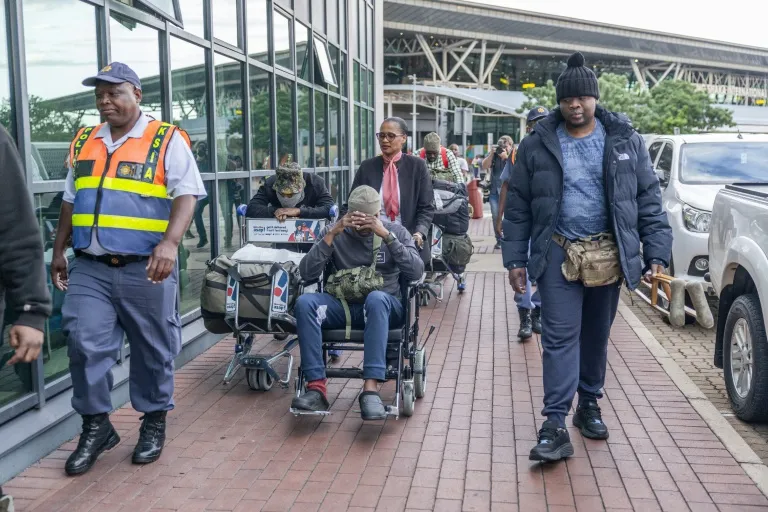
In South Africa, the situation is equally distressing. By February, it was confirmed that at least two South African citizens had died fighting in Russia, with 15 others repatriated that same month. However, concerns remain for those still in the country. A Ukrainian government website dedicated to combating Russian recruitment efforts indicated last month that 10 South Africans had lost their lives.
One South African who returned after being involved in the conflict described the harrowing experience. Having no prior military background, he found himself thrust into intense combat. “All of a sudden you see and hear bombs, drones flying overhead,” he recounted, admitting to being “never been so afraid.” Another young returnee, in his 20s, expressed disappointment with the promised support, stating he received only two counseling sessions despite being promised comprehensive trauma support. “We are left in the lurch, without any money, any means of support, just only the scars from the war,” he lamented.
A South African woman, speaking anonymously, shared the profound impact of the war on her family. Her husband sustained severe injuries, losing a leg after his convoy was hit by a drone on the front line. She expressed hope for his return in the coming months. The emotional and physical toll on these individuals and their families is immense, leaving them with lasting trauma and uncertainty.
Botswana and Allegations of Deception
Botswana’s government acknowledged in July an “alarming” number of men being misled into joining the war. One mother there has not heard from her 20-year-old son, who traveled to Russia with a friend in July of the previous year, for nearly twelve months. “I don’t know if they are alive or not,” she said, requesting anonymity. She believes they were deceived by Duduzile Zuma-Sambudla, the daughter of former South African president Jacob Zuma, who allegedly presented the opportunity as a personal development course in Russia. Zuma-Sambudla resigned as a parliamentarian in December following police investigations into claims she lured men to the Russian war effort. Efforts to reach her for comment were unsuccessful.
The grieving mother is desperately seeking her child’s safe return and also desires justice. “We were raised with, ‘It’s an eye for an eye.’ So now I want that woman to be tried,” she stated, reflecting the deep sense of betrayal and the demand for accountability felt by many families affected by these alleged recruitment schemes.
Conclusion: A Call for Accountability and Support
The experiences of these mothers and families highlight a critical issue of human trafficking and exploitation, where vulnerable individuals are lured by false promises of employment and opportunity into dangerous conflicts. The ongoing recruitment efforts and the devastating consequences for those involved underscore the urgent need for international cooperation, robust legal action against recruiters, and comprehensive support systems for victims and their families. The quest for closure, repatriation, and justice continues for those left behind, grappling with the profound pain of loss and uncertainty.
