

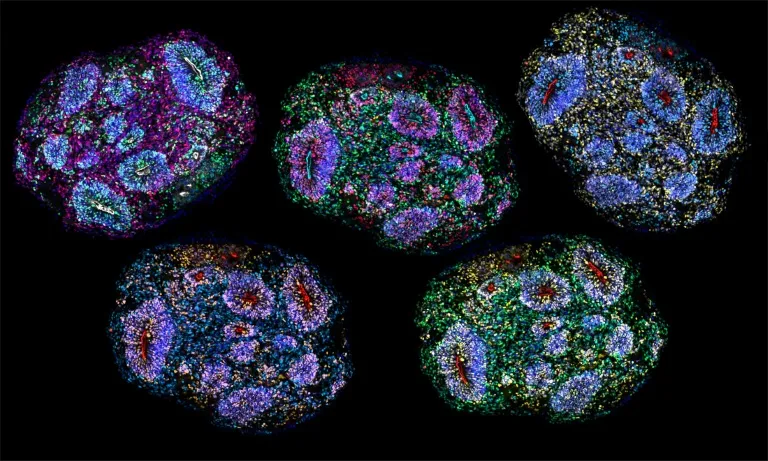
In a groundbreaking scientific achievement, researchers have successfully grown human brain organoids that demonstrate the passage of time, exhibiting developmental changes over an unprecedented seven-year period. These sophisticated lab-grown models, derived from stem cells, offer a unique window into the complexities of human brain development and could revolutionize the study of neurological disorders.
Understanding Brain Organoids
Brain organoids are miniature, three-dimensional structures cultivated from human stem cells. Scientists worldwide utilize these organoids as biological models to explore the intricate workings of the human brain, aiming to unravel its mysteries and develop new therapeutic strategies for diseases. Unlike traditional animal models, organoids provide a more direct and relevant platform for studying human brain biology and disease progression. Typically, these organoids have a limited lifespan, usually only a few months, which restricts their utility to studying the very early stages of brain development. The human brain, however, takes nearly two decades to reach full maturity, highlighting the limitations of short-lived organoid models.
An Unprecedented Developmental Horizon
A collaborative team, led by researchers in the United States, embarked on an ambitious project to extend the developmental timeline of these brain organoids. They successfully cultivated organoids for approximately seven years, establishing a new record for the oldest lab-grown brain models to date. Paola Arlotta, a professor at Harvard University and senior author of the study, explained that these extended-duration organoids continued to mature and evolve over the years, even without ever being part of an embryo or a living body. This finding challenges previous assumptions, demonstrating that the brain possesses a remarkable capacity for continued development outside the confines of a living organism.
Implications for Neurological Research
The ability to study brain development over such an extended period holds immense promise for understanding a range of complex neurological conditions. Researchers anticipate that these long-term organoids will provide crucial insights into the origins and progression of disorders such as autism spectrum disorder and schizophrenia. By observing how these organoids change and develop over years, scientists hope to identify the cellular and molecular mechanisms that underlie the emergence of these conditions, potentially paving the way for earlier diagnosis and more effective treatments.
Evidence of Time’s Passage
The study, published in the prestigious journal Nature, reported that the brain organoids effectively “recorded the passage of time and retain a memory of the developmental steps already performed.” It is crucial to clarify that this does not imply the organoids possess consciousness or human-like memories. Instead, the “memory” refers to the cellular history and developmental trajectory imprinted at a biological level. Arlotta emphasized that these organoids are sophisticated “biological models” or “avatars” for human brain cells, lacking the complexity and sensory input of a living brain. The scientific consensus is that these organoids are not capable of consciousness or higher-order cognitive functions.
The ‘Warped Time’ Experiment
To validate their findings, the research team employed advanced genetic “clocks”—recently developed tools capable of estimating the biological age of cells. Analysis using three distinct genetic clocks consistently indicated that the organoids underwent changes over time consistent with the natural development of brain cells. In a particularly striking experiment, described by Arlotta as “crazy,” the scientists created a “chimera” by combining cells that had developed for a year with cells that were only two weeks old. While the younger cells behaved as expected, the older cells exhibited a dramatic acceleration in their developmental process. They began producing neurons that typically take around four months to form, effectively “warping time” in the context of brain development. Arlotta described this outcome as “super cool” and speculated about the future potential of this technique to rapidly advance the development of specific brain cell types.
Future Prospects and Longevity
The previous record for the oldest brain organoids was just under two years, making the seven-year achievement a significant leap forward. Unlike the human brain within a body, these lab-grown organoids are not subject to the biological limitations of a living organism. This raises the intriguing question of their potential longevity. While Arlotta admitted that the exact lifespan is unknown, she speculated that brain organoids could hypothetically exist for longer periods than previously thought. However, the specific organoids used in this groundbreaking research were recently terminated as part of the scientific process.
Conclusion
The development of seven-year-old brain organoids that demonstrably record the passage of time represents a monumental stride in neuroscience. This research not only pushes the boundaries of what is possible in lab-based biological modeling but also opens up unprecedented avenues for understanding human brain development and the intricate origins of neurological disorders. The ability to observe long-term developmental processes in a controlled environment promises to accelerate discoveries and potentially transform the landscape of brain health research.
