

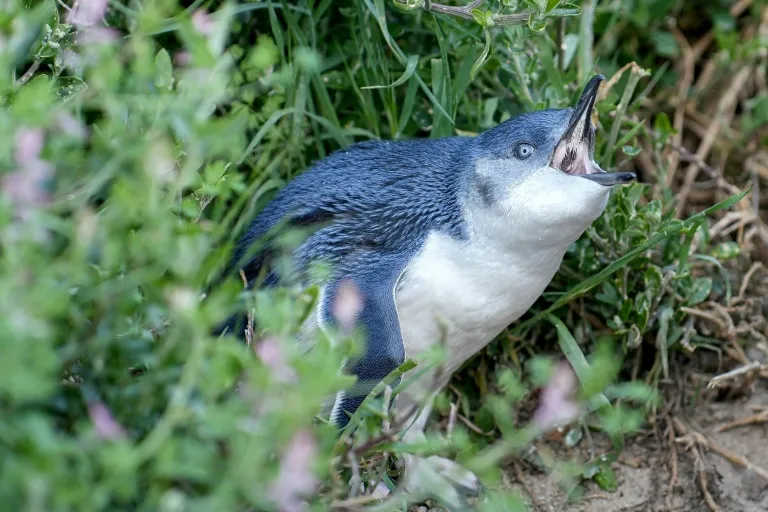
Australia is undertaking an unprecedented vaccination effort to protect its iconic little penguin populations from the highly pathogenic H5N1 avian influenza virus. The virus, commonly known as bird flu, has recently spread to continental Australia, raising serious concerns for native wildlife, including the world’s largest colony of little penguins on Phillip Island, Victoria.
Phillip Island, a major tourist destination off the coast of Victoria, attracts hundreds of thousands of visitors annually to witness the nightly “penguin parade.” Here, a wild colony of up to 40,000 little penguins, also known as fairy penguins, waddle ashore after foraging at sea. These diminutive seabirds, the smallest penguin species, stand barely knee-high and typically weigh around one kilogram (about 2.2 pounds). They have a lifespan of approximately six years and are found in coastal areas of southern Australia, particularly Tasmania, and New Zealand.
The recent detection of H5N1 in a deceased little penguin on Phillip Island marks the first confirmed infection within this vulnerable colony. This development has prompted swift action from wildlife authorities, who have initiated a large-scale vaccination program aimed at safeguarding the birds against the potentially devastating effects of the virus. Bird flu has already caused significant mortality in avian populations globally.
Unprecedented Vaccination Campaign
James Todd, chief biodiversity officer for Victoria, described the vaccination initiative as “unprecedented,” noting that it represents the largest vaccination effort of its kind for a wild bird population anywhere in the world. The program is not limited to Phillip Island; it also includes a well-known little penguin population residing at a breakwater in St Kilda, a beachside suburb of Melbourne.
Administering vaccines to wild animals presents considerable challenges. “Trying to vaccinate wild populations is almost impossible, partly because you need two doses of the vaccine,” Todd explained. However, he highlighted that wildlife experts possess extensive familiarity with the penguins’ nesting burrows on Phillip Island and at St Kilda. Furthermore, the penguins are accustomed to human presence, including the floodlights used for the nightly tourist viewing and periodic handling by veterinary scientists for health monitoring.
The immediate goal of the vaccination teams is to inoculate approximately 5,000 little penguins residing in close proximity to visitor areas. This intensive program is expected to span weeks, if not months, requiring sustained effort and resources.
Vaccine Administration and Urgency
Ideally, the H5N1 vaccine requires two doses administered with a three-to-four-week interval to ensure optimal immunity. However, given the “state of urgency” and the potential for rapid spread of the virus, experts are considering a modified approach. Todd indicated that a decision might be made to proceed with a single dose or a shorter interval between doses, potentially as little as one to two weeks, although this remains under consideration.
The logistics of vaccinating wild penguins involve carefully retrieving them from their burrows or attempting to gather them as they come ashore. Microchips are being used to track individual penguins that have received a vaccination, ensuring proper record-keeping and follow-up if necessary. Todd acknowledged the inherent difficulties in handling wild animals, noting that the penguins might exhibit defensive behaviors such as squawking or pecking. He commended the expertise of the wildlife teams, who are well-versed in safely handling these creatures, a task that would be considerably more challenging for untrained individuals.
Broader Implications and Monitoring
The H5N1 virus has demonstrated a capacity to jump between species, raising concerns about its potential impact not only on penguins but also on other Australian wildlife and potentially domestic poultry. While the current focus is on the little penguin colonies, the broader spread of H5N1 across Australia’s wild bird population necessitates ongoing surveillance and preparedness measures.
Authorities are working closely with scientific institutions and conservation groups to monitor the situation. This includes enhanced surveillance of wild bird populations, rapid response protocols for detected outbreaks, and public awareness campaigns to report any unusual bird mortality. The success of the Phillip Island and St Kilda vaccination programs will be crucial in mitigating the immediate threat to these beloved and ecologically significant species.
The long-term strategy involves a multi-faceted approach, combining vaccination where feasible with biosecurity measures and continued research into the virus’s behavior and transmission dynamics in the Australian context. The commitment to protecting these unique seabirds underscores the importance of biodiversity conservation in the face of emerging infectious diseases.
