

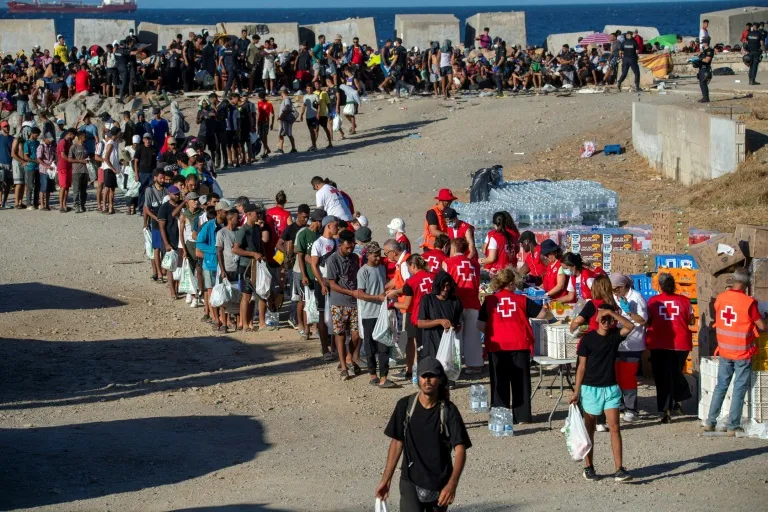
Spain is intensifying efforts to repatriate migrants who entered the North African enclave of Ceuta in a recent surge, aiming to expedite the return process while ensuring legal and human rights are upheld. The move comes after a chaotic influx in late July saw tens of thousands cross from neighboring Morocco, leading to significant humanitarian challenges and political tensions.
Background of the Ceuta Migrant Influx
In late July, a sudden and overwhelming wave of more than 70,000 migrants reached Ceuta, a Spanish enclave on the North African coast. They arrived by swimming or on foot from Morocco, in an event that resulted in numerous fatalities and heightened concerns across the European Union regarding border control and migration management. While the majority of these individuals have since been returned to Morocco, a substantial number, estimated between 3,500 and 7,000 people (representing 5% to 10% of the total), remain in Ceuta. This group includes unaccompanied children, who cannot be summarily deported due to legal protections.
Local Concerns and Political Pressure
The continued presence of migrants has led to complaints from local residents in Ceuta regarding issues of insecurity and sanitation. Accusations have been leveled against the central government, suggesting neglect of the enclave’s needs. Ceuta’s regional government, controlled by the conservative Popular Party (PP), has criticized the pace of the current return procedures as too slow. They are pressing for faster action to address the situation.
Government’s Strategy to Expedite Returns
To streamline the process, the Spanish cabinet has approved the establishment of a “single command” structure for Ceuta. This new operational unit will be headed by Territorial Policy Minister Angel Víctor Torres. Minister Torres stated that the primary objective is “the return and repatriation of the greatest possible number of people, adults and minors,” emphasizing adherence to Spanish law and international human rights standards.
Temporary Accommodation and Humanitarian Aid
While accelerating return procedures, the Spanish government has committed to providing ongoing humanitarian assistance. This support will be directed towards individuals seeking asylum and unaccompanied minors who are unable to be deported. The government recently announced plans to establish reception centers capable of housing 1,800 migrants. Additional temporary accommodation is also being made available with the goal of “restoring normality in Ceuta,” according to government spokeswoman Elma Saiz.
Ceuta’s Unique Geographical and Legal Status
Ceuta, along with Melilla, another Spanish enclave on the African continent, represents the European Union’s only land borders with Africa. These territories operate under special arrangements within the Schengen Area, a zone of free travel. Consequently, individuals cannot proceed to mainland Spain without undergoing border checks, a factor that complicates the onward movement of migrants.
Navigating International Law and Political Discourse
The situation in Ceuta has become a significant political issue. Opposition parties and far-right groups in Spain are calling for the deportation of all individuals who entered the enclave, including minors. However, Minister Torres has stressed the importance of complying with international law. He cautioned against populist approaches, stating that those advocating for blanket deportations for political gain are misguided.
Future Outlook
The Spanish government’s strategy involves a dual approach: accelerating the return of those not eligible for protection and providing necessary humanitarian aid and temporary shelter for vulnerable groups. The establishment of the “single command” aims to centralize and improve the efficiency of these operations. The delicate balance between border security, national law, international obligations, and humanitarian concerns will continue to shape the ongoing response in Ceuta.
