

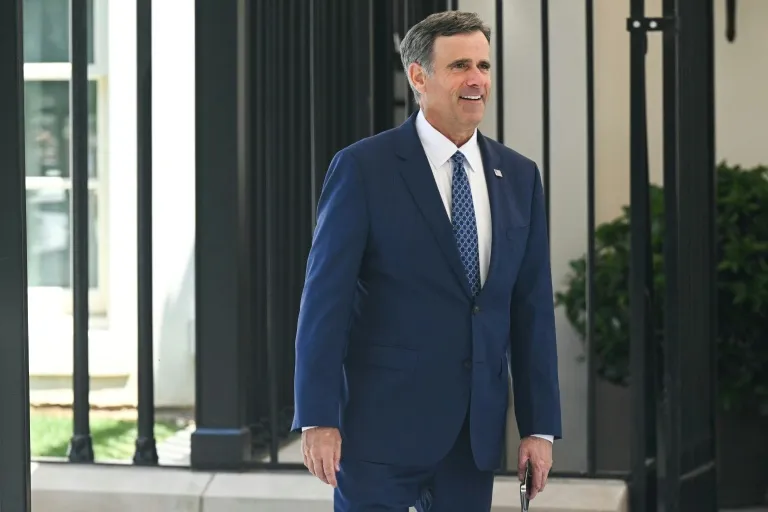
Central Intelligence Agency (CIA) Director William Burns reportedly traveled to Moscow to caution Russia against any potential aggression towards NATO member states. This visit occurred amidst U.S. intelligence assessments suggesting that Russia might attempt to probe the strength and resolve of the North Atlantic Treaty Organization in the coming years. The Wall Street Journal and CBS News were among the outlets reporting on the substance of these discussions.
Intelligence Assessments of Russian Intentions
According to reports citing U.S. intelligence, there was a concern that Russia could initiate a “limited assault” against a NATO member within the next few years. Such a move would represent a significant escalation and a direct challenge to the collective security framework of the alliance. The intelligence community’s assessments are crucial in shaping U.S. foreign policy and its interactions with Russia, particularly in the context of the ongoing conflict in Ukraine.
Context of the Visit and U.S. Stance
The White House did not provide official comment on the specifics of CIA Director Burns’ visit when approached by news agencies. However, then-President Donald Trump characterized the visit as “semi-routine” during an interview. He suggested that the primary focus of the CIA chief’s trip to the Russian capital was to discuss the war in Ukraine, expressing a desire for the conflict to conclude. Trump indicated that he believed both sides in the Ukraine war wished for its end.
Burns’ visit marked him as one of the most senior U.S. officials to travel to Russia since the commencement of its full-scale invasion of Ukraine in early 2022. The timing of his trip coincided with an intensification of Russia’s offensive operations within Ukraine. Reports indicated increased civilian casualties during the summer months, while U.S.-brokered peace initiatives had reportedly stalled.
Broader Diplomatic Engagements
Beyond discussions concerning NATO and Ukraine, the CIA Director also reportedly engaged in talks with Iranian officials during his Moscow visit. According to CBS News, citing sources familiar with the matter, Burns conveyed a warning to Iran regarding potential additional sanctions if shipping traffic through the Strait of Hormuz was not reopened. This highlights the multifaceted nature of U.S. diplomatic efforts, engaging with various actors on issues of regional and global security.
Kremlin’s Perspective on the Meetings
The Kremlin confirmed that Burns had “contacts” with Russia’s intelligence services during his Moscow trip but stated that he did not meet with President Vladimir Putin. Kremlin spokesman Dmitry Peskov mentioned that Putin was briefed on the discussions. Peskov declined to confirm whether the war in Ukraine was specifically raised during these intelligence-level exchanges. He described contacts through intelligence channels as a “positive development in and of themselves” but deemed it “too early to say how this will affect the process of resolving the crisis in our relations.”
Historical Precedents and CIA’s Role
This reported visit by the CIA Director follows a historical precedent. In November 2021, then-CIA Director William Burns also visited Moscow. During that trip, he reportedly issued a warning to Russia against sending troops into Ukraine. Tragically, weeks after that warning, Russia launched its invasion, which has since become the most significant conflict in Europe since the Second World War.
The CIA has also played a role in facilitating other sensitive interactions between the U.S. and Russia, including involvement in prisoner swap agreements. A notable exchange occurred in mid-2024, demonstrating the agency’s capacity for discreet diplomatic operations even amidst high tensions.
Ongoing Conflict and U.S. Objectives
The war in Ukraine has resulted in hundreds of thousands of casualties. The Kremlin has maintained its maximalist demands, seeking to control the remainder of eastern Ukraine and retain its annexation of Crimea. The U.S. objective, as articulated by then-President Trump, was primarily focused on ending the war in Ukraine. He dismissed speculation that Burns’ visit was intended to address other issues, such as Russia testing NATO’s resolve or U.S. efforts to increase economic pressure on Iran, reiterating that the main goal was to facilitate an end to the conflict.
Conclusion
The reported visit of CIA Director William Burns to Moscow underscores the complex and high-stakes nature of U.S.-Russia relations. While the specifics remain largely undisclosed, the underlying message appears to be a clear warning against Russian aggression towards NATO, coupled with ongoing efforts to manage the devastating war in Ukraine and other geopolitical concerns. The interactions highlight the continued importance of intelligence channels for communication and de-escalation, even between adversaries.
