

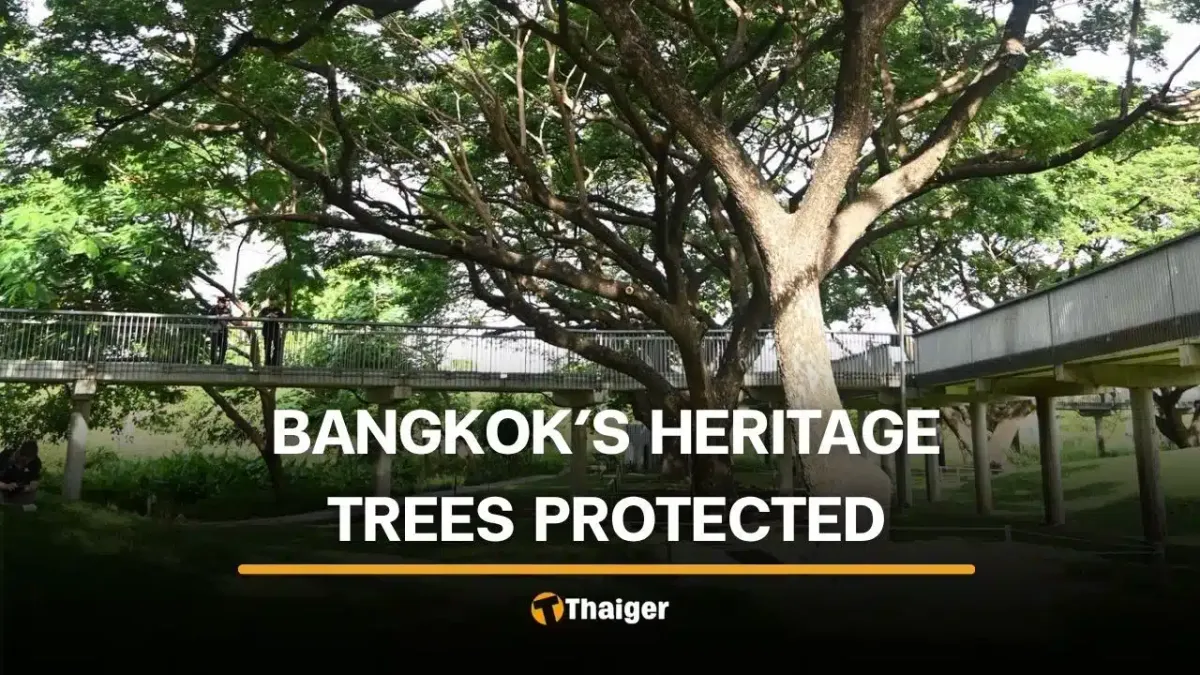
Bangkok is introducing a comprehensive new policy aimed at protecting significant urban trees, designated as “heritage trees.” This initiative, spearheaded by the Bangkok Metropolitan Administration (BMA), establishes clear regulations for the management of these vital green assets, requiring official permission for any cutting, pruning, or transplanting of registered trees.
Defining and Identifying Heritage Trees
A pivotal meeting held on August 31 brought together BMA officials and relevant departments to solidify the definition of a “heritage tree” and outline best practices for their care, aligning with international arboriculture standards. These trees will be meticulously documented in a new city database.
The criteria for identifying heritage trees focus on several key aspects:
- Location: Heritage trees must be situated in public areas within Bangkok.
- Recognition Factors: Identification will be based on a combination of their physical attributes, their ecological importance within the urban environment, and their historical, cultural, or community significance.
Assessment Criteria for Tree Selection
The selection process for heritage trees involves a two-tiered assessment:
- Physical Characteristics: This category evaluates the tree’s age, health, and structural integrity. Key considerations include:
- An estimated age of at least 50 years, or being an original species native to the area.
- Overall good health and vitality.
- Adequate space for root development and protection (tree protection zone).
- Sufficient exposed soil surface area for nutrient and water absorption.
- Safety assessment concerning proximity to city structures and utilities.
- Other Values: This category considers the tree’s broader significance beyond its physical form:
- Rarity or unique botanical importance, such as being an endemic or endangered species.
- Historical or cultural associations, linking the tree to significant events or local heritage.
- Landscape or aesthetic value, recognizing its contribution to the visual appeal of the urban environment.
Phased Implementation of the Heritage Tree Program
The BMA plans a systematic, two-phase rollout for this protective policy:
Phase 1: Tree Inventory and Standards Development
The initial phase will concentrate on establishing a comprehensive “Tree Inventory” database. This will involve:
- Registering trees with a trunk circumference of at least 60 centimeters.
- Developing and implementing standardized pruning guidelines to ensure tree health and safety.
- Making the collected tree data accessible for public review and input, fostering transparency.
Phase 2: Formal Heritage Tree List and Permitting
Upon completion of the inventory and standards development, Phase 2 will involve the formal announcement of the official Heritage Tree List. Once a tree is officially designated as a heritage tree, any actions such as pruning, transplanting, or felling will be strictly regulated and require explicit permission from the Environment Department.
Establishing a Green Space Policy Committee
In parallel with the heritage tree initiative, officials have also considered the establishment of a Green Space Policy Driving Committee. This committee, to be chaired by the deputy governor, will comprise forestry and arboriculture experts, alongside conservation partners. Its mandate will be crucial in:
- Formulating strategic plans for urban green spaces.
- Driving the city’s broader tree-planting initiatives, including the ambitious million-tree goal.
- Monitoring the progress of greening projects across the capital.
- Providing expert guidance and advice to government agencies and the public on green space management and conservation.
This multi-faceted approach underscores Bangkok’s commitment to preserving its valuable urban canopy, recognizing the ecological, cultural, and aesthetic contributions of its significant trees to the city’s identity and livability.
