

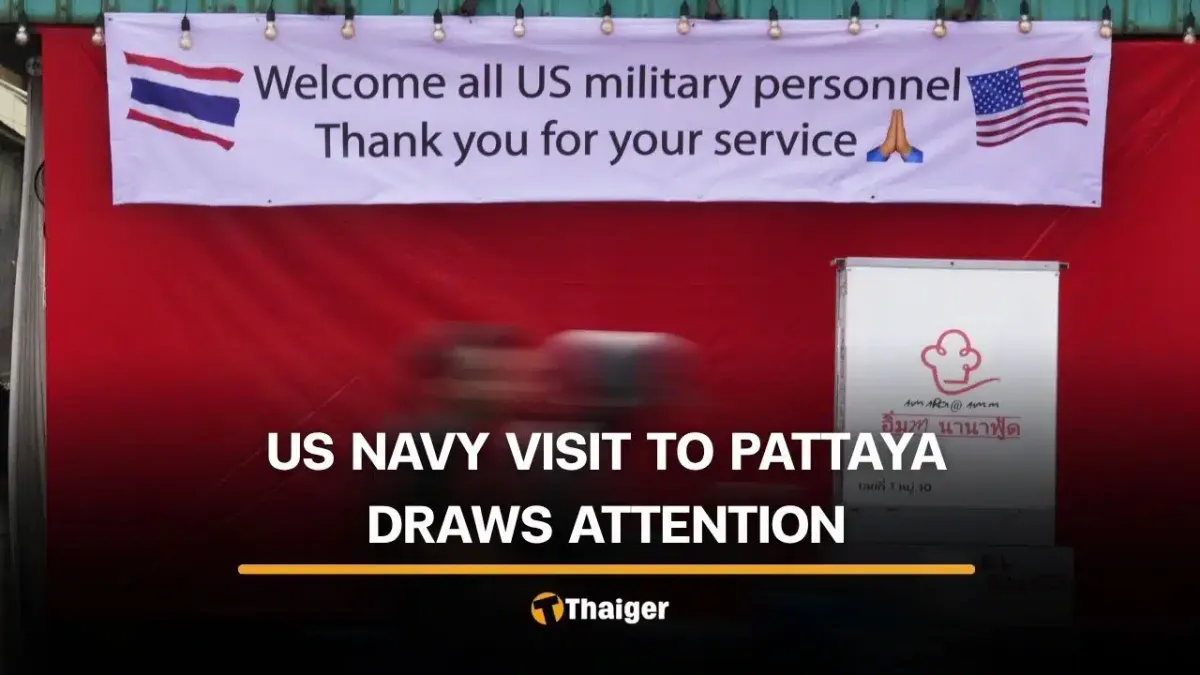
Preparations are underway in Pattaya, Thailand, for the arrival of approximately 5,000 U.S. Navy personnel, a visit that has garnered significant international attention. The USS Abraham Lincoln aircraft carrier and two accompanying vessels are scheduled to dock at Laem Chabang Port in Chon Buri on September 2nd, with the personnel expected to remain in the region until September 6th. This visit presents a complex scenario, balancing military logistics with local regulations and international perceptions.
Local Measures Amidst International Focus
In anticipation of the large contingent of U.S. Navy personnel, Pattaya City officials have implemented a series of security measures. These include a recent crackdown on activities related to prostitution and explicit warnings issued to both residents and visitors emphasizing that prostitution remains illegal in Thailand. To further manage the sailors’ interactions within the city, specific restrictions have been put in place. U.S. Navy personnel are prohibited from entering certain areas, such as cannabis dispensaries, pharmacies, and specific entertainment zones including Soi 6, Soi 6/1, and Soi 7. Additionally, water-based recreational activities have been restricted for the duration of their stay. While access to popular areas like Pattaya Walking Street is permitted, personnel must depart by 2:00 AM.
International Media Spotlight and Misinformation
The impending visit became a focal point for international media, particularly after a report by The Independent. While the article itself correctly stated that prostitution is illegal in Thailand, a subsequent Facebook post by the publication regarding the same visit reportedly used contentious wording. This Facebook post, which accompanied an article titled “Thailand issues prostitution warning as 5,000 US sailors arrive in tourist town after 200 days at sea,” allegedly stated that the USS Abraham Lincoln would dock in Pattaya, “where prostitution is ‘legal’.” This specific phrasing, contrasting with the article’s accurate reporting, ignited a significant online reaction, reportedly garnering tens of thousands of engagements across social media platforms.
The discrepancy in reporting led to criticism from Thai news agencies, which argued that the Facebook post created a false impression about the legal status of prostitution in Thailand. The situation also prompted discussions among Thai netizens, with some suggesting that the online reaction reflected a broader societal observation: that despite being illegal, prostitution remains visibly present in certain areas, with some members of the public and even officials appearing to overlook it.
Further complicating the international coverage, some users commenting on the Facebook post pointed out that the accompanying image seemed to depict Singapore rather than Pattaya. As of the time of reporting, no official correction had been issued by the publication for the disputed wording or the potentially misidentified image on their social media platform.
Understanding Thailand’s Stance on Prostitution
It is crucial to reiterate that prostitution is unequivocally illegal in Thailand. The country’s laws, specifically the Prevention and Suppression of Prostitution Act B.E. 2539 (1996), criminalize the act of prostitution for both the provider and the client. Despite this legal framework, the visible presence of sex work in certain tourist areas has led to complex societal dynamics and international misunderstandings. The recent measures by Pattaya City officials underscore the government’s efforts to enforce these laws, particularly in light of high-profile international visits.
Naval Visits and Local Impact
The arrival of foreign naval vessels is not uncommon in various ports worldwide, and these visits often bring economic benefits through personnel spending. However, they also necessitate careful planning and management by host cities to ensure smooth integration and adherence to local laws and customs. Pattaya, a city known for its vibrant tourism sector, faces the challenge of balancing its hospitality with the need to maintain order and uphold its legal standards.
The U.S. Navy’s visit, while a routine operational deployment, has been amplified by the international media’s focus and the subsequent discussion surrounding the legality and visibility of sex work in Thailand. The restrictions placed on the visiting personnel aim to mitigate potential issues and ensure the visit aligns with Thai law and local sensitivities. This situation highlights the delicate interplay between international relations, military presence, and the socio-legal landscape of host countries.
Conclusion: A Visit Under Scrutiny
The upcoming U.S. Navy deployment to Pattaya is a significant event, marked by extensive local preparations and heightened international scrutiny. While the visit itself is a standard military operation, the surrounding discourse, fueled by media reporting and social media engagement, has brought specific aspects of Thai society and law into sharp international focus. Officials are working to manage the visit effectively, emphasizing legal compliance and public safety, while the international community observes the proceedings, highlighting the importance of accurate reporting and cultural understanding.
