

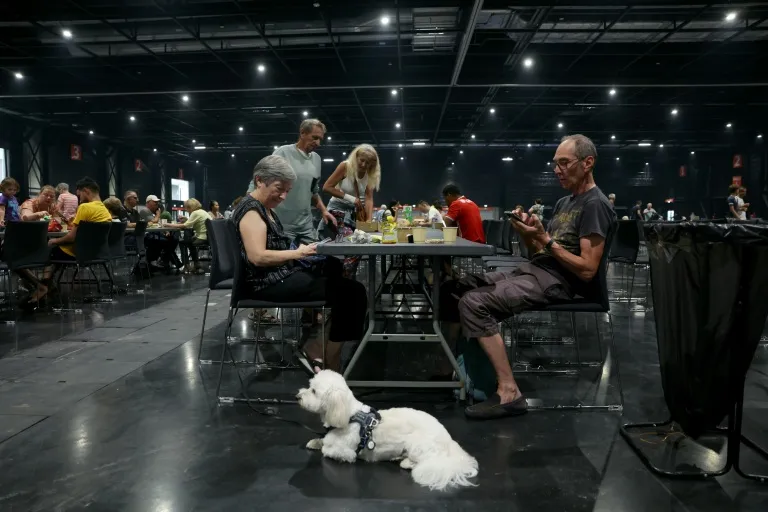
Tens of thousands of people have been evacuated from their homes and holiday accommodations in the Bordeaux region of southwestern France as rapidly spreading wildfires rage through the area. Authorities have established large shelters to house the displaced, with many residents and tourists expressing anxiety about the fate of their properties and the abrupt end to their vacations.
Wildfires Force Mass Evacuations in Bordeaux
The fires, which have been battled by hundreds of firefighters for several days, are consuming vast tracts of land in a region renowned for its pine forests and coastal attractions. The scale of the evacuation, particularly from the popular Cap Ferret peninsula and surrounding villages, is among the largest ever undertaken in France. Evacuees, many arriving in the dead of night, have been directed to emergency shelters, including Bordeaux’s large exhibition center, where thousands are currently staying.
The air in Bordeaux, though still carrying the scent of smoke, has become more breathable compared to previous evenings. Masks are being provided to those who need them. The fires have disrupted numerous lives, forcing people to abandon their homes with little notice.
Personal Accounts of Displacement
Nuala Kelly, a 75-year-old Irish tourist, described the situation as unprecedented in her extensive travels. “Never, never, never, never, never, and I’ve travelled all over the world and been in all sorts of situations,” she told reporters at the exhibition center. Despite the harrowing experience, she expressed gratitude for the kindness and support shown by those assisting the evacuees. “It’s an experience, you know, I would be happy to do without it, but everybody’s been very kind here, very good, so we have to be thankful.”
Olivier Stewart, 38, recounted the stressful experience of evacuating his home in Merignac with his wife and young children. “The children are the most stressed. They think the fire is going to burn down the house, but we’re coping,” he said. To pass the time and cope with the anxiety, children have been seen playing football and badminton outside the shelter.
Frederic Tavitian, a retiree who lives approximately 50 kilometers from the affected area, faced a four-hour journey to reach the shelter due to severe traffic jams. “At 3pm, we were told, ‘You have to evacuate.’ We saw columns of smoke, like a volcano about to erupt. So we left,” Tavitian explained. He described the constant noise at the shelter as exhausting, making sleep difficult. “It’s really tough. That’s the way it is. We just have to live with it.”
Shelter Operations and Community Support
The exhibition center has been transformed into a temporary refuge, with evacuees resting on camp beds, air mattresses, and sleeping mats. Food and coffee services are available, and many are seen trying to find moments of rest amidst the ongoing disruption. Recognizing the emotional toll, a first-aid station staffed by a doctor offers support, with volunteers like Marie Decroix identifying needs, particularly those of children, and monitoring for signs of dehydration.
The welfare of pets has also been considered, with provisions for cat litter and pet food made available for evacuees who brought their animals. Special arrangements, including chartered buses, have been put in place to transport elderly individuals. The community response has been significant, with locals offering assistance. David Duval, an engineer from Bordeaux, has offered a spare room to an affected family. “I have a spare room available,” he stated. “It breaks my heart when I see all these people in distress. We have to think about what each of us can do.”
Ongoing Firefighting Efforts
Hundreds of firefighters are engaged in a relentless battle against the blazes, which are particularly challenging due to the dry conditions and vegetation in the region. The strategic importance of the area, known for its tourism and natural beauty, adds to the urgency of the situation. Firefighting efforts are focused on containment and preventing further spread into populated areas and ecologically sensitive zones.
The long-term impact of the fires on the environment and local economy is a growing concern. The destruction of forests could affect the timber industry and tourism, while the disruption to oyster farming in the Arcachon Bay area also poses economic challenges. Authorities are working to assess the full extent of the damage once the fires are brought under control.
Conclusion
As the wildfires continue to pose a threat in the Bordeaux region, the focus remains on ensuring the safety of residents, supporting those displaced, and bringing the blazes under control. The resilience of the community and the dedication of emergency services are evident amidst this challenging crisis. The situation underscores the increasing risks posed by climate change and the importance of preparedness for extreme weather events.
