

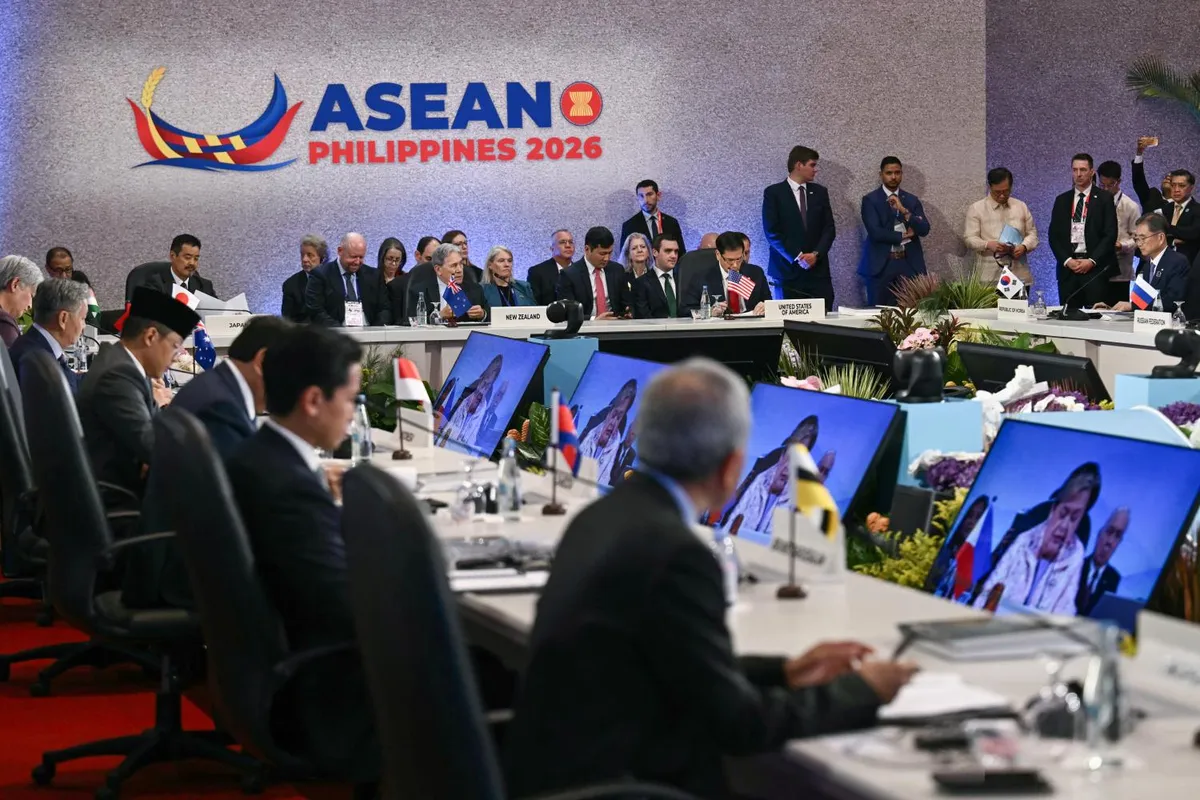
The relationship between democracy and administrative effectiveness in Southeast Asia presents a complex picture, challenging the conventional narrative that democratic procedures automatically lead to good governance and development. While global indicators suggest these two elements can reinforce each other, the region’s experience demonstrates that the path is far from straightforward. This nuanced dynamic has significant implications for how countries in Southeast Asia approach regional cooperation and their development strategies.
Democracy and Governance: A Multifaceted Connection
Political science research has long recognized that effective governance—defined as a government’s ability to make and enforce rules, and deliver services—is crucial for development. This often involves strong institutions that protect property rights, uphold the rule of law, and reduce transaction costs for investment. However, the extent to which democratic processes directly translate into these institutional qualities varies significantly.
Global governance indicators, such as the World Bank’s Worldwide Governance Indicators (WGI) and the Chandran Gurumurthy Governance Index (CGGI) for 2025, provide valuable insights. These assessments, which evaluate over 120 countries, reveal a complex correlation across the governance landscape. For instance, Singapore consistently ranks among the top performers in administrative effectiveness, even while operating as a single-party state. Conversely, the Philippines, a vibrant multi-party democracy with a strong civil society, scores lower on institutional capacity and regulatory quality, illustrating that democratic structures alone do not guarantee superior governance.
Country-Specific Dynamics
Examining specific countries within the region highlights these disparities:
- Indonesia: Despite being the region’s largest democracy, Indonesia ranks highly on the CGGI but faces challenges in institutional bottlenecks, particularly in financial management. While its performance on social indicators is relatively good, it grapples with political instability, which hinders its overall governance effectiveness.
- Thailand and Malaysia: These nations show similar overall scores on the WGI but have distinct strengths and weaknesses. Thailand, while having a long history of oscillations between military and elected governments, demonstrates stronger institutional capacity than its neighbors. Malaysia, on the other hand, excels in financial management but struggles with political interference in its administrative functions.
- Vietnam: This country, despite not being a multi-party democracy, scores well on regulatory quality and government effectiveness within the WGI framework. This suggests that administrative capacity can be developed and improved independently of a liberal democratic political system.
The Role of Institutional Capacity in Development
The debate often centers on what truly drives development. Studies by academics like James Robinson, Daron Acemoglu, and Simon Johnson suggest that robust institutions—those that protect property rights, enforce the rule of law, and reduce transaction costs—are key drivers of long-term economic growth. The relationship between economic growth and regime type, however, is not always systematic. For example, research from the 2000s found no consistent link between economic growth and the level of democracy in Southeast Asia.
The experience of Singapore serves as a unique case. Its strong economic performance and high rankings in governance indicators are undeniable. However, its model, characterized by a dominant party system and a focus on administrative efficiency, may not be easily replicable or desirable for other nations seeking to balance democratic principles with development goals. The challenge for many Southeast Asian countries lies in building institutional capacity that can effectively deliver public services, manage public finances responsibly, and implement coherent policies, regardless of their specific political system.
Regional Cooperation and Future Challenges
Effective regional integration, such as the Regional Comprehensive Economic Partnership (RCEP) which came into force in January 2022, depends not only on formal trade agreements but also on the capacity of member states to implement and benefit from them. Countries with stronger institutional frameworks, like Malaysia and Vietnam, are better positioned to attract foreign direct investment and leverage such agreements. This underscores the importance of building institutional capacity alongside fostering openness to trade and investment.
Looking ahead, Southeast Asian nations face significant challenges. A growing population, aging demographics, climate change, and geopolitical instability all demand adaptive policymaking and effective governance. The increasing role of artificial intelligence in the economy also presents new opportunities and potential disruptions, requiring countries to be agile and responsive.
The core lesson emerging from Southeast Asia is that while democratic processes can foster accountability and responsiveness, they are not a guaranteed pathway to good governance or sustained development. Building strong, effective institutions that can deliver services reliably and manage public resources efficiently is paramount. This often involves targeted reforms within specific sectors rather than attempting wholesale, revolutionary changes. Countries can learn from each other’s experiences, utilizing tools like the WGI and CGGI to identify weaknesses and strengths, and fostering collaboration to share expertise. The path to development is not a one-size-fits-all model; it requires a pragmatic approach that prioritizes institutional strengthening and adaptive governance, tailored to the unique context of each nation.
History offers further warnings. The early 1990s demonstrated that industrialization could drive strong economic growth, but the 1970s and 1980s showed that this often came at the cost of unsustainable resource extraction. More recently, rising commodity prices present a challenge, potentially shifting focus from manufacturing exports to raw material exports, which could hinder long-term development. Ultimately, the challenge for Southeast Asia is not to choose between effective governance and democracy, but to build institutions capable of delivering both.
