

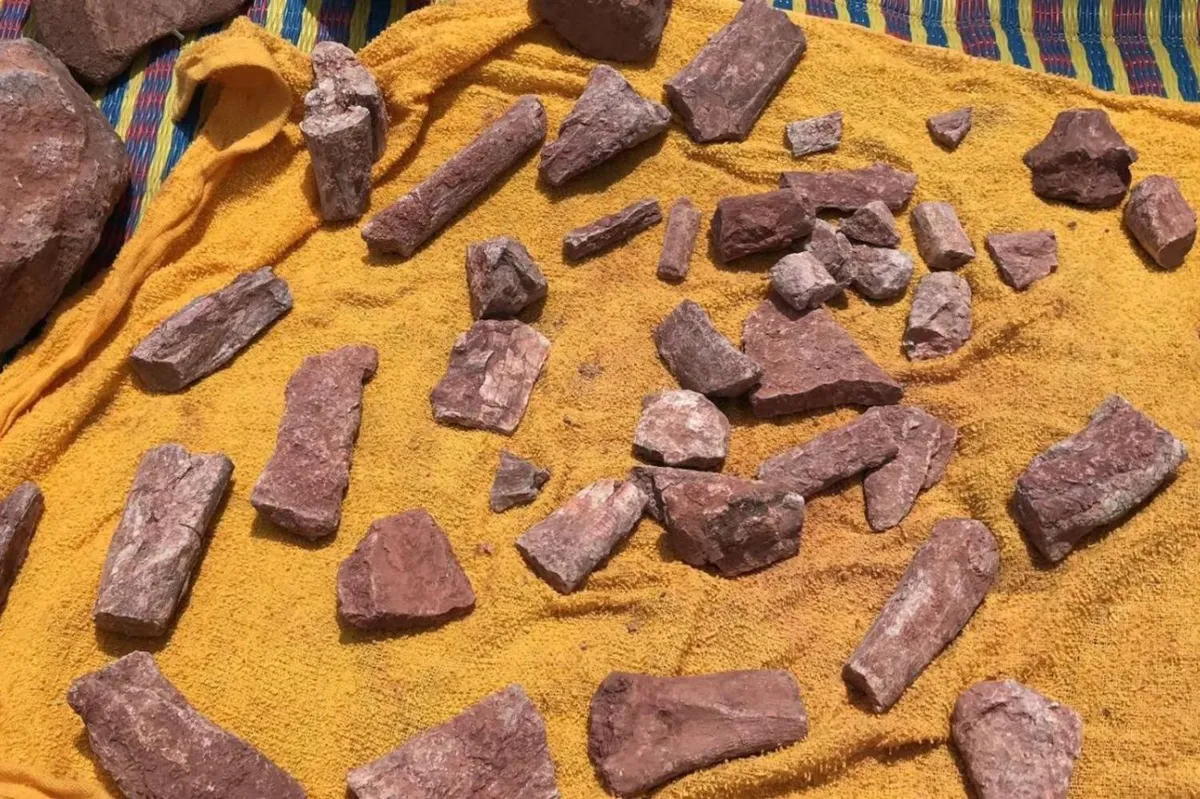
A significant paleontological discovery has been made in Thailand’s Chaiyaphum province with the unearthing of fossilized remains believed to belong to a previously unknown species of carnivorous dinosaur. The find, announced after extensive excavation, adds a crucial piece to the understanding of prehistoric life in Southeast Asia. Researchers are particularly excited as preliminary analysis suggests this specimen predates other dinosaur discoveries in the region.
Discovery of New Dinosaur Fossil Site
The breakthrough occurred in Ban Mai Nong Daeng village, Ban Khwao district, when local resident Yodsanya Pitabut, 53, alerted authorities to fossil fragments he had found. Mr. Pitabut initially collected several bone fragments, which he then submitted for examination. This initial discovery prompted a larger excavation effort, led by Sita Manitkoon, a researcher from the Palaeontological Research and Education Centre at Mahasarakham University. Mr. Manitkoon is also recognized for his work in identifying Nagatitan chaiyaphumensis, a giant herbivorous dinosaur previously identified as the largest in Thailand and Southeast Asia.
The excavation team comprised a multidisciplinary group of experts, including Adulwit Kaweera and Ketsadaporn Krueapakdee, geologists from the Khon Kaen Dinosaur Research Centre and Museum. Local administrative officials and over a dozen villagers also participated in the extensive survey and recovery process. The fossils were found west of Ban Mai Nong Daeng village, a site that was being prepared for the construction of a crematorium. An excavator, initially used for land leveling, inadvertently uncovered the fossil-bearing layers.
Recovery and Initial Analysis of Fossils
Since Mr. Pitabut’s initial report, the excavation has yielded over 100 fossilized pieces. These include crucial skeletal elements such as vertebrae, leg bones, joint structures, ankle bones, and toe bones. The sheer volume and variety of recovered fragments suggest a remarkably well-preserved specimen. In addition to the dinosaur bones, the site also yielded remains of shark fins. These aquatic fossils offer valuable insights into the ancient environment of the region, indicating a complex ecosystem that supported both terrestrial and aquatic life millions of years ago.
The recovered specimens are slated for transport to the research center at Mahasarakham University. There, scientists will conduct detailed analyses to determine the exact classification of the newly discovered dinosaur. Mr. Sita explained that ongoing excavations are planned, focusing on areas beneath the existing limestone layers, which may contain further fossil evidence and provide a more complete picture of the creature.
Significance of the Carnivorous Dinosaur Find
Preliminary assessments by the research team point towards the fossil belonging to a carnivorous dinosaur. This potential identification is particularly significant for several reasons. Firstly, it marks the fourth dinosaur species to be discovered in Chaiyaphum province, further cementing its importance as a paleontological hotspot. Secondly, and perhaps most notably, initial dating suggests this specimen is older than Nagatitan chaiyaphumensis, which has an estimated age of 115 million years. If confirmed, this new carnivorous dinosaur would represent the oldest dinosaur fossil identified in the province to date, pushing back the timeline of dinosaur presence in the region.
Future Prospects for the Discovery Site
The discovery has generated considerable excitement among local leaders and residents. There is a strong hope that the fossil site will eventually be developed into a globally recognized educational center and a significant tourist attraction. Such a development could bring economic benefits to the region and foster greater public interest in paleontology and Thailand’s rich prehistoric heritage. The ongoing research aims not only to classify the new species but also to understand its ecological role and its place within the broader evolutionary history of dinosaurs in Asia.
The meticulous work of researchers, combined with the fortunate discovery by a local resident, has opened a new chapter in understanding Thailand’s ancient past. The ongoing analysis of these fossils promises to reveal more about the diverse life forms that once roamed this part of the world.
