

Direct flights connecting Bangkok and Auckland are set to resume in 2025, a move anticipated to significantly bolster trade, tourism, investment, and travel between Thailand and New Zealand. This development follows discussions between high-level officials from both nations, aiming to deepen bilateral relations and economic ties.
Resumption of Direct Air Services
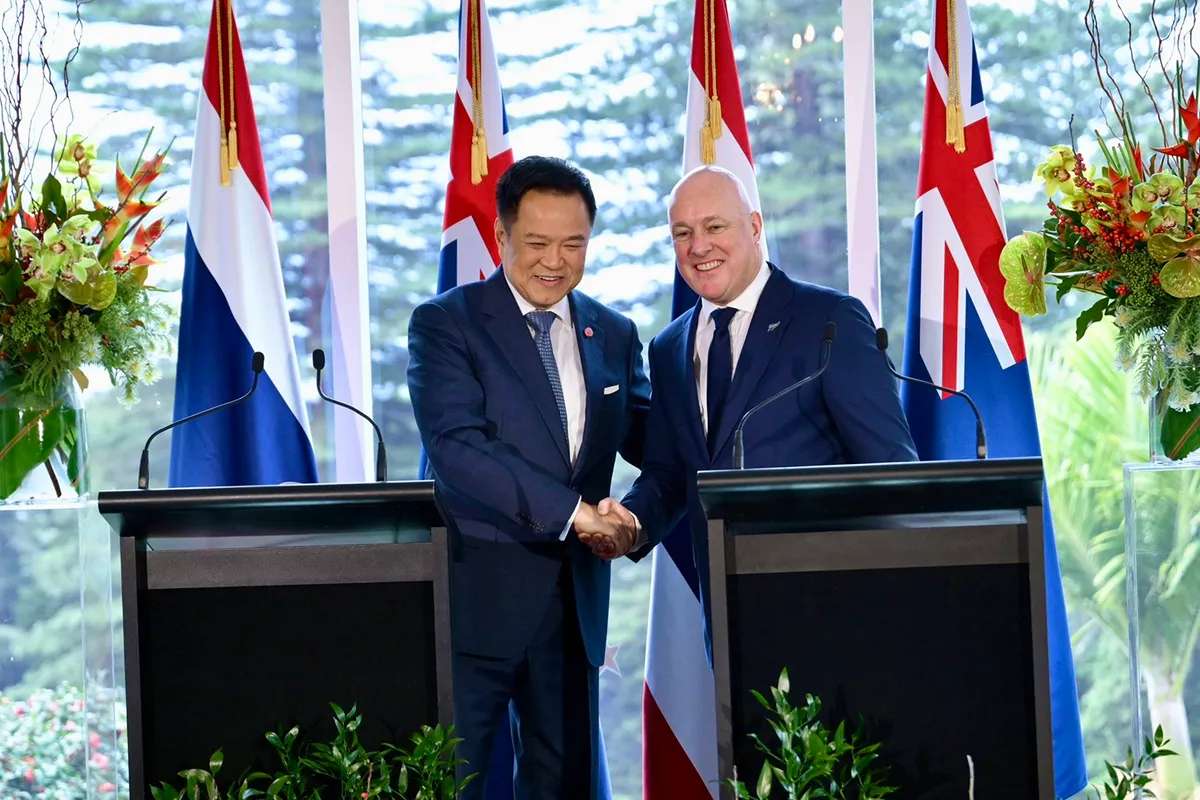
The return of direct air travel between Thailand’s capital and New Zealand’s largest city was confirmed following a meeting between Thai Prime Minister Anutin Charnvirakul and New Zealand Prime Minister Christopher Luxon in Auckland. While the specific airline was not officially named by the Thai government spokesperson, Rachada Dhnadirek, Prime Minister Luxon indicated that Thai Airways would be the carrier resuming services. This announcement marks a significant step in restoring a vital link that was suspended following the onset of the COVID-19 pandemic, which had previously halted global air travel after more than three decades of operation.
Prime Minister Luxon expressed his enthusiasm for the resumption of flights, highlighting its importance for both the tourism and trade sectors. He stated that the direct service would facilitate easier connections, re-establish a crucial air freight route, and strengthen the gateway to Asia via Bangkok. The return of the Thai flag carrier is seen as a positive indicator for increased economic activity and people-to-people exchanges.
Ambitious Trade Targets and Strategic Partnership
Beyond the resumption of flights, the leaders of Thailand and New Zealand have committed to a significant expansion of their economic relationship. They have agreed to a strategic partnership aimed at deepening overall ties and have set an ambitious target to triple bilateral trade by the year 2045. This shared vision underscores a commitment to long-term economic cooperation and mutual growth.
There was a slight variation in the reported figures for the trade target. The Thai government spokesperson indicated a goal of US$7.5 billion (approximately 246 billion Thai baht), while Prime Minister Luxon mentioned a target of NZ$13.5 billion (approximately 263 billion Thai baht). Despite this minor difference, the overarching objective of substantially increasing trade volume remains a key priority for both nations.
New Zealand’s Support for Thailand’s OECD Bid
In a significant show of diplomatic support, New Zealand has reaffirmed its backing for Thailand’s aspiration to become a member of the Organisation for Economic Cooperation and Development (OECD). This endorsement, detailed in a joint statement following the prime ministerial talks, is expected to aid Thailand in its efforts to join the influential international body, which promotes policies that improve economic, social, and environmental well-being worldwide.
Broader Implications for Bilateral Relations
The agreement to resume direct flights and the establishment of a strategic partnership signal a renewed focus on strengthening the relationship between Thailand and New Zealand. The direct air link is expected to not only boost tourism numbers from both countries but also facilitate business travel and the movement of goods, thereby supporting the growth targets. The air freight capacity provided by the flights will be particularly beneficial for industries reliant on timely transportation of products.
The strategic partnership framework provides a platform for enhanced collaboration across various sectors, including but not limited to trade and investment. It is anticipated that this closer alignment will lead to increased opportunities for businesses in both nations and foster greater understanding and cooperation on regional and global issues. The commitment to triple trade by 2045 demonstrates a long-term perspective on building a robust and mutually beneficial economic relationship.
Conclusion
The upcoming resumption of direct flights between Bangkok and Auckland, coupled with the agreement on a strategic partnership and ambitious trade goals, marks a pivotal moment in Thailand-New Zealand relations. These initiatives are poised to enhance connectivity, drive economic growth, and deepen the overall bond between the two Asia-Pacific nations, setting a positive trajectory for future cooperation.
