

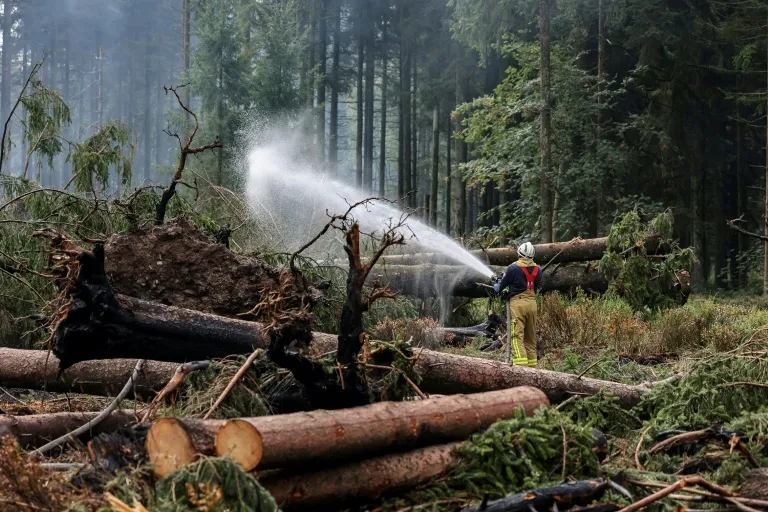
The destructive wildfire that raged through Belgium’s High Fens nature reserve, dubbed the “fire of the century,” has been brought under control, officials announced. The blaze, which consumed thousands of hectares of unique peatland and forest, is no longer spreading, barring significant shifts in weather or other unforeseen events. This marks a critical turning point after days of intense efforts by firefighters and international support crews.
High Fens Fire Contained After Significant Spread
The High Fens fire escalated rapidly over the weekend, growing to an estimated 3,000 hectares (approximately 7,500 acres) – a scale comparable to half the size of Manhattan. The inferno scorched a vast area of sensitive peatland, pine forests, and popular hiking trails within the eastern Belgian region bordering Germany. Firefighting teams worked tirelessly through the night, battling numerous flare-ups amidst challenging conditions. Powerful winds exacerbated the situation, with reports of a “mini-tornado” even impacting a town just outside the nature park.
Authorities confirmed that the fire’s western flank is now fully contained. Efforts are ongoing to extinguish remaining hotspots on the eastern side, completing the containment operation. The challenging terrain of the fens, characterized by heathland, peat bogs, and elevated boardwalks, presented significant obstacles to ground crews.
International Cooperation and Aerial Support
A coordinated international response was crucial in combating the blaze. Seven aircraft from Germany, Norway, Belgium, and Sweden conducted water-dropping missions along the fire’s perimeter and within the affected areas. These operations aimed to cool the ground, where temperatures remained exceptionally high even after the main fire was subdued. Aerial support crews, initially hampered by adverse weather earlier in the week, aimed to continue their work until dusk.
As daylight faded, civil protection drones were deployed to monitor the area for any signs of reignition. This technological support is vital in the ongoing effort to prevent the fire from resurfacing.
Ongoing Efforts and Evacuation Status
Despite the fire being declared under control, officials caution that the process of fully extinguishing it and preventing future outbreaks will be a lengthy one. It is expected to take weeks, potentially months, of continuous soaking and dousing to ensure the High Fens blaze does not reignite. Approximately 350 firefighters and emergency personnel remain on the ground, supported by numerous farmers who mobilized to assist with the operation since last week.
Encouragingly, all evacuation orders in the border region have been lifted as of Wednesday. Residents of several Belgian hamlets and a town situated on the German border have been permitted to return to their homes. The German firefighting contingent is scheduled to depart on Thursday, with Belgian firefighters, including volunteers, taking over their duties to maintain the ongoing efforts.
Context of European Wildfires
The High Fens fire is part of a broader pattern of devastating wildfires sweeping across Europe this summer. Record-breaking heatwaves and prolonged dry conditions have created tinderbox environments, leading to major blazes in countries such as France, Greece, Portugal, and Spain. The unique ecological significance of the High Fens, a protected peatland area, makes this particular fire a matter of considerable environmental concern.
Historical Parallels and Unknown Origins
The origins of the current blaze remain under investigation. Notably, the High Fens area experienced a similarly massive fire in 1911, which also occurred during a period of intense heatwaves. This historical precedent underscores the vulnerability of the region to fire under extreme weather conditions. The 1911 event is cited as Belgium’s largest wildfire prior to the current incident, highlighting the severity and scale of the recent conflagration.
Conclusion: Vigilance and Recovery
While the immediate threat of the High Fens wildfire has subsided, the long road to full recovery and prevention is just beginning. The successful containment marks a significant achievement for the dedicated emergency responders and international partners involved. The focus now shifts to the meticulous, long-term process of extinguishing remaining embers and ensuring the unique landscape of the High Fens is protected from future threats, learning from both recent events and historical precedents.
