

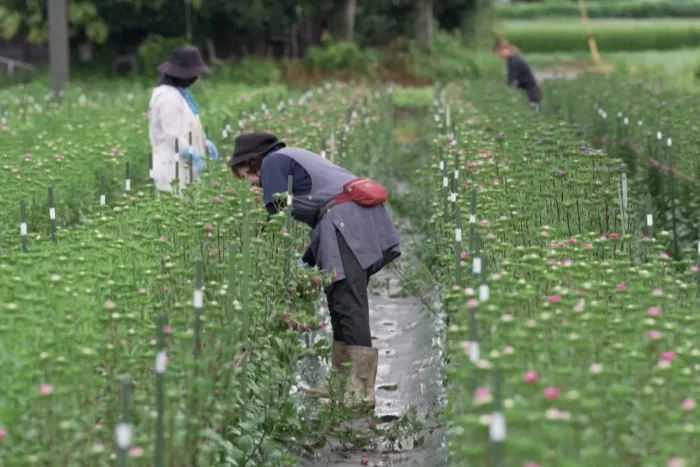
Japan’s agricultural sector is grappling with increasingly severe summer heatwaves, prompting many of its aging farmers to adopt nocturnal working schedules. This shift is a direct response to the growing risks associated with heatstroke and heat shock, which can be fatal, particularly for an older farming population. The extreme temperatures are forcing a fundamental change in traditional farming practices, as the midday sun becomes too dangerous to work under.
The Growing Threat of Extreme Heat in Japan
Recent years have seen a marked increase in the intensity and duration of summer heat in Japan. Meteorological data indicates a clear warming trend, with record-breaking temperatures becoming more frequent. This phenomenon is not just an inconvenience; it poses a significant threat to human health and agricultural productivity. The elderly, who constitute a large portion of Japan’s farming workforce, are especially vulnerable to the adverse effects of high temperatures. Heatstroke, characterized by symptoms ranging from dizziness and nausea to organ failure and death, is a primary concern.
The agricultural industry, which relies heavily on outdoor labor, is at the forefront of this challenge. Farmers typically work from sunrise to sunset, but the current climate conditions make this schedule untenable and dangerous. The need to protect farmers’ well-being has led to innovative, albeit challenging, adaptations.
Nocturnal Farming: A Necessary Adaptation
To mitigate the risks of working in extreme heat, many farmers are now embracing nighttime operations. This involves shifting labor-intensive tasks, such as planting, harvesting, and irrigation, to the cooler hours after sunset and before sunrise. While this approach offers a crucial safety measure, it introduces a new set of challenges.
Challenges of Nocturnal Work
- Reduced Visibility: Working in the dark requires specialized lighting equipment, which can be costly and may not fully replicate daylight conditions for all tasks.
- Disrupted Sleep Patterns: Farmers’ natural circadian rhythms are altered, potentially leading to fatigue and impacting overall health and productivity.
- Increased Costs: The use of artificial lighting, specialized machinery, and potentially extended work hours can lead to higher operational expenses.
- Social and Family Impact: Working at night can affect family life and social interactions, further isolating an already aging demographic.
- Pest and Wildlife Activity: Nocturnal work may increase encounters with pests and wildlife that are more active after dark.
Benefits of Nocturnal Work
- Reduced Heat Exposure: The primary benefit is the significant reduction in exposure to dangerous high temperatures, thereby lowering the risk of heatstroke.
- Potential for Increased Efficiency: In some cases, cooler temperatures might allow for more sustained work without the debilitating effects of heat exhaustion.
- Preservation of Crops: Certain crops may benefit from nighttime watering or harvesting, as it can reduce water loss and stress on the plants.
The Broader Implications for Japanese Agriculture
The shift to nocturnal farming is a symptom of a larger crisis facing Japan’s agricultural sector. The aging farmer population, coupled with the increasing severity of climate change, presents a dual threat to food security and rural livelihoods. Younger generations are often reluctant to enter the demanding and increasingly challenging field of agriculture, exacerbating the labor shortage.
Government initiatives and technological advancements are being explored to support farmers. These include developing heat-resistant crops, improving irrigation systems, and promoting mechanization to reduce manual labor. However, the immediate need for safety has pushed many farmers to adopt the nocturnal strategy as a practical, albeit difficult, solution.
The long-term sustainability of this nocturnal approach remains a question. While it addresses the immediate health risks, it may not be a viable long-term solution due to the associated costs, logistical challenges, and impact on farmers’ well-being. Experts suggest that a multi-faceted approach is necessary, combining adaptation strategies with broader efforts to combat climate change and support the agricultural workforce.
Looking Ahead: Resilience in the Face of Climate Change
The story of Japan’s nocturnal farmers highlights the profound impact of climate change on essential industries and human lives. It underscores the need for resilience and innovation in adapting to new environmental realities. As summers continue to heat up, the agricultural sector, both in Japan and globally, will likely face increasing pressure to evolve its practices to ensure the safety of its workers and the continuity of food production.
This adaptation is not just about changing work hours; it’s about a fundamental rethinking of how agriculture can be sustained in a warming world. The dedication of Japan’s farmers, working through the night to tend their fields, is a testament to their commitment, but it also serves as a stark warning about the escalating climate crisis.
