

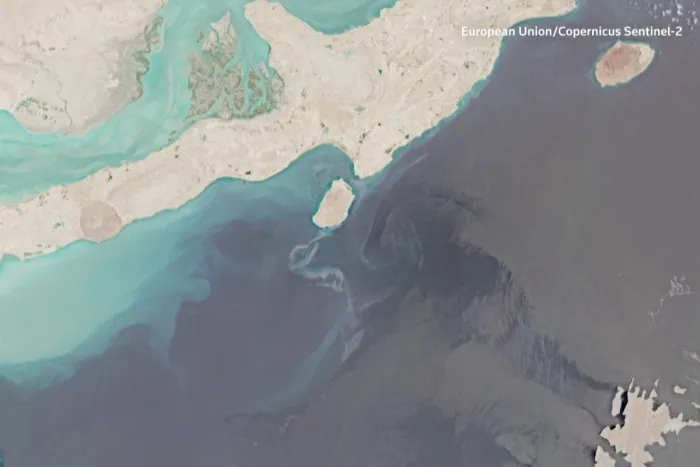
A significant oil spill, described as potentially the largest ever seen in the region, has emerged off the coast of Oman, sparking urgent concerns about widespread environmental damage. Satellite imagery confirms the presence of two large slicks, raising fears for marine life and coastal ecosystems in the vital Gulf waterway. The incident occurs amid heightened geopolitical tensions involving Iran and the United States, adding a layer of complexity to the unfolding crisis.
Unprecedented Scale of the Spill
The sheer magnitude of the oil slick has drawn immediate attention from environmental monitoring organizations. John Amos, CEO of SkyTruth, an organization that specializes in using satellite data to track environmental hazards, stated that the spill is “much larger than anything seen previously.” This assessment underscores the severity of the situation and the potential for long-lasting ecological consequences.
Initial satellite observations indicate the presence of two distinct, expansive slicks. While the exact origin and cause of the spill are still under investigation, its appearance in waters near Oman, a strategically important maritime nation, has amplified concerns among regional governments and international bodies. The Gulf is a critical shipping lane and home to sensitive marine habitats, making any large-scale pollution event particularly devastating.
Geopolitical Context and Potential Triggers
The emergence of this massive oil spill coincides with a period of elevated tensions between Iran and the United States, characterized by a series of incidents involving oil tankers and other commercial vessels in the region. These tit-for-tat actions have previously raised alarms about the safety of maritime traffic and the potential for accidental environmental damage. While no direct link has been officially established between the recent geopolitical escalations and the oil spill, the timing has inevitably fueled speculation and heightened anxieties.
The Gulf region is a global hub for oil production and transportation, making it particularly vulnerable to disruptions. Past incidents, though often smaller in scale, have demonstrated the devastating impact of oil spills on fisheries, tourism, and the delicate balance of marine ecosystems. The current spill’s size suggests that the potential for such impacts is significantly amplified.
Environmental Impact and Response Efforts
The immediate concern following the detection of the oil slicks is the potential impact on marine biodiversity. Seabirds, marine mammals, fish populations, and sensitive coastal habitats like coral reefs and mangrove forests are all at risk. Oil can cause suffocation, poisoning, and long-term damage to reproductive and developmental processes in marine life. Furthermore, the economic repercussions for coastal communities reliant on fishing and tourism could be substantial.
Authorities in Oman and neighboring countries are reportedly mobilizing resources to assess the situation and formulate a response. This typically involves deploying containment booms to limit the spread of the oil, using skimmer vessels to remove oil from the water’s surface, and potentially employing dispersants, although the use of such chemicals is often debated due to their own environmental implications. Aerial surveillance and on-site assessments are crucial for understanding the spill’s trajectory and developing effective cleanup strategies.
Challenges in Containment and Cleanup
Containing and cleaning up a spill of this magnitude presents immense logistical and technical challenges. Factors such as weather conditions, sea currents, and the type of crude oil involved significantly influence the effectiveness of response operations. The vastness of the slick means that a coordinated, multi-national effort may be required, involving sharing resources, expertise, and equipment.
The long-term environmental monitoring of the affected areas will also be critical. Even after the visible oil is removed, residual contamination can persist in sediment and marine life, leading to ongoing ecological damage. Understanding the full extent of the environmental recovery process will likely take years.
International Scrutiny and Future Prevention
The scale of the Oman oil spill is expected to draw significant international attention and scrutiny. It highlights the inherent risks associated with oil transportation and the critical need for robust safety protocols and emergency response capabilities in vulnerable regions. Discussions are likely to intensify regarding international maritime regulations, vessel safety standards, and the responsibilities of nations and corporations in preventing and mitigating such environmental disasters.
As investigations into the cause of the spill continue, there will be a strong focus on identifying responsible parties and ensuring accountability. The incident serves as a stark reminder of the fragility of marine environments and the profound consequences of industrial accidents, particularly in geopolitically sensitive areas. The global community will be watching closely as Oman and its partners work to address this unfolding environmental crisis and mitigate its far-reaching impacts.
