

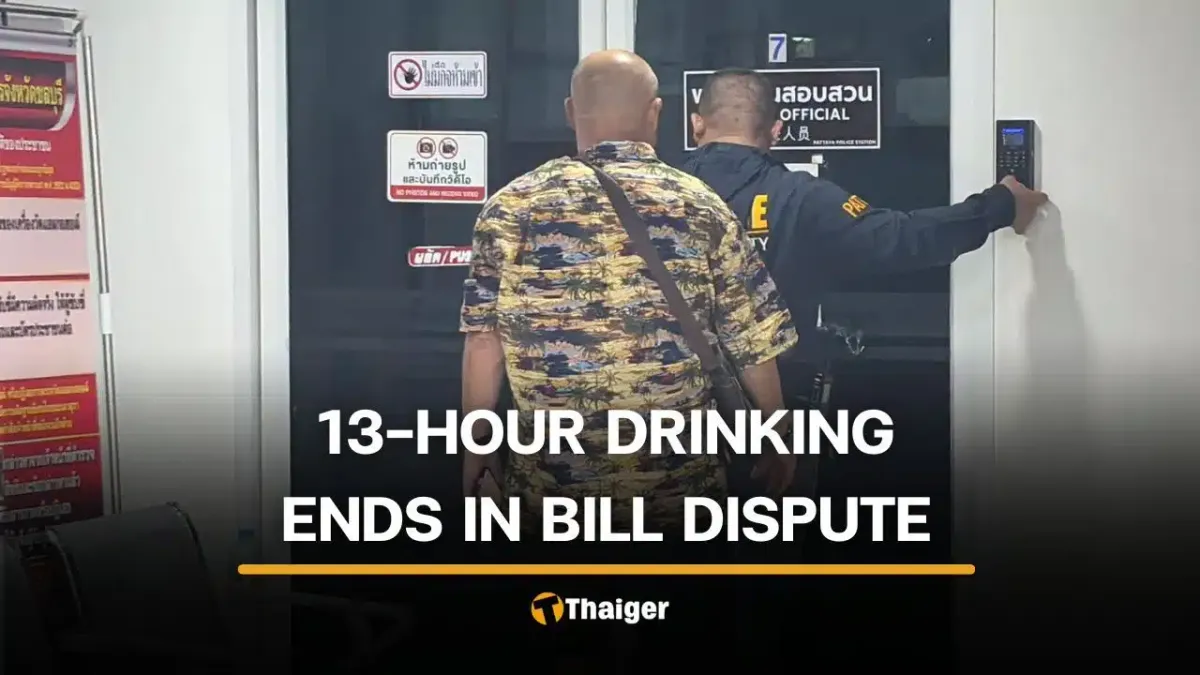
Pattaya, Thailand – A dispute over an extensive bar tab led to a Thai bar owner bringing an Australian tourist to the police station after the man allegedly refused to pay a bill totaling 32,540 baht (approximately US$980). The incident, which involved over 13 hours of drinking, was mediated by police at the Mueang Pattaya Police Station on Wednesday night.
The Allegation of an All-Day Bar Tab
The bar owner, identified as 46-year-old Meeliya, along with her staff, escorted the 53-year-old Australian man, named Thomson, to the police station around 11:30 PM. Meeliya operates a bar located on Soi Bua Khao in Pattaya. She stated that Thomson had arrived at her establishment significantly before its usual opening hours, around 8 AM, and requested service.
According to Meeliya and her staff, they decided to open the bar specifically for Thomson, who is reportedly a regular customer and had previously settled his bills without issue. Throughout the day, Thomson consumed a substantial amount of alcohol and also purchased drinks for several female staff members. He reportedly used the bar’s bell to signal rounds for the staff, which encouraged a large number of them to join him at his table.
Dispute Arises Over Declined Advances and Bill Discrepancy
The situation reportedly escalated when Thomson allegedly became close to one of the female employees and invited her to go out with him. When the employee declined his advances, Thomson allegedly became displeased and subsequently refused to pay the accumulated bill. Meeliya asserted that the total amount was not solely for Thomson’s personal consumption but also included the cost of the numerous rounds he had bought for the staff throughout the day.
Meeliya emphasized the financial implications for her business, noting that opening the bar at 8 AM solely for one customer incurred costs beyond just the drinks, including staff wages for the extended hours. The bar had reportedly been open for Thomson’s service for approximately 13 hours, from 8 AM until around 9 PM.
Police Mediation and Next Steps
When an agreement could not be reached between Meeliya and Thomson, the bar owner decided to involve the police. Officers at the Mueang Pattaya Police Station facilitated a discussion between the two parties. Meeliya maintained her demand for the full payment of 32,540 baht, presenting it as the total cost incurred for the day’s service and drinks.
However, Thomson reportedly disputed the accuracy of the bill, claiming that the charges did not equate to the sum Meeliya was demanding and consequently refused to pay the requested amount. The police acknowledged the disagreement and stated that they would undertake a thorough examination of the details presented by both sides. This review would include scrutinizing the itemized bill and any account records provided by both the bar owner and the customer before determining how to proceed further.
Understanding Bar Tabs and Customer Obligations
This incident highlights the complexities that can arise in hospitality settings, particularly concerning extended service periods and the purchase of drinks for staff. In Thailand, as in many other countries, establishing a clear understanding of what is included in a bar tab is crucial. When customers purchase drinks for staff, it is generally understood that these costs are added to their personal bill.
Bar owners often incur significant operational costs, including rent, utilities, staff salaries, and the cost of goods sold. Opening a venue outside of regular hours or extending service for a single patron represents an additional expense. Therefore, disputes over unpaid bills can have a considerable impact on a business’s profitability.
Legal Framework and Dispute Resolution
While police can act as mediators in such civil disputes, the ultimate resolution often depends on the evidence presented and a mutual agreement. If an agreement cannot be reached, the matter might escalate to a civil court. Key factors in such cases typically include:
- Evidence of Consumption: Detailed records or receipts showing the items consumed and their prices.
- Agreements on Staff Drinks: Clarity on whether drinks purchased for staff were intended as gifts or part of a service agreement.
- Operating Hours and Special Services: Documentation of any special arrangements made for the customer, including extended hours or private service, and associated costs.
The police’s role in this instance was to facilitate communication and attempt to find a middle ground. Their investigation into the bill’s specifics aims to ensure fairness for both the bar owner and the customer before any further action is taken.
Conclusion
The situation at the Pattaya bar remains under review by local authorities. The outcome will likely depend on the detailed examination of the bar’s billing records and any counter-claims or evidence provided by the Australian tourist. This case serves as a reminder of the importance of clear communication and financial responsibility in commercial transactions, especially within the entertainment and hospitality industry.
