

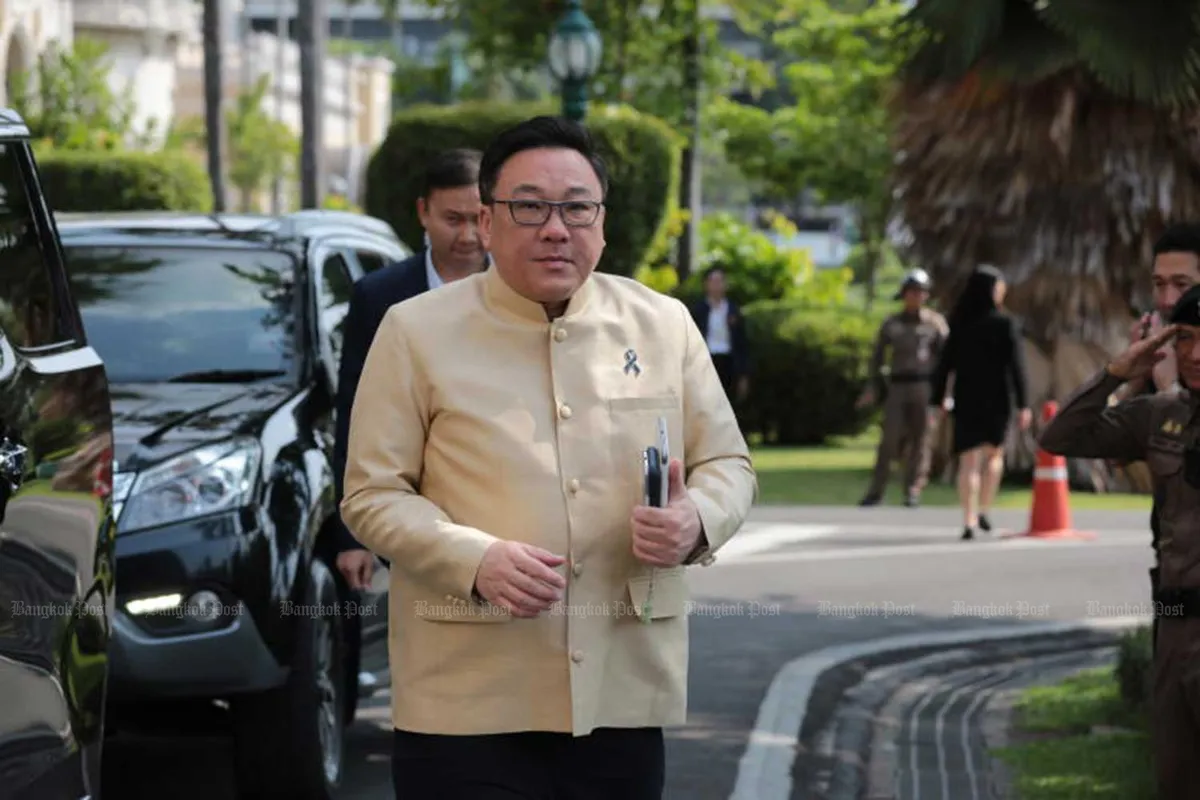
A senior figure within Thailand’s ruling coalition has moved to quell speculation about potential government instability, emphasizing that upcoming gatherings are for strengthening cooperation, not for strategizing against internal challenges. Julapun Amornvivat, a leader of the Pheu Thai Party (PT), stated that a planned dinner for coalition leaders is designed to enhance communication and synchronize government operations.
Coalition Unity and Communication Efforts
The remarks by Julapun Amornvivat, who holds a significant position within the Pheu Thai Party, directly address recent whispers and concerns circulating regarding the stability of the current coalition government. He clarified that the scheduled dinner event on Sunday is purely a proactive measure aimed at fostering better dialogue and ensuring a more cohesive approach to governing. The intention, he stressed, is to improve the day-to-day coordination of government activities and to present a united front, rather than to prepare for any form of parliamentary challenge, such as a no-confidence debate.
This clarification comes at a time when political maneuvering and public discourse often lead to heightened scrutiny of coalition dynamics. By framing the meeting as a routine, albeit important, step in governance, Pheu Thai aims to project an image of stability and forward momentum. The party leader’s statements suggest a commitment to reinforcing the bonds between coalition partners and ensuring that all parties are aligned on key policy objectives and operational strategies.
The Role of Communication in Governance
Effective communication is widely recognized as a cornerstone of successful coalition governments. When multiple political parties unite to form a government, maintaining open lines of communication is crucial for managing differing priorities, resolving potential conflicts, and ensuring that legislative and executive actions are coordinated. The planned dinner, therefore, can be seen as a practical application of this principle.
Such meetings provide a valuable platform for leaders to:
- Share Updates: Discuss progress on ongoing government initiatives and upcoming policy proposals.
- Address Concerns: Provide an informal setting to raise and resolve any issues or disagreements that may have arisen between coalition partners.
- Align Strategies: Ensure that all parties are working towards common goals and understand the broader strategic direction of the government.
- Build Rapport: Strengthen personal relationships among leaders, which can be instrumental in navigating complex political situations.
Addressing No-Confidence Debate Speculation
The specific mention of a no-confidence debate by Julapun Amornvivat indicates that such concerns have been part of the political narrative. In parliamentary systems, no-confidence votes are a significant mechanism through which the legislature can hold the executive accountable. The possibility of such a vote, whether initiated by the opposition or arising from internal coalition rifts, can create an atmosphere of uncertainty.
By explicitly stating that the dinner is not for preparing for a no-confidence debate, Pheu Thai is attempting to preemptively dismiss these anxieties. This suggests a confidence within the party and, presumably, within the broader coalition that they possess sufficient support and internal cohesion to withstand any potential parliamentary challenges. It signals a focus on constructive governance rather than defensive political posturing.
The Political Landscape in Thailand
Thailand’s political landscape has historically been characterized by dynamic coalition formations and periods of political flux. Understanding the current context requires acknowledging the complexities of forming and maintaining a stable government that comprises diverse political interests. The Pheu Thai-led coalition, like any multi-party government, faces the ongoing task of balancing these interests while delivering on its mandate.
The emphasis on communication and coordination by Pheu Thai can be interpreted as a strategic move to reinforce the government’s stability and public image. In a political environment where stability is often a key concern for voters and investors alike, proactive measures to demonstrate unity and effective governance are paramount. The party’s leadership appears keen to project an image of a well-functioning government, capable of navigating both domestic policy challenges and the inherent complexities of coalition politics.
Conclusion: A Focus on Collaborative Governance
In summary, Pheu Thai leader Julapun Amornvivat’s statements underscore a commitment to strengthening the current coalition government through enhanced communication and collaborative work. The planned dinner is presented not as a response to internal threats or external parliamentary challenges, but as a deliberate effort to foster unity and improve operational efficiency. This approach highlights the ongoing importance of dialogue and alignment among coalition partners as they work towards their shared governance objectives, aiming to ensure stability and effective policy implementation in the Thai political arena.
