

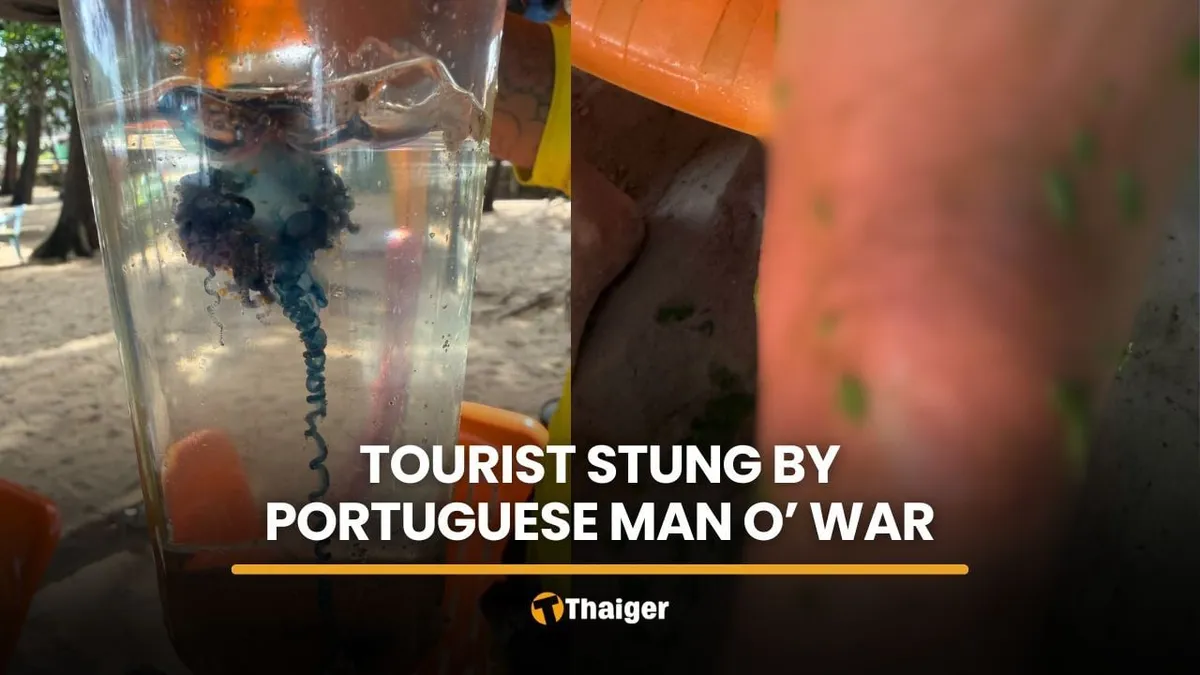
A foreign tourist required hospitalization after a severe allergic reaction to a sting from a Portuguese man o’ war at Naithon Beach in Phuket. Lifeguards administered immediate first aid before the individual was transported to a medical facility.
Portuguese Man o’ War Incident at Naithon Beach
The incident occurred at Naithon Beach, located in the Sakhu subdistrict of Thalang district. Images shared from the scene depicted what appeared to be a Portuguese man o’ war contained in a vessel, alongside visuals of the tourist’s leg exhibiting marks from the encounter. Lifeguards were quick to respond, providing essential first aid on-site before ensuring the tourist received further medical attention at a hospital.
Safety Warnings and First Aid Procedures
Following the event, lifeguards issued a crucial warning to both local residents and international visitors, urging extreme caution when entering the ocean. They emphasized the importance of avoiding direct contact with Portuguese man o’ war or any other venomous marine life. Individuals encountering such creatures are advised to alert lifeguards or relevant authorities immediately and refrain from touching them with bare hands.
What to Do After a Portuguese Man o’ War Sting
Medical experts outline specific steps for managing stings from Portuguese man o’ war, aiming to prevent further envenomation and alleviate symptoms. According to information from San Paolo Hua Hin Hospital, the immediate priority is to carefully remove any lingering tentacles from the skin. This should be done using an object, such as a credit card, piece of paper, or stick, ensuring no direct skin contact is made.
Crucially, the affected area should not be rubbed or massaged. Applying certain medications is also discouraged, as even invisible venom-containing structures, known as nematocysts, may remain on the skin. Pressure or friction can trigger these nematocysts, potentially worsening the reaction.
Rinsing and Pain Management
Rinsing the affected area with seawater is recommended to help wash away any remaining tentacles. It is vital to avoid using fresh water, as this can inadvertently cause the nematocysts to discharge more venom. If available, a spray anesthetic can be beneficial in reducing pain and discouraging the urge to rub the skin. In the absence of anesthetic, gently applying ice can help to soothe the discomfort.
Recognizing Severe Symptoms
Prompt medical attention is paramount for individuals experiencing severe reactions. Anyone exhibiting signs such as difficulty breathing, dizziness, or loss of consciousness must be transported to a hospital without delay. These symptoms can indicate a serious systemic reaction to the venom.
Seasonal Considerations for Marine Encounters
The hospital also noted that jellyfish, including the Portuguese man o’ war, are more prevalent during certain times of the year. Tourists and locals planning to swim are advised that the rainy season often sees an increase in jellyfish populations in coastal waters. Considering this seasonality can help individuals make informed decisions about entering the sea and potentially avoid encounters with venomous marine organisms.
The Portuguese man o’ war, while often mistaken for a jellyfish, is actually a siphonophore – a colony of specialized organisms working together. Its distinctive blue, gas-filled float allows it to drift on the ocean surface, propelled by winds and currents. Its long, venomous tentacles, which can trail for many meters, are used to paralyze and capture prey. The sting can cause excruciating pain, welts, and in severe cases, systemic effects.
Phuket, a popular tourist destination, relies heavily on its pristine beaches and marine environments. Incidents like this underscore the importance of respecting marine wildlife and adhering to safety guidelines provided by local authorities and lifeguards. Awareness and preparedness are key to ensuring a safe and enjoyable experience for all visitors to the island’s beautiful shores.
