

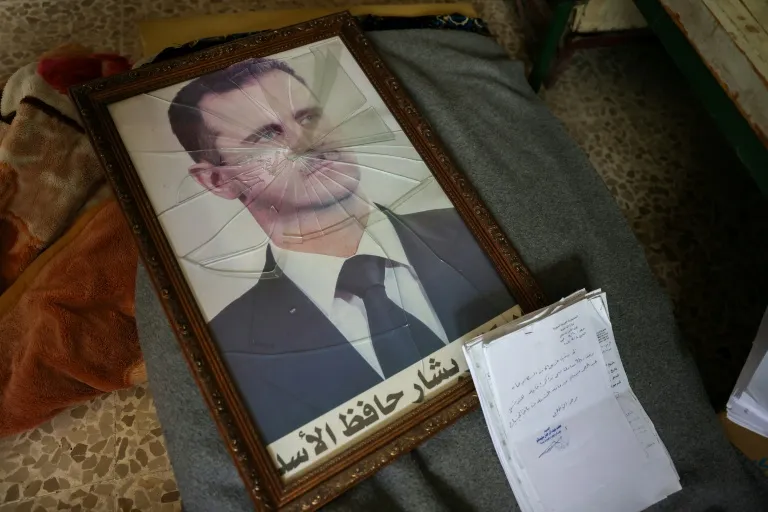
In a landmark ruling, a Syrian court has sentenced Bashar al-Assad to death in absentia for his role in widespread atrocities committed during the country’s protracted civil war. This marks the first such judgment under Syria’s transitional leadership, which assumed power in December 2024 with a mandate to ensure justice and accountability for crimes perpetrated during Assad’s tenure. Assad himself reportedly fled to Moscow as opposition forces advanced on the capital, Damascus.
Court Convicts Assad for Crimes Against Humanity
Presiding Judge Fakhr al-Din al-Aryan announced the verdict at a Damascus court, detailing convictions against Assad for a series of grave offenses. These included premeditated murder, intentional killing of multiple individuals, and the deliberate killing of children under the age of 15. The court also found him guilty of torture, torture resulting in death, and unlawful deprivation of liberty on numerous occasions. These acts were collectively classified as crimes against humanity and war crimes, leading to the ultimate sentence of death.
The legal proceedings against Assad and other officials accused of atrocities began in April. The charges stemmed from the violent suppression of pro-democracy protests that ignited the Syrian civil war. The conflict, which erupted in 2011, has had devastating consequences, resulting in over half a million deaths, displacing millions, and leading to the disappearance of tens of thousands, many of whom are believed to have perished in the nation’s notorious prison system.
Death Sentences for Former Officials
Alongside Bashar al-Assad, the court imposed death sentences in absentia on six former military and security officials. Among those sentenced is Maher al-Assad, Bashar’s brother, who commanded the elite Fourth Armored Division and is also reported to have left the country. Other convicted individuals include former Defense Minister Fahd al-Freij and Louay al-Ali, who previously led military intelligence operations in Daraa province.
The charges against these former officials mirrored those against Bashar al-Assad, encompassing murder, incitement to murder, torture leading to death, and repeated instances of unlawful detention. These actions were also categorized as crimes against humanity and war crimes by the court.
Atif Najib: The Sole Defendant in Custody
In a notable aspect of the trial, former security official Atif Najib was the only individual present in court to face the charges. Najib, a cousin of Bashar al-Assad, was arrested in January of the previous year and was also sentenced to death for crimes against humanity. These offenses were committed during his tenure as head of political security in Daraa province, the region where the 2011 uprising originated.
The court found Najib guilty of murder, the intentional killing of children under 15, and torture resulting in death. The judge emphasized that the acts attributed to Najib constituted crimes against humanity, warranting the court’s most severe penalty.
Origins of the Syrian Uprising
The Syrian conflict traces its roots back to March 2011 in Daraa. The initial spark was the arrest of 15 students who allegedly scrawled anti-government graffiti on public walls. Reports from residents at the time indicated that these students were subjected to torture, which in turn fueled a protest demanding their release. This demonstration reportedly escalated into violence.
Security forces responded to peaceful demonstrations with significant force, employing live ammunition to disperse sit-in protests across various locations. Following this crackdown, Atif Najib was dismissed from his position, as the protests rapidly spread to encompass other provinces throughout Syria.
Judge al-Aryan noted that Najib had pleaded not guilty to the charges and displayed no signs of remorse during the proceedings. Bashar al-Assad ascended to the Syrian presidency in 2000, succeeding his father, Hafez al-Assad.
Broader Context of the Conflict
The Syrian civil war, which began in 2011, has been characterized by immense human suffering and widespread destruction. The initial protests, inspired by the Arab Spring movements in neighboring countries, were met with a brutal response from the government. This led to an armed insurgency and the involvement of numerous regional and international actors, transforming the conflict into a complex geopolitical quagmire.
International bodies have extensively documented the human rights abuses committed by all sides, but the convictions and sentences handed down in this recent trial specifically target the former regime’s actions. The prosecution focused on systematic violence, torture, and extrajudicial killings as core elements of crimes against humanity and war crimes.
The death sentence, while a significant judicial outcome, is unlikely to be immediately enforceable given Bashar al-Assad’s reported presence in Russia. However, the ruling serves as a powerful symbolic statement from Syria’s new leadership, signaling a commitment to holding perpetrators of past abuses accountable. The transitional government has pledged to rebuild the nation and establish a framework for future governance that prioritizes human rights and the rule of law, though significant challenges remain in achieving lasting peace and reconciliation.
