

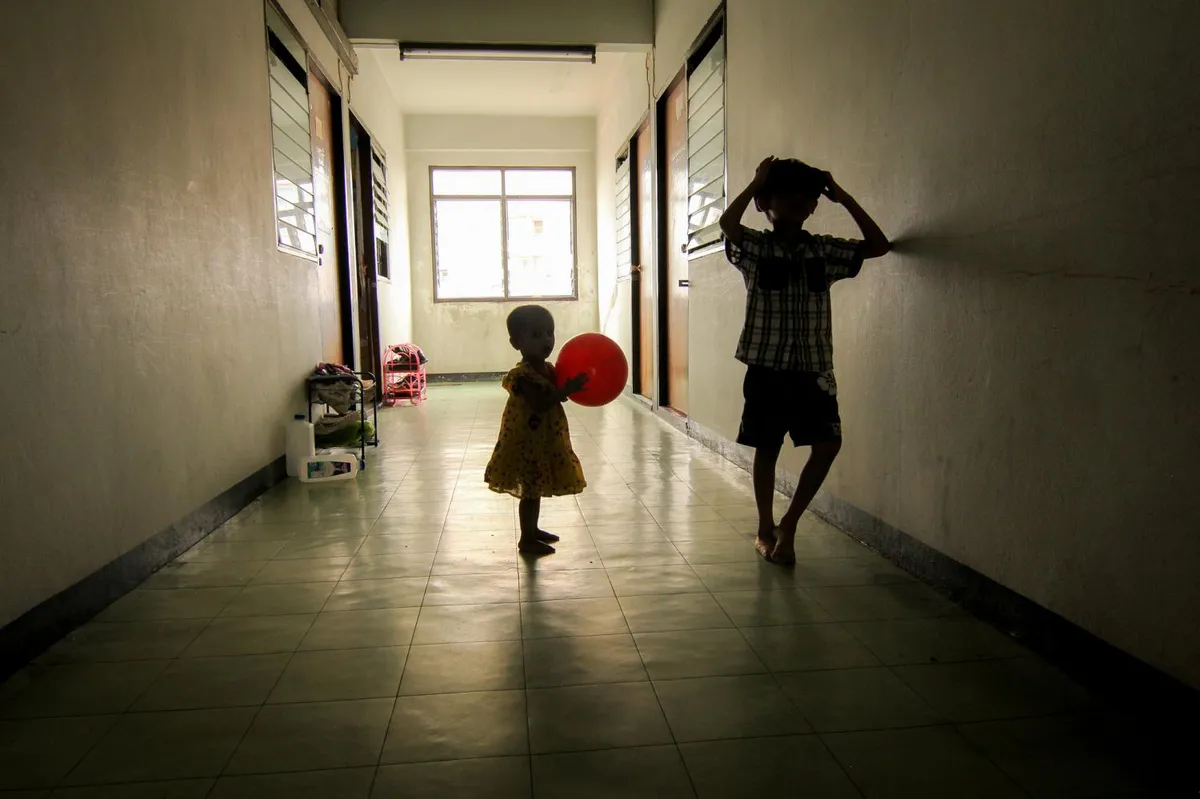
In a world grappling with an escalating displacement crisis, Thailand is home to a significant population of asylum seekers and refugees whose daily lives are defined by legal uncertainty. Projections indicate that over 136 million individuals globally will be forcibly displaced or stateless by 2026, with around 30.5 million being registered refugees. Within Thailand, approximately 7,000 asylum seekers from 45 different countries reside, according to Asylum Access Thailand (AAT). However, for these individuals, reaching safety is often just the prelude to a protracted struggle.
A Legal Grey Area
Unlike nations that have ratified the 1951 Refugee Convention, Thailand does not formally recognize refugee status under its domestic laws. While many asylum seekers and refugees possess documentation issued by the United Nations High Commissioner for Refugees (UNHCR), Thai authorities largely categorize them under immigration regulations. This creates a precarious legal vacuum that profoundly impacts nearly every facet of their existence.
Many urban refugees enter Thailand on tourist visas or without any formal immigration status. Even after receiving refugee recognition from the UNHCR, they can still be considered to be residing unlawfully once their visas expire. This lack of recognized legal standing denies them formal rights to work, severely limits their access to essential healthcare and education, and leaves them vulnerable to arrest, detention, and deportation.
While the international principle of non-refoulement offers protection against forced return to dangerous situations for recognized refugees, it does little to alleviate the practical challenges of living in prolonged uncertainty. AAT reports that urban refugees often live discreetly, relying on community support, charitable organizations, and informal employment for survival. Tragically, some asylum seekers, including children, have faced detention.
For those apprehended, release often hinges on financial guarantees, the approval of resettlement applications, or circumstances beyond their immediate control.
The Enduring Struggle for Safety
Escaping persecution offers a degree of safety, but for numerous refugees in Thailand, hardship persists in less visible, quieter ways. Sami, a mother of three from Pakistan, has navigated nearly a decade of uncertainty. Her family belongs to the Ahmadiyya Muslim community, a group that has long endured discrimination and persecution in Pakistan. The decision to leave was precipitated by escalating threats to her children’s safety.
“The school called me and said they didn’t want my children to come to school and could not promise if someone would hurt them,” Sami recounted. The family sold all their possessions and journeyed to Thailand, hoping it would serve as a transit point for permanent resettlement. Instead, they found themselves in a protracted waiting period.
Although the family has since been recognized as refugees by the UNHCR, this status has not translated into legal work rights. “There are some people who give you work but pay you half salary because you don’t have anything that would allow you to work,” she explained.
Once a teacher in Pakistan, Sami now undertakes informal cooking jobs, preparing dishes like biryani, curries, and samosas when orders come through refugee networks and aid groups. She expresses gratitude for every order, as it provides essential income to support her family. However, the absence of a stable income makes daily financial decisions a constant source of anxiety.
Healthcare for her family is often limited to over-the-counter remedies, as proper medical treatment is frequently unaffordable. Food is rationed, with meals carefully stretched to last longer. “My children sometimes want more curry,” she shared. “I say sorry, we eat tomorrow, drink some water.” Years of waiting have also taken a toll on her children, who have grown up in Thailand and speak the language fluently. “Sometimes they say, ‘Mama, you promised we would go to another country, but we are still stuck here.'” Her response to them remains consistent.
For Sami, legal access to employment would represent the most significant positive change. “If we were allowed to work, waiting would be easier,” she stated. “We are educated people. We do not want to ask others for help.”
The Human Cost of Waiting
While Sami’s experience is defined by waiting, 24-year-old Zom embodies another reality for urban refugees: growing up in a country that feels like home while remaining legally invisible. Zom arrived in Thailand from Vietnam in 2011 with her Hmong family, fleeing what they perceived as religious persecution. Her family applied for refugee status but was ultimately rejected. Nonetheless, her father maintained that their move to Thailand was the correct decision. “If we stayed there, we might die,” she recalled, referencing her father’s perspective.
Having spent the majority of her life in Bangkok, Zom speaks fondly of Thailand and its people. “Apart from the issue of documents, everything here is good,” she said. However, without proper documentation, nearly every opportunity remains out of reach. She has worked in informal roles such as packing goods, selling products, and in restaurants.
Access to higher education has been unattainable for Zom, as formal identification documents are a mandatory requirement for enrollment. “I tell employers honestly that I have a high school diploma but no documents,” she explained. “If they understand, I work for them.” Zom notes that employers sometimes offer lower wages due to her undocumented status. “We don’t have paperwork. They can just pay us how much they want or not hire us at all.”
The risks extend beyond employment. Police checks are common in her neighborhood, and the inability to produce identification can lead to detention. She knows individuals who have experienced this. “My friend,” she said softly. Her friend was eventually released after securing approval for resettlement to another country. “But if there’s no opportunity, people just remain in detention for who knows how long.” Unlike many refugees seeking a future elsewhere, Zom aspires to remain in Thailand permanently and is pursuing legal documentation through official channels. “The only thing I hope for is to become Thai,” she expressed.
A Plea for Dignity
Despite years of enduring uncertainty, both women find Thailand to be safer and more welcoming than the countries they fled. Sami can practice her faith freely, and her children can move about without fear. Zom, meanwhile, has built her life and identity within the country. What troubles them most is not the kindness of ordinary citizens, but a legal framework that leaves them suspended between protection and illegality.
Their appeals are straightforward. “I would ask for permission to work legally,” Sami stated. Zom’s request is equally modest. “If we haven’t broken the law, do we really deserve to be arrested?” She paused, then added, “We’re human beings too.”
