

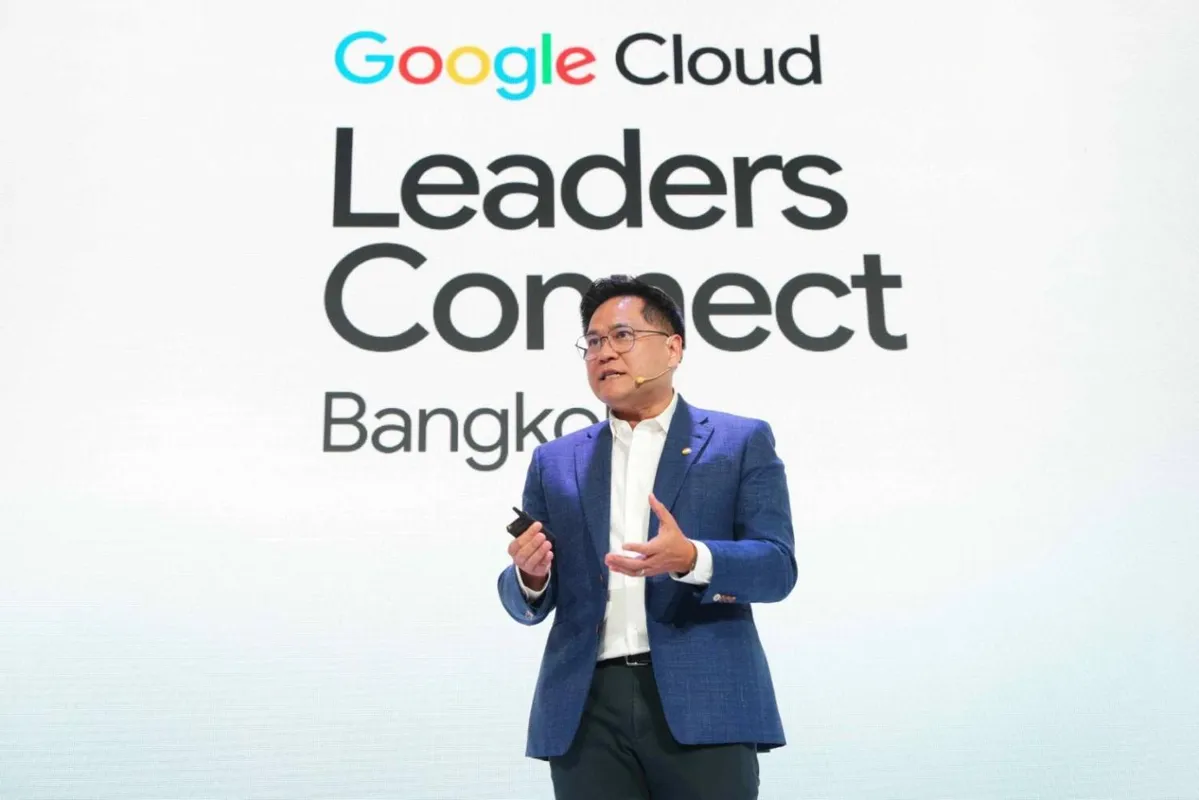
Thai businesses are being strongly encouraged to move beyond isolated AI tools and integrate artificial intelligence deeply into their core operations. This strategic shift is crucial for enhancing efficiency, automating routine tasks, and enabling more informed, data-driven decision-making, according to insights from Google Cloud Thailand. Many companies currently operate at the “individual AI” stage, where employees use public AI applications without formal oversight or enterprise-wide governance. To truly harness AI’s potential and unlock significant business value, a transition to what is termed “institutional AI” is necessary. This involves embedding AI across the entire organization, supported by unified governance, standardized workflows, and robust data management practices.
The Transition to Institutional AI
Achieving “institutional AI” requires a multi-faceted approach. Key elements include establishing standardized AI policies that span all departments, fostering collaboration between different business functions, and embedding AI directly into daily workflows. Crucially, this integration must be supported by secure access to enterprise data, ensuring that sensitive information remains protected. Instead of relying on isolated pilot projects, organizations need to pursue comprehensive, organization-wide integration. When executed effectively, AI integration has the potential to contribute significantly to Thailand’s economy, with projections suggesting up to 1.4 trillion baht in economic value over the next five years, alongside the creation of numerous new jobs and professions.
Key Factors for Successful Enterprise AI
The success of enterprise-level AI adoption hinges on three primary factors:
- Seamless Integration: AI must be integrated into the daily work routines of employees, becoming a natural part of their tasks rather than an additional burden.
- Secure Data Access: Companies need to provide secure access to internal corporate data without compromising information security or risking data leakage.
- Measurable Business Outcomes: The implementation of AI solutions must demonstrate clear, quantifiable business benefits and return on investment.
To facilitate this transition, Google Cloud offers solutions like Gemini Enterprise. This platform allows organizations to leverage AI capabilities while ensuring that proprietary corporate information is kept within the company’s secure environment. Furthermore, the Gemini Enterprise Agent Platform empowers businesses to develop and manage multiple specialized AI agents for functions such as customer service or inventory management. These agents can then collaborate effectively, reducing the need for extensive manual programming.
Google Cloud’s Integrated AI Infrastructure
Google Cloud is also emphasizing its vertically integrated AI infrastructure, which encompasses custom chips, cloud infrastructure, AI models, analytics, and applications. As organizations move from initial testing phases to full-scale production, managing the economics and predictability of complex AI workloads becomes a critical differentiator. A key advantage highlighted is “tokenomics,” a strategy that optimizes AI spending by allocating simpler tasks to smaller, more cost-effective AI models, while reserving larger, more advanced models for complex requests. This intelligent allocation helps organizations manage their AI budgets more efficiently.
Beyond Technology: Governance and Human Capital
Widespread enterprise adoption of AI will not solely depend on access to advanced technology. It also necessitates that organizations fundamentally redesign their business processes, strengthen their governance frameworks, and invest in their human capital. Equipping employees with the necessary skills and fostering a culture that embraces AI are essential to ensure that these technologies deliver tangible business value. This holistic approach, combining technological advancement with strategic organizational changes, is vital for maximizing the benefits of AI.
Addressing Evolving Security Threats with AI
The integration of AI also brings significant implications for cybersecurity. AI has dramatically altered the threat landscape, enabling attacks that once took weeks to execute to now be carried out in mere minutes or hours. To counter this evolving range of threats, organizations require more than just a single AI model or agent. Instead, a comprehensive solution involving a collection of models is needed. This solution should be capable of analyzing systems, prioritizing the most significant threats, rapidly patching vulnerabilities, and continuously monitoring for new attacks. Statistics indicate a sharp rise in vulnerabilities, with numbers tripling from approximately 20,000 in 2020 to 60,000 in the current year. Concurrently, the time required to weaponize these vulnerabilities has decreased significantly. Fixing security flaws during the coding phase can take mere seconds, a stark contrast to the potentially 40 hours required after deployment.
Driving Economic Value in Thailand
Google Cloud is committed to partnering with Thai enterprises and their partners to leverage the full potential of its open, end-to-end AI stack. The goal is to help these businesses translate AI’s promise into concrete economic value. The company’s commitment is underscored by its DNA of delivering open and integrated solutions, coupled with investments in local infrastructure. This approach ensures robust support for customers, particularly during times of uncertainty and rapid AI development. Regarding concerns about the environmental impact of data centers, Google highlights that its facilities are among the most energy-efficient globally, achieving 83% greater efficiency compared to standard data centers.
