

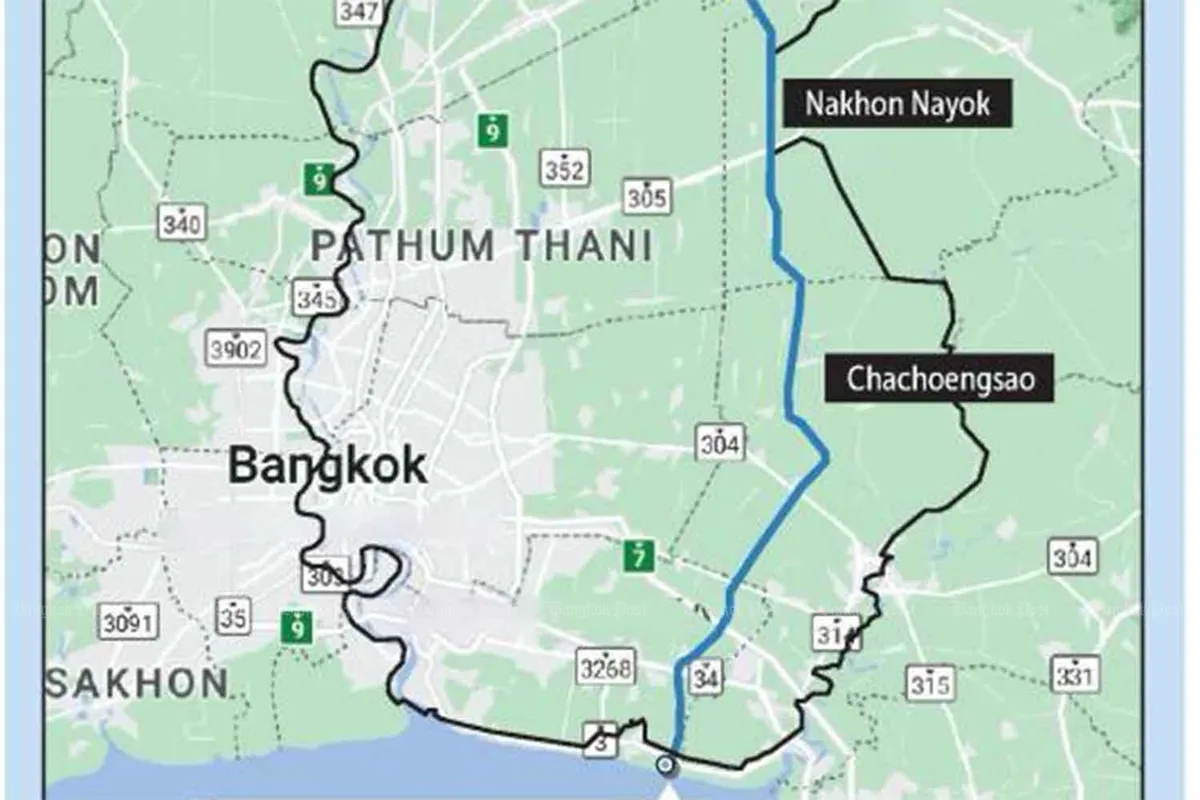
Local community groups and residents in Nakhon Nayok are strongly refuting official statements that suggest widespread public acceptance of the proposed Pasak–Gulf flood diversion canal project. Organizations including the Nakhonnayok Citizen Association and the Nakhon Nayok Civic Network have voiced significant opposition, asserting that their feedback has been misrepresented as mere concerns rather than outright rejection of the controversial infrastructure plan.
Community Groups Challenge Official Consultation Findings
The latest wave of criticism stems from the minutes of the fifth National Water Resources Committee (NWRC) meeting, held on December 3, 2025. During this session, the committee reviewed the Pasak–Gulf flood diversion canal project. According to the NWRC’s secretariat, public consultations conducted for the project revealed “no objections or conflicts from the public, only concerns regarding the project.”
However, the civic groups argue that this characterization is a “serious inconsistency with the facts” and a deliberate distortion of the genuine sentiments of those directly impacted in Nakhon Nayok province. They contend that the official report fails to acknowledge the depth of local opposition to the canal.
Evidence of Public Protest Cited
To substantiate their claims, the Nakhonnayok Citizen Association pointed to a public hearing held on June 5, 2024, at Ongkharak School in Ongkharak district. During this event, residents reportedly made their opposition clear by displaying anti-project placards and actively voicing their dissent. This direct demonstration of protest, the groups argue, was downplayed or omitted in the official summary presented to the NWRC.
Furthermore, the association highlighted instances where project representatives allegedly failed to provide satisfactory answers to critical questions posed by attendees. These questions pertained to the potential environmental ramifications and the broader socio-economic impacts the canal could have on local communities. The lack of clear and comprehensive responses, they suggest, further fueled resident apprehension and opposition.
Accusations of Deliberate Wording to Minimize Opposition
The civic groups are not only questioning the accuracy of the consultation report but also the intent behind its wording. They allege that the phrase “no objections or conflicts” was not an accidental oversight but a calculated choice of language designed to downplay explicit public opposition. By framing strong objections as mere “concerns,” the official narrative, they claim, significantly softens the reality of local resistance.
This re-framing, according to the affected communities, allows the project to proceed under a false premise of public consensus, undermining the principles of transparent and participatory governance. They believe this tactic aims to create an illusion of support that does not reflect the ground reality.
Calls for Transparency and Re-evaluation of the Process
In light of these discrepancies, the Nakhonnayok Citizen Association has issued a formal call to action directed at key government bodies. They are urging the Royal Irrigation Department, the agency overseeing the canal project, and the Office of the National Water Resources, which acts as the secretariat for the NWRC, to address the matter urgently.
Specifically, the groups demand a clarification of the conflicting accounts and an amendment to the official consultation report to accurately reflect the public’s feedback. More importantly, they are calling for a halt to the advancement of the project based on what they describe as distorted information. The community advocates insist that the entire public consultation and participation process must be thoroughly reviewed and re-conducted. This new process, they emphasize, needs to be conducted with genuine transparency and in a manner that allows for verifiable public input, ensuring that the voices of those most affected are truly heard and respected.
Broader Implications for Infrastructure Projects
The controversy surrounding the Pasak–Gulf flood diversion canal highlights a recurring tension between large-scale development projects and community engagement in Thailand. Critics argue that such projects often proceed with insufficient genuine consultation, leading to local resistance and potential long-term environmental or social costs. The Nakhon Nayok case underscores the importance of accurate reporting of public feedback and the need for authorities to address community opposition constructively rather than dismiss it.
The demand for a new, transparent consultation process reflects a broader desire for greater accountability and meaningful participation in decision-making processes that significantly impact local populations and environments. Until these issues are resolved, the future of the flood diversion canal remains uncertain, shadowed by the persistent opposition from the very communities it is intended to serve.
