

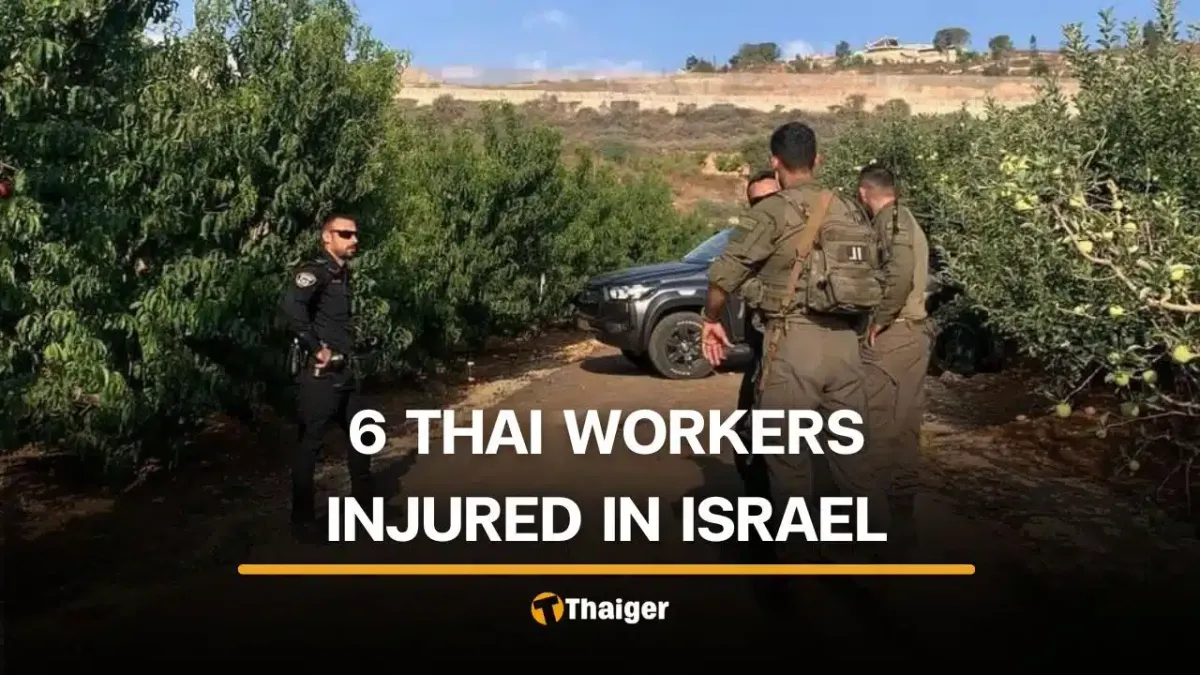
Two Thai agricultural workers sustained serious injuries, with one in critical condition, following an explosion in an orchard near the border between Israel and Lebanon on August 18. The incident occurred in the morning, prompting an immediate response from emergency services. Six Thai nationals in total were affected by the blast, which took place in a nectarine orchard close to the Israeli town of Metula.
Explosion Details and Emergency Response
At approximately 6:52 AM local time, authorities received reports of the explosion. Police, bomb disposal units, and medical teams were dispatched to the scene. Upon arrival, first responders found six Thai workers who had sustained injuries. While conscious, the workers exhibited various wounds. Immediate first aid was administered to control bleeding before they were transported to the Ziv Medical Center in Safed. The evacuation involved both ambulances and helicopters, with support from an Israeli military medical team.
Medical Assessment of Injured Workers
At the Ziv Medical Center, the condition of the six Thai workers was assessed. Two were classified as seriously injured, one as moderately injured, and three with mild injuries. Dr. Aviram Nissan, director of the surgical department, stated that one of the critically injured individuals underwent emergency surgery. The other seriously injured worker was undergoing diagnostic tests to determine the extent of his injuries and the appropriate course of treatment.
Initial Findings on the Cause of the Explosion
The preliminary assessment by the local council of Metula suggests that the explosion was likely caused by old, unexploded ordnance that had remained undetected in the agricultural area. The precise origin of this ordnance and the timeline of its placement in the area remain under investigation. The Israeli police have launched a formal inquiry into the incident.
Possible Ordnance Type and Context
Reports indicate that the ordnance may have been a component of cluster munitions, although official confirmation from the Israel Defense Forces (IDF) is pending. This incident occurs against a backdrop of ongoing tensions and sporadic exchanges of fire along the Israel-Lebanon border. Such prolonged conflict often results in the presence of unexploded ordnance and weapon fragments in affected regions, posing a significant risk to civilians and workers in agricultural or border areas.
Safety Warnings and Precautions
Authorities have issued stern warnings to the public regarding the dangers of unexploded ordnance. Residents and workers in border regions are strongly advised not to touch or approach any suspicious objects, including bomb fragments, remnants of intercepted rockets, or other unidentified items. The protocol is to immediately move away from such objects and report them to the police. This incident underscores the persistent dangers posed by legacy explosive remnants in conflict zones.
Broader Implications for Thai Workers
The incident involving the injured Thai workers highlights the risks faced by foreign nationals employed in agricultural sectors in regions experiencing security challenges. In recent times, there have been advisories for Thai workers to consider delaying travel to Israel and Lebanon due to escalating tensions. Previous attacks have tragically resulted in fatalities among Thai workers, emphasizing the volatile environment in these border areas. Despite these risks, many Thai workers in the Middle East continue their employment, often due to economic necessity.
Ongoing Investigation and Future Outlook
The investigation into the specific cause and origin of the ordnance is ongoing. Officials are working to piece together the events that led to the explosion and to ensure such incidents are prevented in the future. The safety and well-being of foreign workers in potentially hazardous environments remain a critical concern for both their home countries and host nations. The incident serves as a stark reminder of the residual dangers of past conflicts and the importance of rigorous safety protocols and public awareness campaigns.
