

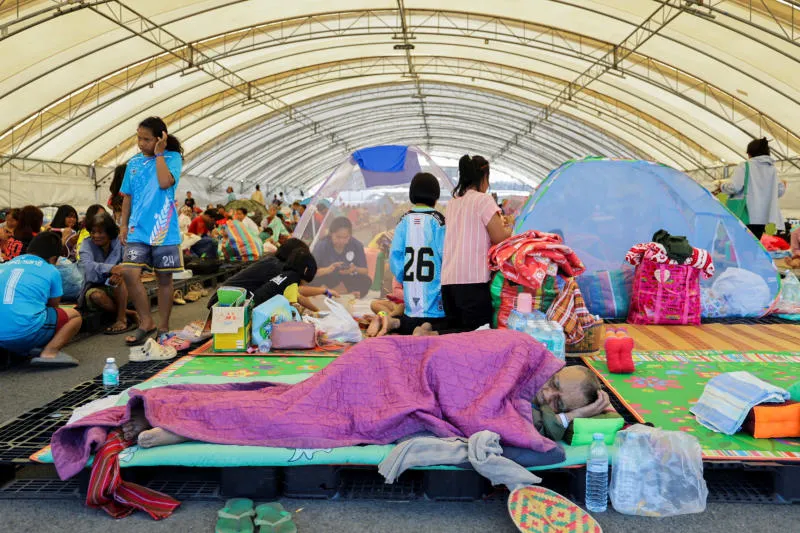
Thailand’s Ministry of Foreign Affairs has formally rebutted claims made by a United Nations Special Rapporteur regarding the border conflict with Cambodia and the displacement of Cambodian civilians. The ministry issued a statement on Saturday addressing comments by Tom Andrews, the UN Special Rapporteur on human rights in Cambodia, following his visit to the country from July 20-31.
Thailand Denies Initiating Border Conflict
The Thai Ministry of Foreign Affairs asserted that Thailand did not instigate the border conflict. Instead, the ministry stated that the conflict arose from what it characterized as unprovoked Cambodian attacks on civilian areas within Thai territory. This statement directly challenges the narrative presented by Mr. Andrews.
Disputed Displacement Figures and Definitions
A significant point of contention is Mr. Andrews’ assertion that approximately 650,000 Cambodians were displaced due to the border conflict. Thailand’s response clarifies that this figure likely includes individuals who have been residing in temporary shelters within Thailand since the late 1970s. These individuals were permitted to stay under humanitarian programs and have not returned to Cambodia despite repeated requests from Thai authorities.
The ministry argued that, under the accepted definition of internally displaced persons (IDPs), these long-term residents cannot be classified as such. Furthermore, Thailand emphasized that the responsibility for the protection and support of Cambodian citizens affected by the conflict, including provision of shelter, food, clean water, sanitation, and healthcare, rests with the Cambodian government in Phnom Penh.
Challenging Migrant Worker Return Statistics
The Ministry of Foreign Affairs also contested Mr. Andrews’ estimate that around 900,000 Cambodian migrant workers had returned from Thailand since the onset of the recent border conflict. Thailand stated that this figure encompasses both legally employed and undocumented workers who returned voluntarily, often in response to appeals from the Cambodian government.
Thailand reiterated its position that it has never implemented a policy of expelling Cambodian migrant workers and remains committed to ensuring their safety. The government affirmed its dedication to upholding human rights and adhering to international humanitarian law. The ministry noted that Thailand has consistently cooperated with special procedures of the UN Human Rights Council and has provided official explanations of its actions.
Call for Objectivity in UN Assessments
In its statement, the Ministry of Foreign Affairs urged UN special procedures to operate under the principles of independence, impartiality, and objectivity. It stressed the importance of considering information from credible and verifiable sources, as well as incorporating facts and perspectives from all involved parties in a comprehensive and fair manner. This approach, Thailand believes, is crucial for ensuring that human rights assessments are balanced and align with the mandates of these special procedures.
UN Rapporteur’s Findings and Recommendations
Tom Andrews released his end-of-mission statement on Friday, following a 12-day visit to Cambodia that included travel to areas impacted by the border fighting that occurred last year. He reported that approximately 650,000 Cambodian civilians were displaced during the conflict, with over 20,000 still unable to return to their homes.
During his visit, Mr. Andrews heard accounts from some displaced residents who stated they could not return because their towns and villages were allegedly occupied by Thai troops. He called upon both governments to collaborate on facilitating the return of these displaced civilians, underscoring that individuals displaced by armed conflict have a right to return to their homes under international law.
Thailand’s Stance on Sovereignty and Resolution
Thailand has consistently refuted allegations of occupying Cambodian territory. The government maintains that its actions have been in compliance with a bilateral ceasefire agreement established on December 27, 2025. The Ministry of Foreign Affairs urged both nations to fully implement this joint statement, work towards de-escalating tensions, and refrain from actions or statements that could erode trust between the two countries.
The ministry concluded by emphasizing that resolving border issues through bilateral mechanisms, fostered by mutual trust and cooperation, is the most effective path forward. This approach, Thailand suggests, will contribute to a stable and peaceful resolution of ongoing border disputes.
