

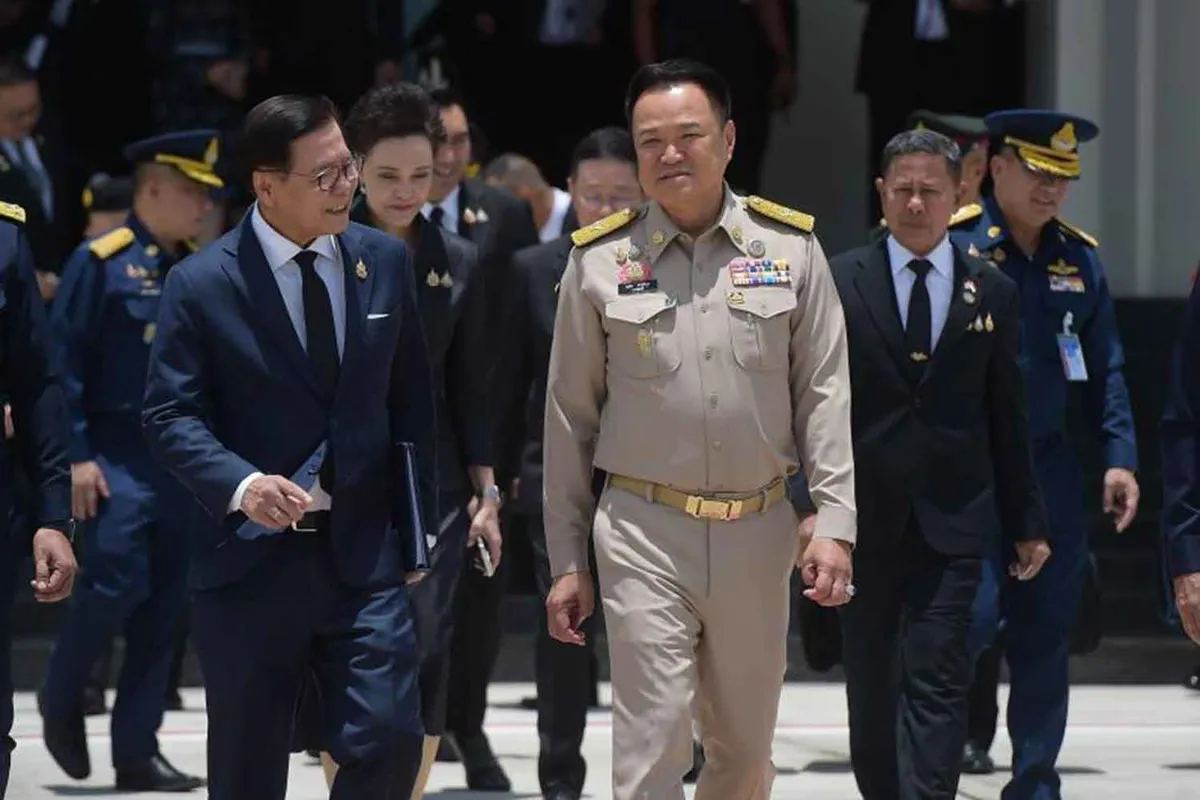
Thailand is preparing a formal response to a United Nations report concerning the Thai-Cambodian border, asserting that the findings are inaccurate and lack balance. Prime Minister Anutin Charnvirakul stated on Monday that the Ministry of Foreign Affairs, led by Minister Sihasak Phuangketkeow, is compiling Thailand’s factual counter-arguments. The government is adamant that it will not accept conclusions it deems factually incorrect.
Disputed UN Special Rapporteur Report
The controversy stems from a report by Tom Andrews, the UN Special Rapporteur on the situation of human rights in Cambodia. The report cited approximately 650,000 internally displaced Cambodians as a result of recent clashes along the border shared by Thailand and Cambodia. However, Prime Minister Anutin strongly rejected this assessment, arguing that the report was primarily based on information from a single source—Cambodia—and failed to adequately consult with Thai authorities. He advised the public to await the Ministry of Foreign Affairs’ official clarification for a more comprehensive and balanced perspective.
Border Negotiation Frameworks
In addition to the report’s content, discussions have also surfaced regarding Cambodia’s reported intention to submit documents to the United Nations. These documents reportedly aim to gain recognition for the 2000 Memorandum of Understanding (MoU 2000) and a specific 1:200,000-scale map as the foundation for future border negotiations. Prime Minister Anutin reiterated Thailand’s firm stance on its own legal position and negotiating conditions, emphasizing that no external party can compel Thailand to accept terms it does not agree with.
Thailand maintains that land boundary discussions will proceed under the established framework of the 2000 MoU. However, maritime boundary negotiations must adhere to the principles of the United Nations Convention on the Law of the Sea (Unclos). This position follows Thailand’s withdrawal from a related 2001 memorandum concerning maritime boundaries.
Foreign Ministry’s Objections
Minister of Foreign Affairs Sihasak Phuangketkeow echoed the Prime Minister’s sentiments, expressing strong disagreement with Mr. Andrews’ report. Mr. Sihasak clarified that the report was issued by an independent rapporteur and does not represent an official resolution from the UN Human Rights Council. He stressed the importance of impartiality, balance, and verified information in reports submitted to the council.
Mr. Sihasak detailed several key objections:
- One-Sided Information: The report heavily relied on Cambodian claims, including figures related to displaced persons and migrant workers, while omitting any mention of losses or impacts suffered by Thailand and its citizens due to the conflict. “What Thailand cannot accept is that the report does not mention Thailand’s losses at all,” Mr. Sihasak stated, advocating for assessments that reflect the suffering on both sides.
- Disputed Displacement Figures: The figure of 650,000 displaced Cambodians was challenged. Mr. Sihasak suggested this number might incorrectly include residents of long-established Cambodian villages situated in disputed border areas, who should not automatically be categorized as internally displaced.
- Migrant Worker Claims: Regarding Cambodian migrant workers, Mr. Sihasak refuted claims of forced repatriation. He stated that approximately 400,000 people were evacuated by Thailand during the conflict, but these were primarily Thai citizens. He asserted that Cambodian migrant workers returned to their country voluntarily, prompted by appeals from the Cambodian government.
Potential Political Misuse
The Foreign Minister warned that the report, due to its perceived lack of balance, risked being exploited as a political instrument against Thailand. To formally address these concerns, Bangkok intends to submit official letters detailing its objections to both the UN High Commissioner for Human Rights and the President of the UN Human Rights Council.
Conclusion
Thailand’s government has firmly rejected the UN Special Rapporteur’s report on the Thai-Cambodian border situation, citing a significant imbalance in the information presented and a failure to acknowledge Thailand’s perspective and losses. The Ministry of Foreign Affairs is preparing a detailed response to present to the UN, aiming to ensure a more accurate and equitable assessment of the complex border issues and the impact of recent conflicts.
