

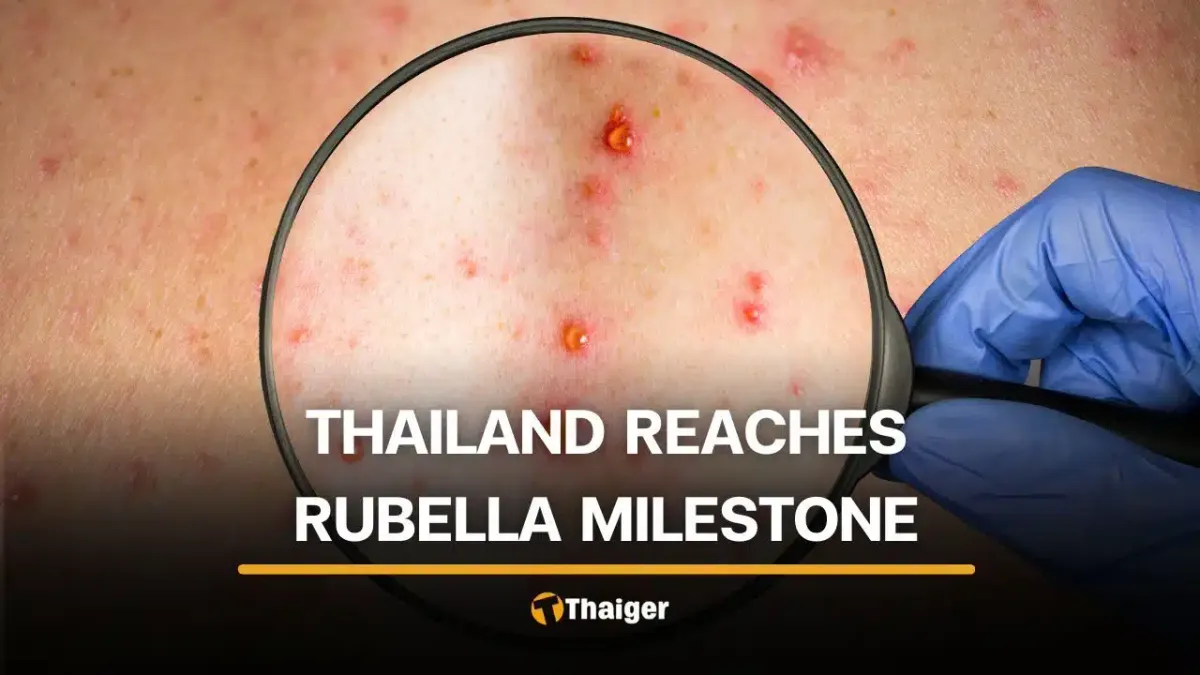
Thailand has officially achieved the elimination of rubella as a public health concern, marking a significant public health victory for the nation. The World Health Organization (WHO) South-East Asia Region formally verified this achievement on September 5, recognizing Thailand as the seventh country within the region to reach this critical milestone. This accomplishment underscores the success of sustained public health initiatives and robust vaccination programs.
A Collaborative Effort Towards Rubella Elimination
The verification process involved rigorous assessment by the WHO’s Regional Verification Commission for Measles and Rubella Elimination. This commission reviewed comprehensive evidence presented by Thailand’s National Verification Committee during their annual meeting in June. Following this review, a field visit was conducted in July to further validate the data. Dr. Nilesh Buddha, Officer-in-Charge of the WHO South-East Asia Region, officially endorsed the commission’s recommendation, stating, “Thailand has shown that rubella elimination is achievable when strong political commitment, resilient immunisation services, high-quality surveillance and community trust come together.”
This recognition is a testament to decades of dedicated work by numerous individuals and organizations. Public Health Minister Pattana Promphat hailed the outcome as a national triumph, expressing pride in the achievement and acknowledging the contributions of health workers, volunteers, partners, and communities across the country. Their collective efforts have been instrumental in reaching this goal.
Thailand’s Journey to Rubella Elimination
Thailand’s commitment to combating rubella began in 1977 with the launch of its Expanded Programme on Immunisation. The introduction of a rubella-containing vaccine into the national immunization schedule in 1986 initially targeted six-year-old girls in primary school. Recognizing the broader need for protection, Thailand expanded this vaccination coverage to all one-year-old children in 1993, significantly increasing the population’s immunity against the virus.
Understanding Rubella and Its Risks
Rubella, often referred to as German measles, is a highly contagious viral illness. While typically causing mild symptoms in children, its implications, particularly for pregnant women, are severe. Infection during pregnancy can lead to serious complications, including miscarriage, stillbirth, and congenital rubella syndrome (CRS). CRS is a devastating condition that can result in lifelong birth defects for affected infants, impacting their vision, hearing, and cardiac health.
The availability of a safe and effective vaccine has been the cornerstone of efforts to control and eliminate rubella globally. Vaccination not only protects the individual but also contributes to herd immunity, reducing the overall circulation of the virus within a community and safeguarding vulnerable populations, especially newborns.
Regional Context and Future Vigilance
With this latest achievement, Thailand joins a distinguished group of countries in the WHO South-East Asia Region that have successfully eliminated rubella. Other nations in the region that have reached this milestone include Bhutan, North Korea, the Maldives, Nepal, Sri Lanka, and Timor-Leste. Notably, Bhutan, North Korea, the Maldives, and Timor-Leste have also achieved the elimination of measles, another vaccine-preventable disease.
Despite the successful elimination of rubella as a public health problem, health authorities emphasize the ongoing need for vigilance. Thailand, like any nation, remains susceptible to imported cases of rubella due to global travel and interconnectedness. Therefore, maintaining high levels of population immunity through continued vaccination efforts and robust surveillance systems is crucial to prevent the re-establishment of the virus and preserve the hard-won elimination status.
The Importance of Sustained Immunization Programs
The elimination of rubella in Thailand is a powerful demonstration of what can be achieved through sustained public health investment, strong governmental leadership, and community engagement. The success highlights the critical role of immunization programs in preventing infectious diseases and protecting public health. Continued commitment to these programs is essential not only for maintaining rubella elimination but also for tackling other vaccine-preventable diseases and ensuring the long-term health and well-being of the population.
The journey from the initial introduction of the Expanded Programme on Immunisation to the verified elimination of rubella showcases a long-term vision and persistent execution by Thailand’s health sector. This accomplishment serves as an inspiration and a model for other countries striving to achieve similar public health goals, reinforcing the WHO’s commitment to a healthier South-East Asia region.
