

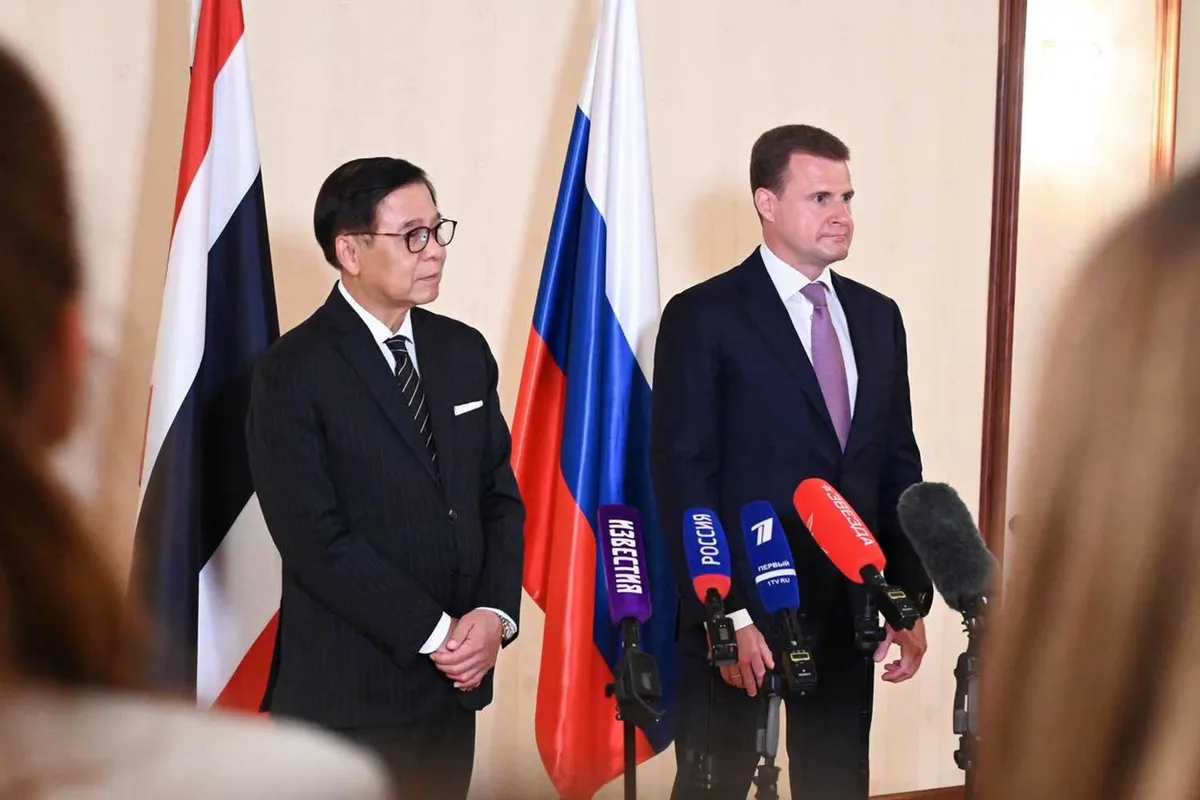
Thailand is actively pursuing a free trade agreement (FTA) with the Eurasian Economic Union (EAEU), a move aimed at significantly boosting bilateral trade and economic cooperation. Deputy Prime Minister and Foreign Minister Sihasak Phuangketkeow indicated that discussions regarding the launch of formal FTA negotiations are expected to commence shortly. This strategic initiative highlights Thailand’s commitment to diversifying its trade partnerships and tapping into new markets.
Understanding the Eurasian Economic Union (EAEU)
The EAEU is a significant economic bloc comprising five member states: Armenia, Belarus, Kazakhstan, Kyrgyzstan, and Russia. Established to foster economic integration and facilitate the free movement of goods, services, capital, and labor, the union represents a substantial market with a combined GDP of trillions of dollars. Its primary objectives include promoting sustainable development, enhancing competitiveness, and improving the living standards of its member nations.
The EAEU operates through common policies in various economic sectors, including trade, industry, agriculture, and transportation. It aims to create a unified economic space, remove trade barriers among member states, and establish a common external tariff policy. This economic integration allows for greater efficiency and provides a more robust platform for international trade negotiations.
Thailand’s Strategic Objectives for an EAEU FTA
The primary motivation behind Thailand’s pursuit of an FTA with the EAEU is to expand its trade horizons beyond traditional partners. The Deputy Prime Minister emphasized that such an agreement would provide Thai businesses with preferential access to the EAEU market, potentially leading to increased exports of key Thai products. These could include agricultural goods, processed foods, automotive parts, electronics, and consumer products.
Furthermore, an FTA could facilitate increased foreign direct investment (FDI) flowing into Thailand from EAEU member states. By reducing tariffs and non-tariff barriers, the agreement would make Thailand a more attractive investment destination for businesses looking to access both the Thai market and the broader EAEU region. This could spur job creation and technological transfer within Thailand.
The initiative also aligns with Thailand’s broader economic strategy of strengthening international trade ties and promoting economic diplomacy. By engaging with a large economic bloc like the EAEU, Thailand aims to enhance its global economic standing and resilience against international economic fluctuations.
The Role of Russia in Initiating Talks
Russia, as a key member of the EAEU and a significant trading partner for many nations, has been instrumental in discussions regarding the potential FTA. Reports indicate that Russia has expressed support for launching formal talks between Thailand and the EAEU. This backing is crucial, as consensus among member states is often required to initiate such significant trade negotiations.
The involvement of Russia suggests a mutual interest in deepening economic ties. For Russia, strengthening trade relations with Thailand could open up new avenues for its own exports and investments, while also solidifying its economic influence in Southeast Asia. The potential for increased trade in energy, machinery, and agricultural products is considerable.
Potential Benefits and Challenges
The potential benefits of a Thailand-EAEU FTA are multifaceted. For Thailand, it offers:
- Market Access: Reduced tariffs and streamlined customs procedures for Thai goods entering EAEU countries.
- Investment Inflows: Increased opportunities for foreign direct investment from EAEU member states.
- Economic Diversification: Reduced reliance on traditional export markets and a broader customer base.
- Enhanced Competitiveness: Potential for Thai industries to become more competitive through access to new technologies and supply chains.
However, the path to an FTA is not without its challenges. These may include:
- Complex Negotiations: Reaching an agreement that satisfies the diverse economic interests of all EAEU member states and Thailand will require extensive and potentially lengthy negotiations.
- Regulatory Harmonization: Aligning standards, regulations, and technical requirements across different jurisdictions can be a complex process.
- Competition: Thai businesses may face increased competition from EAEU imports in the domestic market.
- Geopolitical Factors: International geopolitical dynamics can sometimes influence the pace and outcome of trade negotiations.
Next Steps and Future Outlook
The immediate next step involves the formal commencement of discussions between Thai officials and representatives of the EAEU. These initial talks will likely focus on defining the scope of the FTA, identifying key areas for negotiation, and establishing a roadmap for future engagement. The successful initiation of these talks, supported by key members like Russia, marks a significant milestone in Thailand’s efforts to forge deeper economic ties with the Eurasian region.
If negotiations proceed smoothly, an FTA could be finalized within a few years, ushering in a new era of economic cooperation between Thailand and the EAEU. This development would not only benefit the economies of the involved parties but also contribute to greater regional and global economic integration. The Thai government remains optimistic about the prospects of this initiative and is committed to working collaboratively towards a mutually beneficial agreement.
