

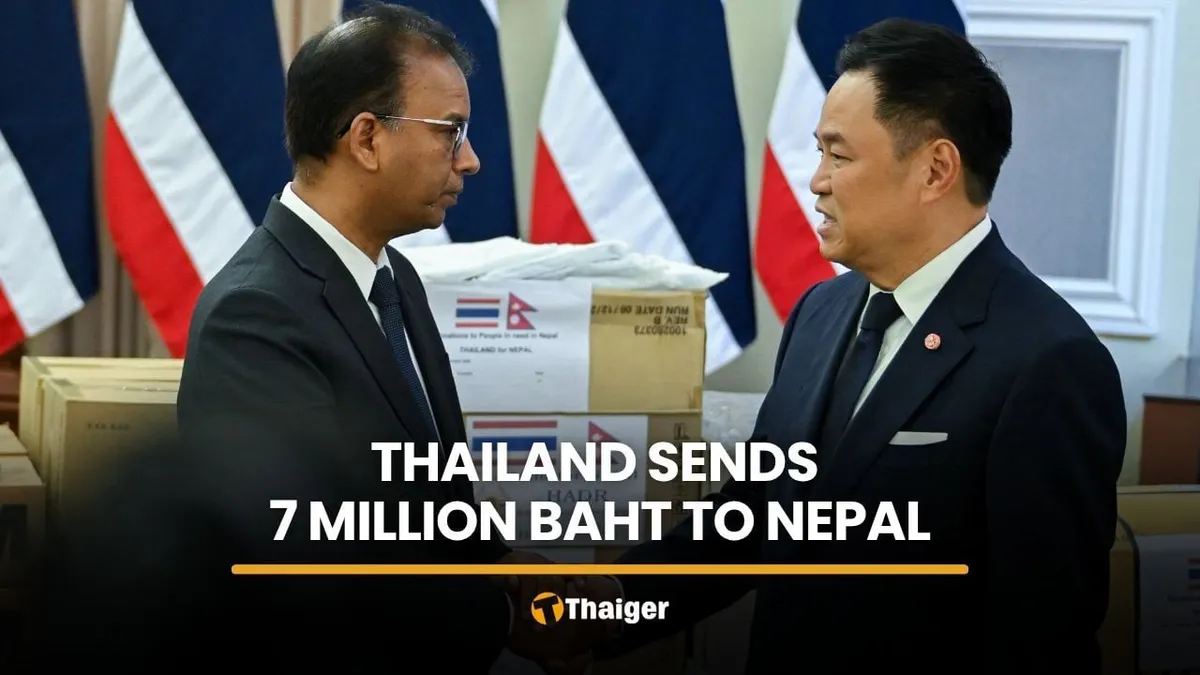
Thailand has dispatched a humanitarian aid package valued at 7 million Thai Baht (approximately US$210,000) to Nepal to assist those affected by recent devastating floods. The aid includes essential supplies and medical equipment aimed at providing immediate relief and supporting recovery efforts in the disaster-stricken nation. The official handover ceremony took place at Government House in Bangkok, underscoring the solidarity between the two countries during this challenging time.
Humanitarian Assistance Package Details
The comprehensive aid package, presented by Deputy Prime Minister Anutin Charnvirakul to Nepal’s Ambassador to Thailand, signifies Thailand’s commitment to international humanitarian assistance. The 7 million Baht allocation covers not only the cost of the supplies but also their transportation to Nepal, ensuring that the aid reaches those most in need efficiently.
Key components of the aid include:
- Medical supplies crucial for treating injuries and preventing the spread of disease in the aftermath of the floods.
- Protective equipment, such as 500 Level C protective suits, vital for rescue and recovery operations in hazardous conditions.
- Essential items for managing casualties, including 2,700 body bags.
- Rescue masks and surgical masks to protect personnel and affected populations.
- Air-filtration equipment to improve air quality in affected areas.
In addition to government provisions, the private sector in Thailand has also contributed valuable resources. Thai Beverage Public Company Limited, for instance, donated blankets, which will be distributed to individuals and families who have lost their homes and belongings due to the flooding.
Official Statements and Bilateral Relations
During the handover ceremony, Deputy Prime Minister Anutin Charnvirakul conveyed Thailand’s sincere condolences to the Nepalese government and its people for the losses and hardships incurred. He emphasized Thailand’s unwavering support for Nepal during this difficult period, highlighting the strong bilateral relationship between the two nations.
Government spokesperson Ratchada Thanadirek elaborated on the objectives behind the aid. She stated that the assistance is designed to offer immediate relief to flood victims while also contributing to the long-term recovery and rebuilding processes in Nepal. Furthermore, she noted that this act of generosity reflects the enduring relationship between Thailand and Nepal and Thailand’s proactive stance in offering humanitarian aid to countries facing crises.
The ceremony was attended by several high-ranking officials, including Deputy Prime Minister and Minister of Foreign Affairs Sihasak Phuangketkeow, Minister of Public Health Pattana Promphat, and Deputy Minister of Interior Jesada Thaiseth. Their presence underscored the significance of the aid initiative and Thailand’s commitment to regional cooperation and disaster relief.
Broader Context of Disaster Preparedness and Aid
This humanitarian effort by Thailand to support Nepal comes amidst a global increase in extreme weather events. The initiative serves as a reminder of the importance of international cooperation in disaster response and preparedness. Thailand’s own experiences with natural disasters, such as the aftermath of the 2025 earthquake, have informed its approach to providing aid and strengthening its own disaster management capabilities.
Following the 2025 earthquake, Thailand’s Ministry of Public Health conducted thorough inspections of hospital buildings nationwide and prepared urgent medical aid packages for neighboring countries, particularly Myanmar, which suffered extensive damage. This proactive approach demonstrates Thailand’s dedication to not only responding to immediate needs but also to building resilience and capacity for future challenges.
The recent flooding in Nepal has tragically resulted in a significant number of missing persons, with reports indicating figures around 2,478. This highlights the scale of the disaster and the urgent need for sustained international support. Meanwhile, Thailand itself has faced localized flood impacts, such as those in Nan province, which affected thousands of people, and flash floods in Saraburi that necessitated tourist rescues, illustrating the pervasive nature of such events.
Conclusion
The 7 million Baht aid package from Thailand to Nepal is a significant gesture of goodwill and solidarity. It provides crucial resources for flood victims and reinforces the strong diplomatic and humanitarian ties between the two nations. As Nepal works towards recovery, international support remains vital, and Thailand’s contribution is a testament to its commitment to assisting global communities in times of crisis.
