

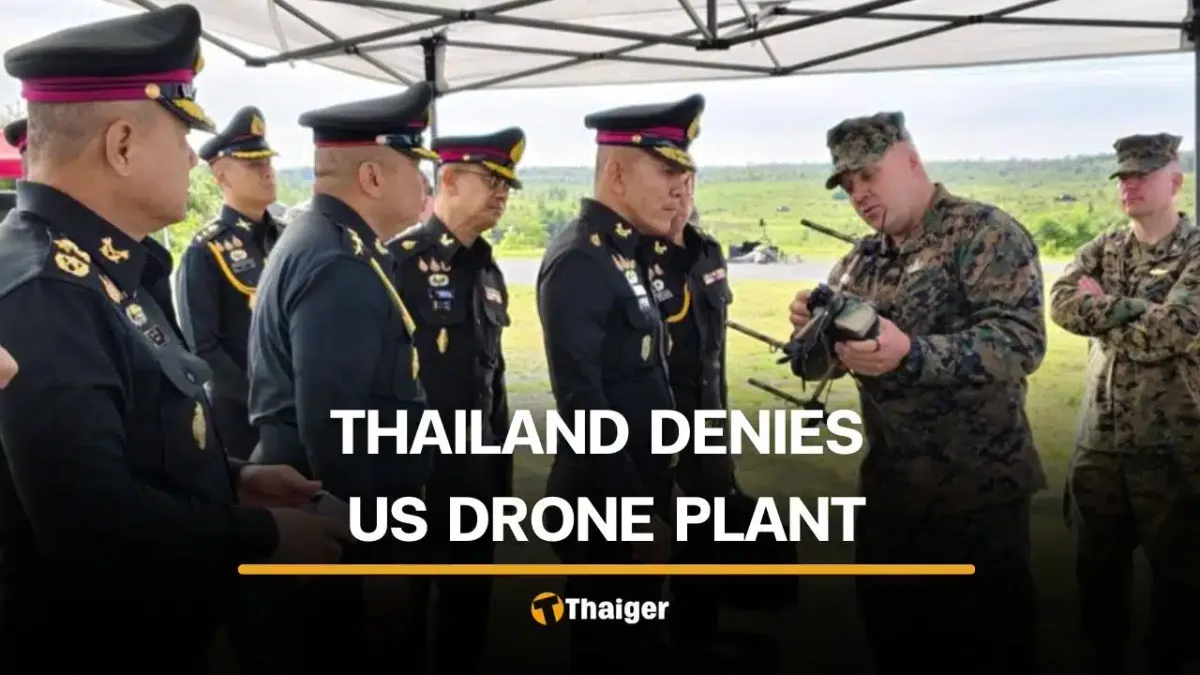
Thailand’s Ministry of Defence is currently studying a potential project for a US drone manufacturing facility within the country. However, officials have emphasized that no government approval has been granted, nor has any binding agreement been finalized. This clarification comes in response to public concerns regarding the proposal and its implications for Thailand’s diplomatic and economic relationships, particularly between the United States and China.
Defense Ministry Delegation’s US Visit
Between August 2 and August 9, a delegation led by Defence Ministry Permanent Secretary Tharapong Malakham undertook a visit to the United States. The primary objectives of this trip were to strengthen bilateral relations and enhance cooperation in security and military affairs. A significant aspect of the discussions involved exploring opportunities for defense industry development, which included investigating the feasibility of establishing a drone manufacturing facility in Thailand. This initiative was reportedly aligned with Thailand’s existing military development roadmap.
Addressing Public and Observer Concerns
News of the potential drone manufacturing project quickly sparked apprehension among military analysts and political observers. Concerns were raised about safeguarding national interests and maintaining a delicate balance in Thailand’s foreign policy, especially given its complex relationship with both the US and China. Several defense-focused media outlets also called for greater transparency from the government, urging them to provide more detailed information about the proposed facility and clarify the strategic roadmap behind such a venture.
Clarification from the Ministry of Defence
Responding to these public concerns on August 13, Defence Ministry spokesperson Surasan Kongsiri provided further details. He explained that the Permanent Secretary’s visit to the US was primarily an information-gathering mission. The aim was to observe advanced technologies and assess Thailand’s capabilities in developing and supporting low-cost unmanned aerial vehicle (UAV) technologies, citing examples like the LUCAS system. Kongsiri reiterated firmly that there is currently no agreement, commitment, or official approval in place for a US drone manufacturing plant in Thailand. The project, he stressed, is strictly in the exploratory phase. Authorities are diligently examining the potential costs and benefits, as well as the frameworks for technology transfer, to ensure that Thailand stands to gain the maximum advantage from any future collaboration.
Broader Context: Foreign Investment and Resource Concerns
The public debate surrounding the proposed drone facility echoes recent discussions about other significant foreign investments in Thailand, notably in the data center industry. Technology giant Microsoft recently announced a substantial investment exceeding US$1 billion to develop data centers and cloud-based artificial intelligence (AI) infrastructure within the country. In response to strong interest from international investors, the Thai government recently established a national committee to oversee the data center sector.
While the government has highlighted the potential economic benefits of this burgeoning industry, segments of the public have voiced concerns. These anxieties primarily revolve around the considerable resources required to operate large-scale data centers. Critics have pointed to the substantial electricity and water demands, expressing worries that the development of these facilities could lead to competition for essential resources between foreign investors and local communities. This situation underscores a recurring theme in Thailand’s approach to foreign investment: balancing economic opportunities with national resource management and public welfare.
Future Outlook for Drone Technology in Thailand
The ongoing study into a potential US drone manufacturing project signifies Thailand’s interest in advancing its defense technology capabilities. The Ministry of Defence’s cautious approach, emphasizing information gathering and benefit assessment, suggests a strategic effort to navigate the complexities of international defense partnerships. As the evaluation progresses, transparency and public engagement will be crucial in addressing concerns and ensuring that any future developments align with Thailand’s national interests and strategic objectives. The exploration of UAV technology aligns with global trends in military modernization and surveillance, and Thailand’s careful consideration of this path reflects a desire to enhance its technological self-sufficiency while managing international relations.
