

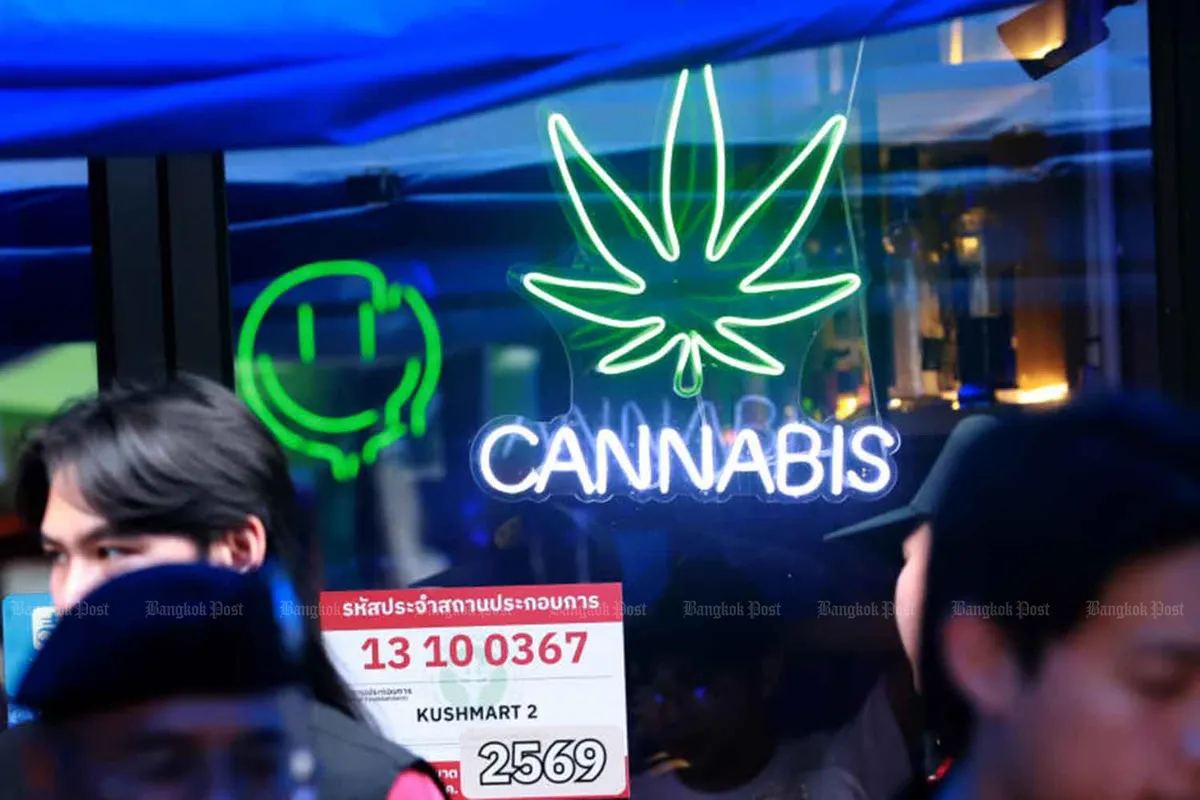
Thailand’s Ministry of Public Health is intensifying its enforcement of cannabis regulations, emphasizing a strict medical-use policy and working to finalize legislation that would curb recreational consumption. The move comes as authorities report significant enforcement actions since regulations began last October, including numerous inspections, seizures, and legal proceedings.
Strengthening Cannabis Regulations
Public Health Minister Pattana Promphat recently chaired a critical meeting focused on refining the guidelines for enforcing cannabis regulations under the existing Protection and Promotion of Thai Traditional Medical Knowledge Act. The ministry is actively pushing forward with the draft Cannabis and Hemp Act, a pivotal piece of legislation intended to re-establish cannabis as a substance strictly for medical purposes. This proposed act aims to prevent recreational use and, crucially, to shield children and young people from potential risks associated with cannabis.
Enforcement Statistics and Actions
Since the commencement of enforcement activities in October, Thai authorities have conducted a thorough review of the cannabis market. Their efforts have included:
- Inspecting 1,326 cannabis shops across the country.
- Carrying out 83 seizure operations.
- Initiating legal proceedings against 40 individuals and businesses found to be in violation of regulations.
The value of seized cannabis products has been substantial, exceeding 109 million baht. In addition to seizures and legal actions, the ministry has taken administrative measures to control the market. These include suspending 84 operating licenses, revoking four licenses entirely, and reviewing 39 appeals lodged by businesses against previous suspension or revocation decisions. Minister Pattana stressed that the recent meeting was specifically designed to ensure a uniform and consistent application of these rules by officials nationwide.
Training and Nationwide Inspections
To achieve consistent enforcement, participants from the Ministry of Public Health, the Royal Thai Police (RTP), and various local administrative bodies underwent specialized training. This training covered crucial procedural aspects related to cannabis cultivation, sales, its application in medical contexts, and the systematic inspection of licensed businesses. Following this enhanced training, officials are now poised to conduct comprehensive inspections of premises throughout Thailand. The consequences for violations will vary based on the offense’s severity, potentially leading to corrective orders, license suspension, business closure, or criminal prosecution.
Addressing Legislative Delays and Future Compliance
Minister Pattana acknowledged that political instability in recent years had regrettably slowed the progress of cannabis legislation. However, he affirmed the government’s unwavering commitment to expediting the passage of the new Cannabis and Hemp Act. He sought to allay concerns regarding any perceived uncertainty surrounding the bill’s final approval. The ministry’s long-held stance, as reiterated by the Minister, is that “cannabis is for medical use only.”
Under current laws, cannabis extracts containing more than 0.2% tetrahydrocannabinol (THC) are still classified as narcotics. Minister Pattana indicated that any broader reclassification of cannabis would be a decision for the relevant authorities to make. Should the new act be enacted, it will introduce a permit system for cultivators. Existing licensed retailers, who currently operate under three-year licenses, will be permitted to continue their trade until their current licenses expire. Subsequently, they will be required to adhere to the new regulations outlined in the forthcoming legislation.
Navigating the Evolving Cannabis Landscape
The Thai government’s approach signifies a significant shift from the more liberal cannabis policies that emerged following its decriminalization. The focus is now squarely on medical applications, with a clear intent to prevent misuse and protect vulnerable populations. The ministry’s stepped-up enforcement and the push for new legislation underscore a commitment to establishing a robust regulatory framework that balances public health concerns with the potential benefits of cannabis for medicinal purposes. Businesses operating within the cannabis sector are advised to stay informed about the evolving legal landscape and prepare for compliance with the stricter regulations anticipated under the new act.
The ongoing efforts aim to create a clear distinction between legitimate medical use and recreational activities, ensuring that Thailand’s cannabis policy serves its intended public health objectives effectively. The ministry’s proactive stance signals a new era for cannabis regulation in the country, prioritizing safety and responsible use.
