

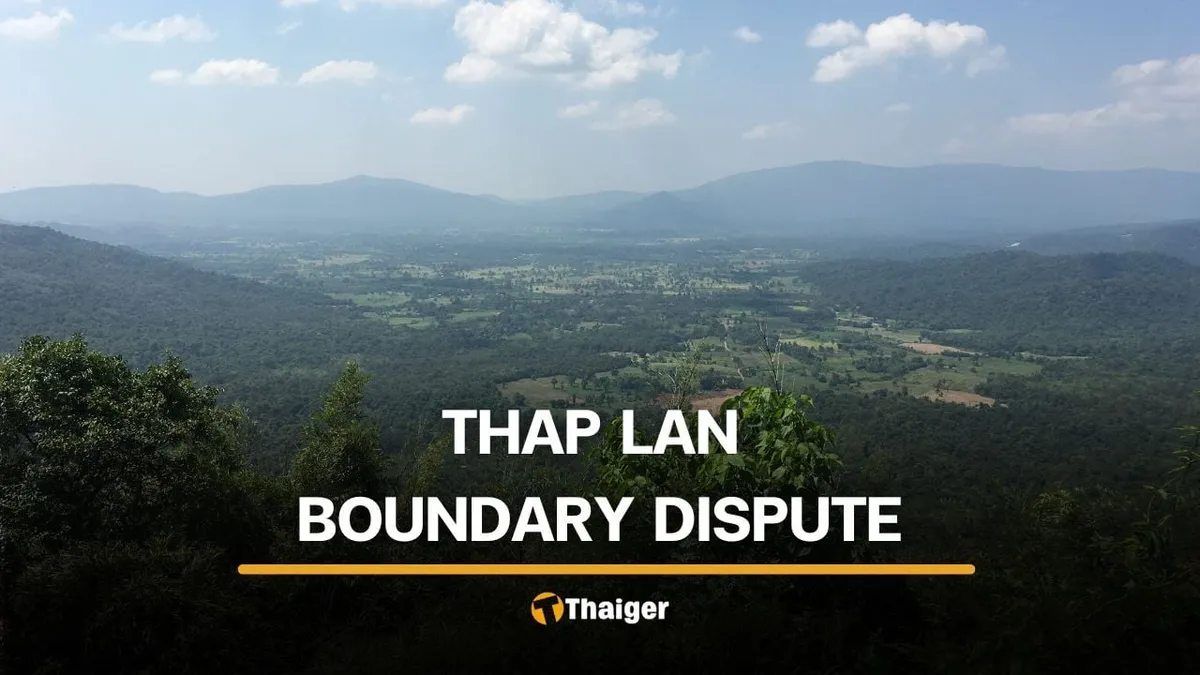
Thap Lan National Park Boundary Adjustment Triggers Public Outcry
Plans to revise the boundaries of Thap Lan National Park have ignited a significant public debate, prompting a clarification from Thailand’s Department of National Parks, Wildlife and Plant Conservation (DNP).
The controversy emerged after the National Parks Committee, operating under the Ministry of Natural Resources and Environment, reviewed a 2023 Cabinet resolution concerning the park’s existing perimeters. Following deliberations, the committee gave its approval for the boundary adjustment.
The approved modification entails the removal of over 155,000 rai of land, encompassing areas within Nakhon Ratchasima and Prachin Buri provinces, from the designated Thap Lan National Park boundaries. This land is slated for transfer to state agencies responsible for land rights management and subsequent allocation.
Environmental Concerns and Public Opposition
The decision has elicited strong reactions from environmental organizations and the general public. Numerous environmental activists have voiced their opposition, citing potential long-term repercussions for the region’s forests, wildlife, and natural resources.
Critics have expressed apprehension that portions of the affected land could eventually be repurposed for commercial ventures, including tourism-related businesses and accommodation projects. The issue has gained considerable momentum online, fueled by the hashtag #Saveทับลาน, or Save Thap Lan, with environmental campaigners, celebrities, and social media users urging the government to reconsider its stance.
Official Justification: Resolving Land Disputes
In response to the widespread criticism, the DNP stated that the boundary adjustment is intended to address long-standing land disputes. These disputes involve areas where national park boundaries overlap with land historically occupied and utilized by local residents for many years, predating the park’s official establishment.
Supporters of the adjustment, including some local residents, have criticized the opposition, suggesting that some critics may not fully grasp the complexities of the land rights issues faced by the communities.
Questions of Management and Future Use
Despite official assurances that the land is designated for local residents, concerns persist regarding its practical management. Some critics have voiced worries about potential misuse or future exploitation for commercial gain. Others have warned that similar boundary adjustments in other locations could progressively weaken forest protection efforts.
DNP Director-General Athapol Charoenshunsa defended the decision, asserting that the policy aims to resolve legal and land rights issues affecting residents while simultaneously upholding forest conservation. Charoenshunsa emphasized that inaction would leave affected residents without a resolution.
He categorically rejected claims that the policy would lead to deforestation, stating, “To say we are cutting down the forest is incorrect because there is no deforestation involved.” He explained that the objective is to organize communities living in or around forest areas, providing assistance to those with legitimate rights while preventing unlawful occupation.
Verification Procedures and Ongoing Scrutiny
Charoenshunsa further indicated that stringent verification procedures would be implemented prior to any land allocation. Officials are set to examine eligibility based on multiple forms of evidence, including aerial photographs, residential history, and witness testimony, to ensure that land rights are granted only to qualified residents.
The debate surrounding Thap Lan National Park remains active, with environmental groups and local communities closely observing the subsequent stages of the adjustment’s implementation.
