

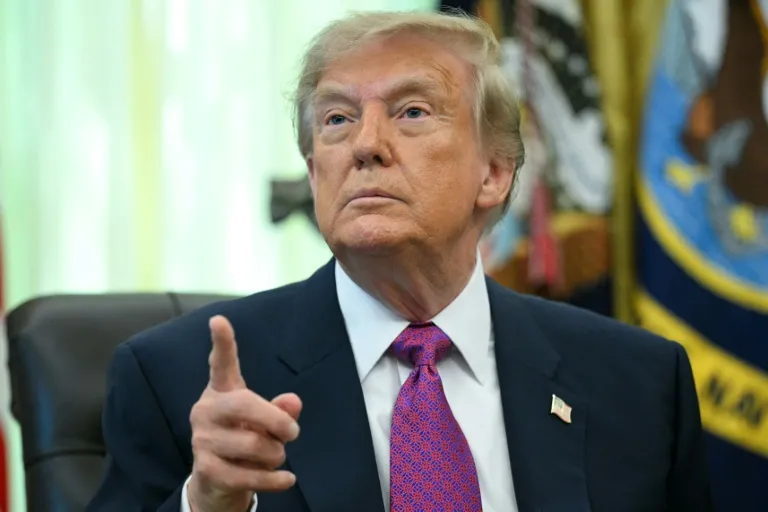
Former President Donald Trump stated that Russia has indicated it will not attack NATO territory, asserting his confidence based on his interactions with Russian leadership. These remarks followed reports of a high-level meeting between CIA Director William Burns and Russian officials, which some media outlets suggested was intended to convey a warning to Moscow regarding potential aggression against the NATO alliance.
Assurances on NATO Security
When questioned by reporters at the Oval Office about whether Russian President Vladimir Putin had given assurances against attacking NATO countries, Trump responded affirmatively. “I’ve had good talks with him. He’s not going to be attacking a NATO territory,” Trump told journalists. He reiterated this stance when pressed to confirm whether CIA Director Burns had delivered a specific warning during his visit to Moscow.
Trump declined to comment directly on the specifics of the CIA director’s discussions, stating, “I don’t want to comment on that.” However, he immediately followed this by reinforcing his earlier assertion: “but they’re not going to attack.” This suggests a belief on his part that diplomatic channels, potentially including those facilitated by the CIA, have successfully communicated the seriousness of NATO’s collective defense commitments and deterred any potential Russian incursions into allied territory.
Russia’s Conduct Regarding Iran and the Strait of Hormuz
Beyond the issue of NATO security, Trump also addressed Russia’s relationship with Iran, particularly in the context of maritime security in the Strait of Hormuz. His administration had previously signaled a firm stance against Tehran, with an announcement of significant economic measures if Iran did not ensure the free passage of vessels through the crucial waterway. This policy aimed to pressure Iran by leveraging economic sanctions, often referred to metaphorically as an “economic D-Day.”
In this regard, Trump expressed a positive assessment of Russia’s recent behavior. “So far, I think Russia’s behaved quite well, having to do with the Strait of Hormuz,” he remarked. This statement implies that Russia had not engaged in actions that would undermine the security or stability of the Strait, nor had it provided significant support to Iran in ways that would contravene the broader objectives of the US and its allies in the region. Trump’s comments suggest a perception that Russia has acted with restraint, aligning, at least implicitly, with the US interest in maintaining freedom of navigation in this vital global shipping lane.
Context of International Relations and Alliances
The former president’s statements arrive at a time of complex geopolitical dynamics. NATO, a cornerstone of transatlantic security, has consistently reaffirmed its commitment to mutual defense under Article 5 of its treaty, which stipulates that an attack against one member is an attack against all. Any perceived threat to NATO territory is taken with extreme seriousness by all member states.
Russia, on the other hand, has frequently expressed concerns about NATO’s eastward expansion and its military presence near Russian borders. These differing perspectives often create friction, making diplomatic assurances and de-escalation efforts crucial for maintaining stability. Trump’s comments, if reflecting genuine assurances from Moscow, would indicate a temporary easing of tensions on this specific front.
The relationship between Russia and Iran is also a significant factor in Middle Eastern security. While both nations have historically maintained a degree of cooperation, their alignment can shift based on regional developments and international pressure. The US has consistently sought to isolate Iran economically and diplomatically, and any perceived Russian support for Tehran is closely monitored.
Implications and Future Outlook
Trump’s public pronouncements on these sensitive international issues carry weight, particularly given his past role as commander-in-chief. His assertions about Russia’s intentions towards NATO and its conduct concerning Iran offer insight into his administration’s assessment of these relationships. The effectiveness of diplomatic warnings, whether delivered directly or through intelligence channels, is often difficult to gauge publicly, but Trump’s confidence suggests he believes such efforts have been successful in the current context.
Moving forward, the ongoing developments in Eastern Europe and the Middle East will continue to be closely watched by global powers. The stability of key maritime routes like the Strait of Hormuz and the security of NATO’s borders remain critical concerns. Trump’s latest statements provide a snapshot of his perspective on these critical issues, emphasizing a belief in de-escalation and successful diplomatic engagement with Russia.
