

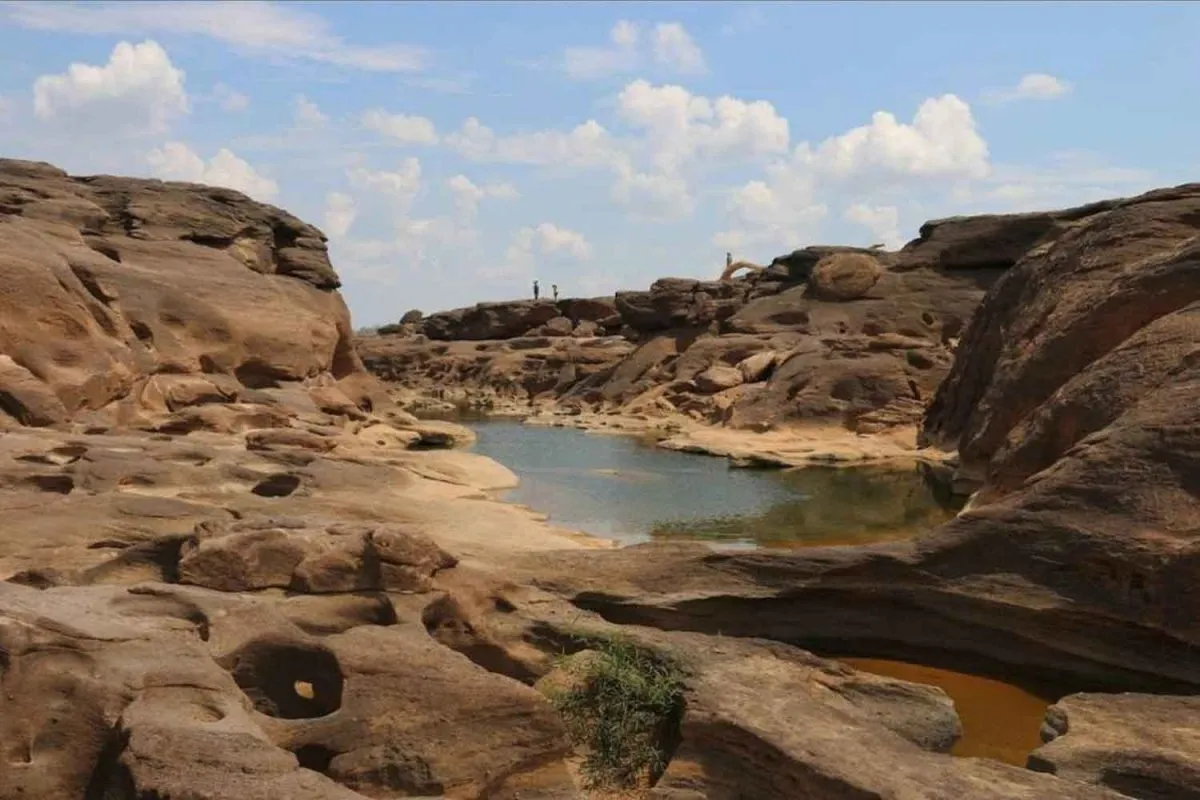
A Thai Senate committee is actively promoting two significant natural attractions in Ubon Ratchathani province, Pha Taem National Park and Sam Phan Bok, with the aim of elevating them onto the international tourism stage. The initiative is closely linked to Ubon Ratchathani’s bid to achieve recognition as a Unesco Global Geopark, a designation expected to bolster both regional and national tourism efforts.
Pha Taem National Park: A Gateway to Ancient Art and Sunrise Vistas
During a recent inspection tour of Ubon Ratchathani’s tourist sites, Senator Phisut Ratanawong, who chairs the Senate committee on tourism and sports, highlighted the potential of Pha Taem National Park. Located in Khong Chiam district, the park is renowned for its Pha Taem viewpoint, offering visitors one of the earliest sunrise experiences in Thailand. Beyond the breathtaking dawn, the park features a 3-kilometer nature trail that leads to a dramatic cliff face adorned with prehistoric rock paintings. These ancient artworks, estimated to be between 3,500 and 4,000 years old, stretch across 180 meters and provide a tangible link to Thailand’s distant past.
The committee received detailed briefings on the park’s existing tourism infrastructure, its inherent potential for growth, and the specific development needs required to enhance the visitor experience. The focus on Pha Taem underscores its dual appeal: a natural spectacle for sunrise viewing and a significant archaeological site.
Sam Phan Bok and the Unesco Global Geopark Ambition
A key objective of the Senate committee’s visit was to assess the progress of Sam Phan Bok’s application for Unesco Global Geopark status. This unique geological site, often dubbed the “Grand Canyon of Thailand,” is a crucial component of the broader Ubon Ratchathani Geopark initiative. The provincial and national tourism sectors see the potential Unesco designation as a powerful catalyst for increased visitor numbers and international recognition.
The cabinet has officially endorsed Thailand’s plan to nominate Ubon Ratchathani Geopark for this prestigious award. If successful, Ubon Ratchathani would join the ranks of existing Thai Unesco Global Geoparks, such as Satun and Korat, with Khon Kaen Geopark currently undergoing its review process. Achieving this status would place Ubon Ratchathani among a select group of globally significant geological and natural heritage sites.
Understanding Sam Phan Bok’s Seasonal Nature
Officials emphasized the importance of clear communication regarding Sam Phan Bok’s accessibility. The site is primarily a dry-season attraction, typically open to visitors from November through June. During the monsoon season, the rising waters of the Mekong River inundate large portions of the area, making normal tourist activities impossible. Senator Phisut stressed that informing potential visitors about this seasonal limitation is vital for effective trip planning and managing expectations.
Addressing Transportation Challenges
A significant hurdle identified during the committee’s discussions was the issue of transportation accessibility. Visitors arriving at Ubon Ratchathani’s airport or central bus station face a considerable journey of approximately 1.5 to 2 hours to reach the province’s main tourist attractions. For independent travelers, the cost of car rentals and taxis can be prohibitive, potentially deterring some from exploring the region.
To counter these challenges and foster tourism growth, local authorities are advocating for government intervention to expedite the development of public transportation networks connecting Ubon Ratchathani city with its key natural and cultural sites. Enhancements to directional signage and the provision of more precise, up-to-date tourism information, especially concerning seasonal attractions like Sam Phan Bok, are also high on the agenda.
Diverse Attractions Beyond the Main Sites
While Pha Taem and Sam Phan Bok are central to the promotion efforts, Ubon Ratchathani offers a variety of other attractions that contribute to its tourism appeal. These include:
- Pak Bong: The narrowest stretch of the Mekong River separating Thailand and Laos, measuring a mere 56 meters across.
- Ancient Rain Tree: A majestic, century-old rain tree that serves as a natural landmark.
- Community-Based Tourism: Local initiatives offering services such as transportation, boat tours along the Mekong, guided excursions with local experts, and the sale of traditional woven handicrafts. These community-led efforts are crucial for generating local income and ensuring economic benefits are distributed within the region.
The Path Forward: Infrastructure, Information, and Conservation
Senator Phisut reiterated that strengthening transportation infrastructure, ensuring the accuracy and accessibility of public information, and fostering sustainable community-based tourism development, all while prioritizing environmental conservation, are fundamental prerequisites for securing the coveted Unesco Global Geopark status for Ubon Ratchathani. The committee believes that achieving this recognition will not only position Ubon Ratchathani as a premier international destination for nature and geological tourism but also create sustainable economic opportunities, enhance livelihoods, and improve the overall quality of life for its local communities.
The committee’s engagement signifies a concerted effort to leverage Ubon Ratchathani’s unique natural and cultural assets, transforming them into globally recognized tourism draws that benefit both visitors and residents.
