

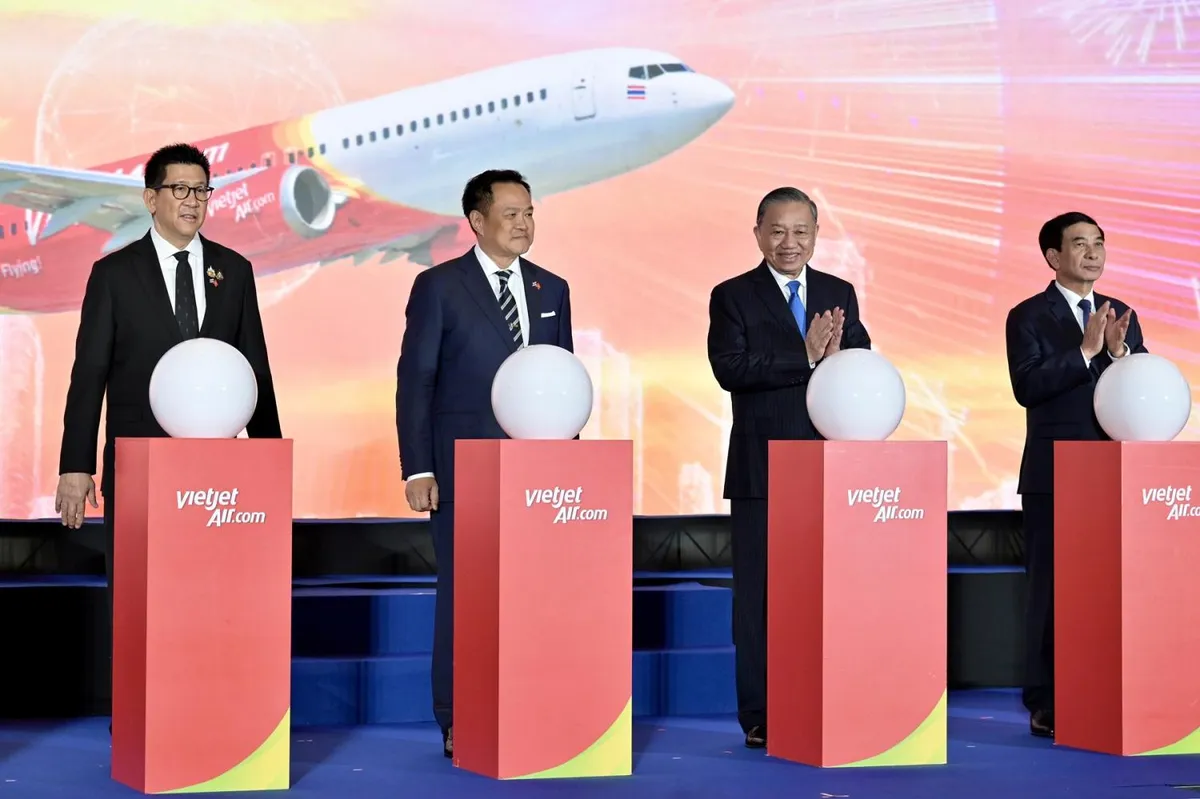
VietJet Thailand Charts Ambitious Growth Despite Economic Headwinds
VietJet Thailand is forging ahead with significant fleet expansion and a strategic pivot towards long-haul international routes, even as global economic factors present considerable challenges.
Fleet Modernization and Expansion
The airline is accelerating its transition from Airbus A320 and A321 aircraft to Boeing 737-8 planes. This aggressive fleet modernization is seen as crucial for cost management and operational efficiency, particularly in light of fluctuating jet fuel prices.
Chief Executive Woranate Laprabang stated that the new aircraft have demonstrated a notable 20% reduction in fuel consumption since their introduction in February. This efficiency boost has been instrumental in improving the airline’s on-time performance (OTP) rate to over 80%, positioning VietJet Thailand among the top performers in Southeast Asia, rivaling even full-service carriers.
By the close of this year, VietJet Thailand anticipates operating 29 aircraft, with a mere four Airbus jets remaining. The long-term vision, set for 2028, includes a fleet of 50 Boeing 737-8 aircraft, with projections to carry approximately 10 million passengers annually, a substantial increase from the current 7 million.
Exploring New Horizons: Long-Haul and Wide-Body Aircraft
Beyond its current operations, VietJet Thailand is actively exploring opportunities to introduce wide-body jets and commence long-haul routes, a move that could see the airline become the first low-cost carrier in Thailand to fly to Europe. This ambition is further supported by the potential delivery of Airbus A330neo planes.
The extended range of the new aircraft, capable of seven-hour flights, also opens up possibilities for direct routes, such as the planned increase in service to Tokyo from seven to 11 flights per week starting in November.
Navigating Rising Airfares and Fuel Costs
Despite the fleet advancements, Mr. Woranate cautioned that average airfares are likely to increase. New bookings made after fare adjustments can expect to see hikes of around 20%, driven by surging fuel prices. For example, fares on Japan routes have already climbed from 15,000 baht to 20,000 baht.
While promotional offers will still exist, their availability may be reduced as the airline prioritizes profitability amid escalating operational expenses. Unlike some competitors, VietJet Thailand does not engage in fuel hedging, instead focusing on currency hedging to mitigate exchange rate risks.
Mr. Woranate anticipates that jet fuel prices will remain above the pre-war baseline of $80 per barrel for the next two years, citing ongoing production disruptions in the Middle East. He noted that the current economic climate presents unique challenges for airlines, distinct from the pandemic era, as they must operate with higher costs that cannot be fully absorbed by fare increases alone.
Strategic Route Management and Future Growth
Pinyot Pibulsonggram, head of commercial at VietJet Thailand, highlighted the airline’s focus on routes with consistently high load factors, such as those to Japan, which maintain over 85% during the low season and exceed 90% in the high season.
The airline is also intensifying its focus on international routes, leveraging fifth-freedom rights to serve intermediate destinations with strong passenger demand before proceeding to final stops. In the near future, VietJet Thailand plans to launch two new routes: Phuket-Taipei-Fukuoka and Bangkok-Phuket-Perth, expected to commence early next year.
